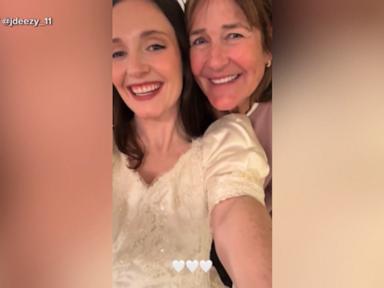
The viral video loop is predictable. A daughter unboxes a yellowing heap of 1990s polyester lace. She cries. Her mother cries. The comments section overflows with heart emojis and platitudes about "preserving history."
It is a lie.
What you are witnessing is not a sentimental breakthrough. It is the ritualization of clutter. We have rebranded the refusal to let go as a "viral trend," forcing the next generation to act as unpaid curators for museums of mediocre textile choices.
Stop unboxing the past. Start burning the bridges to it.
The Sunk Cost Fallacy in a Garment Bag
Most wedding dresses sitting in attics today are not archival masterpieces. They are mass-produced artifacts of a specific retail moment. Between 1980 and 2010, the "heirloom" industry convinced millions of women that spending $300 on a vacuum-sealed box was an investment in their future daughter’s happiness.
It was actually a tax on guilt.
Economically, the "wedding dress preservation" industry is a masterpiece of psychological manipulation. They sell you a "forever" promise for a garment that is physically designed to fail. Silk shatters. Synthetic fibers off-gas. Elasticized waists become brittle. By the time a daughter unboxes that dress twenty-five years later, she isn't looking at a garment; she’s looking at a biohazard of deteriorating polymers.
Holding onto these items is a textbook example of the Endowment Effect. We overvalue things simply because we own them. We mistake the object for the memory. But the memory of the wedding exists in the marriage and the photographs. The dress is just four yards of heavy fabric taking up prime real estate in a suburban closet.
The Aesthetics of Hostage-Taking
Let’s be brutally honest about the "unboxing" videos. There is a palpable undercurrent of pressure. When a mother presents her dress to her daughter, she isn't offering a gift. She is offering a social contract wrapped in tissue paper.
The unspoken question is: Will you wear this?
If the daughter says yes, she sacrifices her own identity to play a supporting role in her mother’s nostalgia. If she says no, she is the "heartless" child who broke a decades-old dream.
Fashion is a language of the present. Trends move in cycles, yes, but the fit, the construction, and the social context of a 1985 puff-sleeve gown do not "translate" to 2026. Forcing a daughter to navigate the emotional minefield of rejecting a moth-eaten dress is a bizarre form of domestic cruelty.
The Environmental Cost of Sentimental Hoarding
We talk constantly about fast fashion and sustainability, yet we ignore the millions of pounds of "heirloom" clothing sitting stagnant in climate-controlled storage.
If you want to be sustainable, you don’t keep a dress for thirty years in a plastic box. You donate it while it is still wearable. You let another woman experience the joy of the garment while the style is still relevant.
By hoarding these dresses, we are creating a massive, private landfill of "someday" clothes. According to textile waste data, the average American throws away 81 pounds of clothing per year. The wedding dress is the only item we exempt from the "does this spark joy" audit, even though it is the item we are least likely to ever use again.
The Logistics of Letting Go
I have seen families tear themselves apart over the contents of a storage unit. I have watched daughters pay for professional cleaning on dresses they hated just to avoid a fight at Thanksgiving. It is a waste of capital, emotion, and space.
If you actually care about your daughter’s wedding day, give her a check. Give her the freedom to choose her own silhouette. Do not give her a box of chores.
Here is the unconventional reality: The most loving thing a mother can do with her wedding dress is to get rid of it before her daughter ever feels the weight of its expectation.
The "Heirloom" Audit
If you are currently harboring a dress in your attic, run this diagnostic:
- The Physicality Check: Open the box. Is it yellow? Does it smell like a basement? If yes, it’s trash. No amount of "restoration" will make it feel like a luxury garment again.
- The Silhouette Test: Can this dress be worn without $2,000 in alterations? Most vintage gowns require a complete structural overhaul to meet modern standards. At that point, you aren't wearing "mom’s dress." You’re wearing a Frankenstein’s monster of old lace and new boning.
- The Motive Inquiry: Are you keeping it for her, or are you keeping it because you’re afraid that throwing it away means your own wedding didn't matter?
Destroy the Box
The viral trend of unboxing is the final gasp of a generation obsessed with "stuff" over experiences. We are a society of collectors who have run out of shelves.
If you want to honor the past, take a high-resolution photo of the dress. Frame it. Then, take the dress to a textile recycling center or a theater troupe that needs costumes.
Stop filming the unboxing. Start filming the liberation.
The daughter in that viral video doesn't want your dress. She wants your permission to be herself. Give her that instead.
Burn the box. Clear the shelf. Move on.