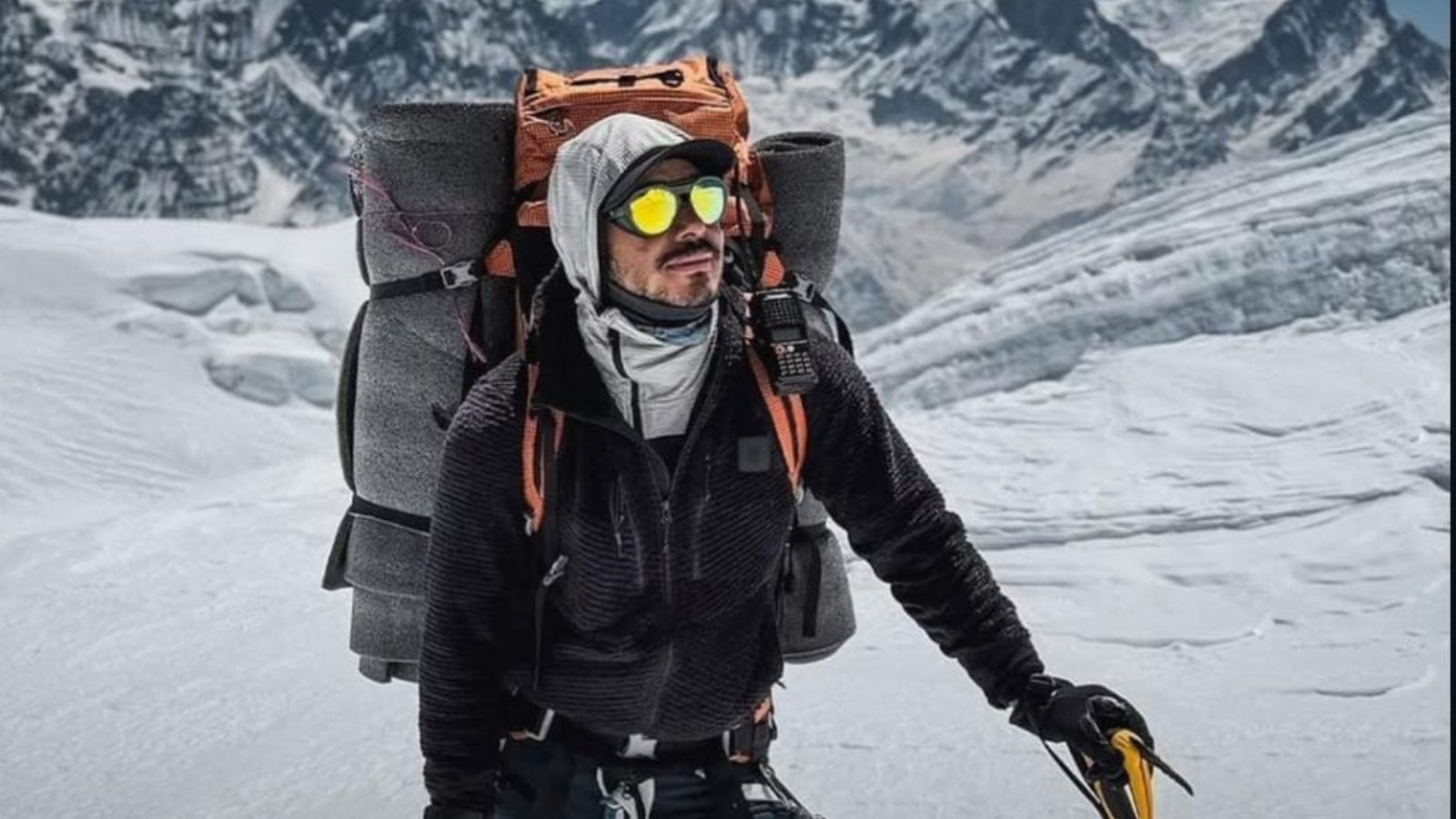
The air at seven thousand meters does not sustain life. It strips the moisture from your lungs, freezes the sweat on your skin into a brittle armor, and forces the heart to hammer against your ribs like a trapped bird.
Nirmal Purja knew this rhythm better than almost anyone alive.
On a Thursday afternoon in the Karakoram range, high on the slopes of Broad Peak, that thin air turned feral. A wall of snow broke loose between Camp Two and Camp Three, carrying down ten human beings with the terrifying, indifferent weight of an avalanche. Among them was Nimsdai himself—the man who had made the impossible look routine, the former British Gurkha and Special Boat Service soldier who had rewritten the physics of high-altitude mountaineering.
Two days later, the tracking data flatlined, and Elite Exped released the words the climbing community prayed they would never read.
He was forty-three.
To understand the weight of this loss, you have to look past the cold statistics of the 8,000-meter peaks. In 2019, Purja shocked the globe with Project Possible, conquering all fourteen of earth's highest mountains in six months and six days. The previous record stood at over seven years. That staggering feat wasn't just a physical triumph; it was a psychological earthquake. It shattered the glass ceiling of what human will could extract from a broken body. Later, his exploits were captured in the Netflix documentary 14 Peaks: Nothing Is Impossible, turning a quiet soldier from Nepal into a global symbol of relentless grit.
Yet the mountains do not care about Netflix specials. They do not care about world records, or military medals, or the adoration of millions.
Consider what happens on a mountain like Broad Peak. Standing at 8,051 meters, the twelfth-highest on earth, it is a brutal mass of rock and ice sitting in Pakistan-administered Kashmir. Climbers call it a giant ridge for a reason—its massive summit ridge offers no single point of safety, exposing teams to unpredictable weather shifts and massive wind-slabs.
Just days before the catastrophe, Purja posted a quiet message on social media. He was seeking safe passage up and down the mountain. He noted, with the hard-earned wisdom of a veteran, that he took no mountain for granted.
It was a poignant reminder. Even the masters bow to the margin of error.
When the snow gave way, it swept Purja and his trusted companions—including guides Pur Bahadur Gurung, known as Yukta, and Nima Sherpa—thousands of feet down the slope. Communication vanished instantly. Military helicopters and ground search teams fought through treacherous weather windows, hoping against hope for a miracle in the white silence. They found bodies. They found shattered gear. They found the brutal reality of the altitude.
The tragedy extends far beyond a single legendary name. Ten lives were extinguished on those slopes—climbers from Nepal, Pakistan, the United States, China, and Oman, knit together by a shared, irrational desire to stand where the earth meets the stratosphere. Among them were local guides, the invisible backbone of the Himalayan climbing industry, whose names rarely make the main headlines yet whose boots pack down the trails that others walk to glory.
Nepal Prime Minister Balendra Shah remarked that mountaineering is never merely about reaching a summit. It is about discipline, sacrifice, and the raw courage to challenge human boundaries.
Purja understood those boundaries intimately. After leaving elite military service, he dedicated his life to lifting others up, founding Elite Exped and the Nimsdai Foundation to support the mountain communities of Nepal. He wanted the world to see that Sherpas and high-altitude workers were not just support staff, but the absolute elite of the craft.
Now, the man who taught a generation to look up at the highest skyline is gone, claimed by the very giants he demystified through sheer tenacity.
The snows of the Karakoram have settled back into a deceptive, blinding peace. The winds howl across the summit ridge of Broad Peak, erasing footprints within minutes. But the legacy remains carved into the ice, echoing the truth that while physical journeys must eventually end, the audacity to chase the impossible remains written forever in the stone.