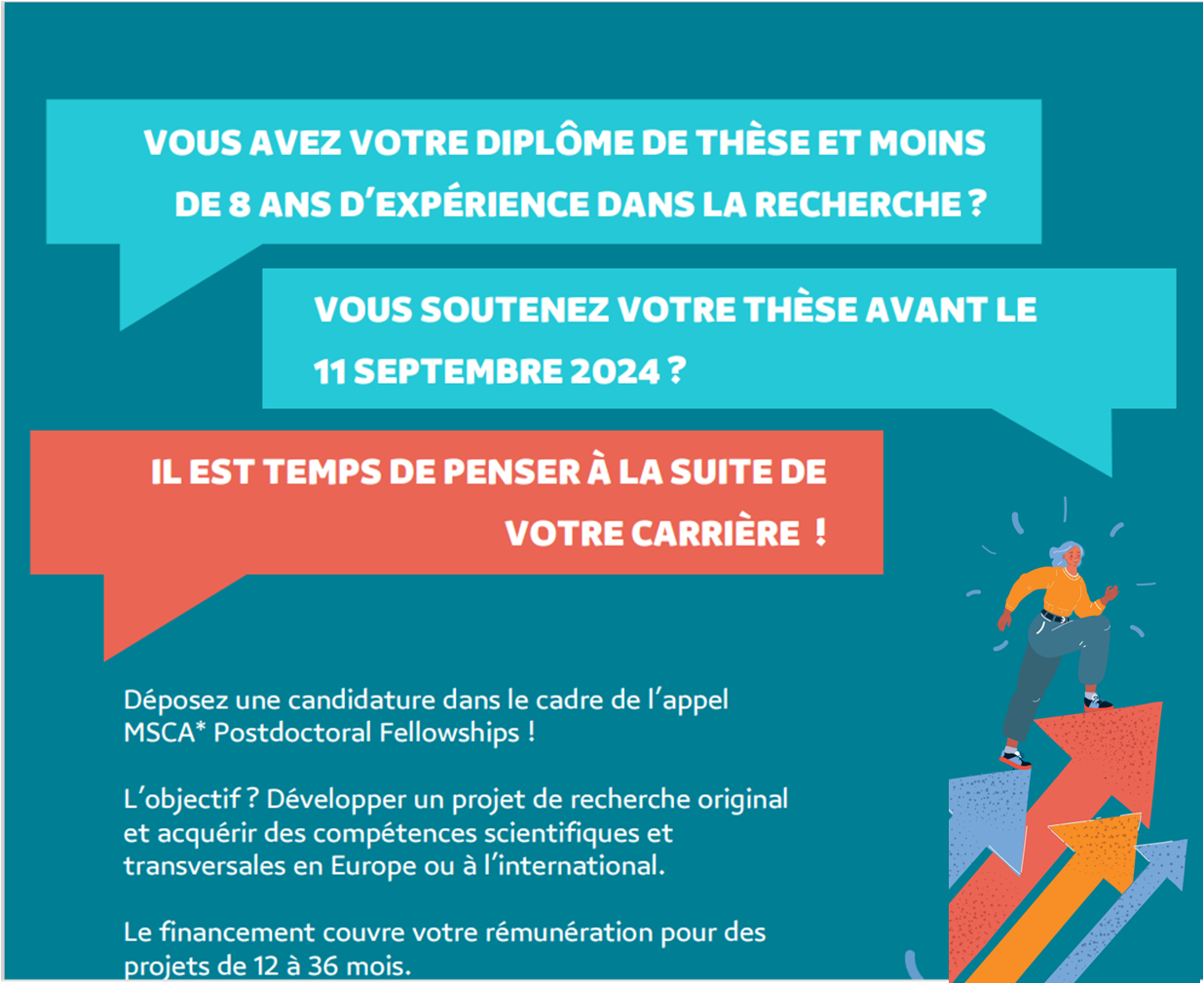
You’ve spent years grinding through a PhD, only to find the local job market for specialized research feels like a dead end. It’s a common story, especially for researchers in the Global South where funding is tight and labs are often under-equipped. If you’re sitting on a fresh doctorate and wondering where the "global" part of your career went, the Marie Skłodowska-Curie Actions (MSCA) Postdoctoral Fellowships 2026 isn't just another grant. It’s a career reset button with a €399 million budget.
The 2026 call is officially open as of April 9, 2026. You have until September 9 to convince the European Commission that your research matters. This isn't just about moving to Europe; it's about getting the kind of financial backing that lets you actually focus on science instead of worrying about how to pay rent or buy reagents.
The Reality of the MSCA 2026 Call
Let's cut the fluff. Most people think these fellowships are only for the elite from Ivy League-tier schools. That's wrong. The MSCA is built on "mobility," which is code for: we want you to move so you can learn stuff you can't learn at home.
For 2026, the European Commission is looking to fund roughly 1,600 projects. With over 17,000 applicants expected, the success rate will likely hover around 10% to 15%. Those aren't great odds if you're just "winging it." But if you understand that this is a career development grant—not just a research project—you’re already ahead of the pack.
Two Paths to the Same Goal
You need to pick your lane early. There are two main types of fellowships, and choosing the wrong one is a fast way to get disqualified before an expert even reads your abstract.
European Postdoctoral Fellowships
This is the one most Global South applicants aim for. You move from any country in the world to an EU Member State or a "Horizon Europe Associated Country" (like Norway, Turkey, or Israel).
- Duration: 12 to 24 months.
- Mobility Rule: You can’t have lived or worked in the host country for more than 12 months in the last three years. If you’ve already been doing a postdoc in Germany for two years, you can’t apply to stay in Germany. You’ve got to move.
Global Postdoctoral Fellowships
These are trickier. They’re for European nationals or long-term residents who want to leave Europe for a bit.
- Duration: 24 to 36 months total.
- The Catch: You spend 12 to 24 months in a "Third Country" (like the US, Brazil, or Kenya) and then you must return to Europe for a final 12-month "return phase."
The 8 Year Rule is Non Negotiable
Don't waste your time if you're a "career postdoc." The MSCA has a strict 8-year limit on research experience after your PhD.
The clock starts the day you were awarded your degree. However, they don't count:
- Time spent working outside of research.
- Maternity or paternity leave.
- Career breaks (even if you were just unemployed).
- Time spent in "Third Countries" if you’re a European returning home.
If you’re at 7 years and 11 months, you’re in. If you’re at 8 years and 1 day, you’re out. Use the official "Self-assessment tool" on the EU Funding & Tenders Portal. It’s the only way to be sure.
What They Actually Pay For
The MSCA is famous for being "fully funded," but what does that mean for your bank account? It’s not just a salary; it’s a package.
- Living Allowance: This is your base salary. It’s adjusted based on a "country correction coefficient." A fellow in Denmark gets more than a fellow in Poland because eggs cost more in Copenhagen.
- Mobility Allowance: Around €600 a month just for the hassle of moving.
- Family Allowance: About €660 a month if you have a family. The best part? You still get this even if your family doesn't move with you.
- Research, Training, and Networking costs: This goes to your host lab to pay for your conferences, books, and lab supplies. You don't see this in your paycheck, but it’s what keeps your project alive.
Why the Global South Has an Edge in 2026
Europe is desperate to diversify its research pool. If you're applying from Africa, Latin America, or Southeast Asia, you aren't just "another applicant." You're bringing perspective that European labs lack.
Specifically, look into the ERA Fellowships. If you apply for a European Fellowship with a host in a "Widening Country" (places like Portugal, Greece, Poland, or much of Eastern Europe) and your score is high but just misses the MSCA cut-off, you automatically get funneled into the ERA pool. It’s a second chance at funding that researchers heading to France or the UK don't get.
The Strategy That Wins
Stop writing your proposal like a dissertation. The evaluators aren't just looking at your science; they’re looking at Part B1 of the application, which is divided into three sections: Excellence, Impact, and Implementation.
Excellence is Only 50 Percent
Yes, your science needs to be good. But you also need to explain how the host supervisor is going to teach you something new. If you’re an expert in X and you’re going to a lab that does X, you’ll fail. You need to be an expert in X going to a lab that does Y, so you can create "XY" by the end of the two years.
Impact is the Secret Weapon
How will this fellowship make you a leader? Don't just say "I will publish papers." Say, "I will lead a workshop for 50 PhD students" or "I will translate my findings into a policy brief for the Ministry of Health."
Implementation is Boring but Vital
This is where you prove you can actually manage a project. If you don't have a clear Gantt chart showing when you're doing your lab work versus when you're doing your outreach, the evaluators will assume you're disorganized.
Common Mistakes to Avoid
I've seen brilliant researchers lose out because of stupid errors. Don't be that person.
- Choosing a "Ghost" Supervisor: If your supervisor is a Nobel laureate who never answers emails, the evaluators will notice the lack of a "concrete training plan." Pick someone who actually has time for you.
- Ignoring the Non-Academic Sector: You can add a 6-month placement at the end of your fellowship to work in a company, NGO, or hospital. This is a huge bonus in the eyes of the MSCA because it shows your research has real-world legs.
- The "Copy-Paste" Proposal: If your proposal looks like you just swapped the name of the university, you're done. It needs to be tailored to the specific equipment and expertise of the host.
The First Steps You Need to Take Today
September 9 feels far away. It isn't.
- Find a Host Now: Reach out to professors in Europe. Don't send a generic "Please hire me" email. Send a two-paragraph pitch of your project and ask if they’d be willing to host your MSCA application.
- Register on the Portal: Get your "EU Login" sorted and find your host's PIC (Participant Identification Code).
- Download the 2026 Guide for Applicants: Read it twice. It’s dry, it’s long, but it’s the rulebook.
The MSCA isn't just a job. It’s a pedigree. Once you’re a "Marie Curie Fellow," that title stays on your CV forever, opening doors in both academia and industry that are usually slammed shut for researchers from the Global South. Stop waiting for a local opening that might never come. Start drafting.