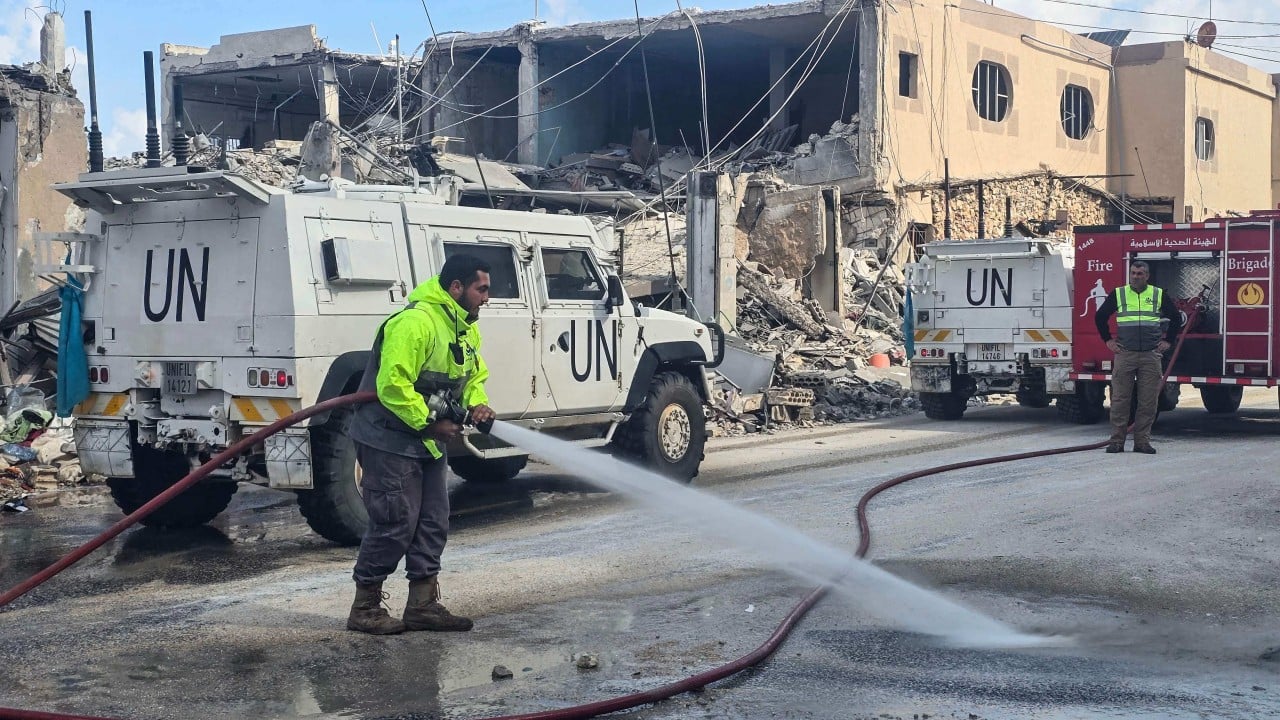
The blue helmet is losing its power. For decades, the presence of United Nations peacekeepers stood as a visible barrier between fragile peace and total chaos. Today, that barrier is eroding.
A report by the Stockholm International Peace Research Institute (SIPRI) reveals that international peacekeeping personnel numbers dropped to 78,633 by the end of 2025. That is a massive 49% plunge since 2016. It marks the lowest level of global deployment since at least the year 2000. In 2025 alone, numbers plummeted by 17% in the sharpest single-year decline of the decade.
We are watching the slow fracturing of international conflict management. It is happening at a time when global instability is spiking. The collapse is not accidental. It is driven by a toxic combination of political gridlock and intentional financial starvation.
The Two Billion Dollar Hole in Global Security
Peacekeeping requires money. Right now, the money isn't there because the world's wealthiest nations refuse to write the checks.
By July 2025, UN peace operations faced a staggering $2 billion budget shortfall. That is more than 35% of the total $5.6 billion budget allocated for the 2024–25 fiscal period. Major donors are simply failing to fulfill their financial commitments on time or in full.
This is not a bureaucratic bookkeeping issue. It has immediate, dangerous consequences on the ground. Missions are forced to slash personnel, cancel patrols, and reduce their presence. It leaves local populations entirely vulnerable.
While the funding dries up, the physical burden of these missions is carried by a specific group of nations. Every single one of the top ten military personnel contributors to multilateral peace operations comes from the Global South.
- Uganda has risen to become the top military personnel contributor.
- Nepal, Bangladesh, and India follow closely behind.
- Rwanda, Ethiopia, Burundi, and Kenya represent the heavy lifting from Sub-Saharan Africa.
- Pakistan and Indonesia round out the list from Asia.
The dynamic is stark. Wealthy Western nations hold the purse strings and dictate terms from comfortable seats in New York, yet they are starving the system financially. Meanwhile, countries in the Global South provide the actual boots on the ground, absorbing the physical risks of increasingly hostile deployment zones.
Veto Threats and Political Hostage Taking
The financial crisis is mirrored by total paralysis within the UN Security Council. Permanent members are using veto threats and hardline demands to transform mandate renewals into political leverage.
Look at what happened with the UN Interim Force in Lebanon (UNIFIL). Despite frequent and clear violations of the 2024 ceasefire agreement between Israel and Lebanon, the United States aggressively demanded the complete termination of the mission during mandate talks in August 2025.
The Security Council eventually managed a desperate compromise. It renewed UNIFIL for one final period, extending its lifespan only until December 2026. This sets a hard expiration date on a crucial buffer force in one of the world's most volatile regions.
Geopolitical rivalries are blocking action elsewhere too. In 2024, a US-backed plan aimed to transition the Multinational Security Support mission in Haiti into a formal, UN-funded peacekeeping operation. It stalled out completely because China and Russia blocked it in the Security Council.
Instead of a unified UN response, Haiti ended up with a fractured transition to the Gang Suppression Force (GSF) in 2025. This gridlock means that no entirely new UN-led peacekeeping operation has been successfully mandated since 2014.
The Myth of Regional Alternatives
Some foreign policy analysts argue that we don't need the UN anymore. They claim that regional organizations can step up and handle security in their own backyards.
The data proves that theory wrong. Regional groups are suffering from the exact same institutional diseases as the UN.
Organizations like the African Union, the Economic Community of West African States (ECOWAS), and the Organization for Security and Co-operation in Europe (OSCE) are hit hard by internal political deadlocks and massive budget shortfalls. Look at the ongoing failures to establish effective, coordinated peace operations in war-torn regions like Sudan or Ukraine.
As SIPRI researcher Dr. Claudia Pfeifer Cruz notes, regional bodies simply lack the integrated capabilities required for complex peacebuilding. They can't just step in and fill the void.
When the UN is sidelined and regional organizations fail, a dangerous shift occurs. Conflict response moves completely outside of established international frameworks. We are seeing a rise in unilateral, bilateral, and ad hoc military arrangements.
These coalition-of-the-willing operations are inherently more militarized. They are not bound by international oversight, and they operate purely out of the direct self-interest of the states funding them. It replaces collective security with raw, cynical geopolitics.
Mapping a Shrinking Footprint
The physical footprint of global peace operations is contracting rapidly. Only 58 multilateral peace operations were active across 34 countries or territories in 2025. This marks the first time the number of active missions has dropped below 60 since 2016.
Four major missions shut down entirely in 2025:
- The Democratic Republic of the Congo
- Haiti
- Iraq
- The Nagorno-Karabakh region of Azerbaijan
The remaining operations are heavily concentrated. Nearly three-quarters—73 percent—of all international peacekeeping personnel are deployed in just five specific operations. Four of these are located in Sub-Saharan Africa (including missions in the Central African Republic, South Sudan, and Somalia) alongside the vulnerable UNIFIL mission in Lebanon.
This concentration means that if a single major mission collapses due to a lack of funding or political betrayal, the entire global peacekeeping statistics framework collapses with it.
The irony is that demand for these missions has not faded. The desire for multilateral conflict management remains high among ordinary citizens and countries caught in the crossfire. More than 130 UN member states gathered at the Berlin Peacekeeping Ministerial to discuss how to rescue the system. New ceasefires, such as the October 2025 peace agreement drafted for Gaza, still explicitly call for the deployment of multilateral peace operations.
Governments like the idea of peacekeeping on paper. They just refuse to provide the political space and predictable funding needed to make it work in reality.
The Real Cost of Walking Away
If you think this decline doesn't matter to you, you're miscalculating. The alternative to a flawed UN peacekeeping system isn't a more efficient system. It is chaos.
When long-established international norms are abandoned, conflicts burn hotter and last longer. The direct consequence is an immediate, catastrophic impact on civilian populations. We will see higher refugee numbers, disrupted global trade routes, and more spaces where extremist groups can operate without consequence.
Reversing this slide requires immediate, practical steps from the international community:
- Enforce Financial Penalties: Member states, especially wealthy G7 nations, must pay their assessed peacekeeping contributions in full at the start of the fiscal year. Delinquent states should face a loss of voting rights in budget committees.
- Insulate Mandates from the Veto: The UN General Assembly must utilize mechanisms like the "Uniting for Peace" resolution more frequently to bypass predictable Security Council vetoes on urgent humanitarian deployments.
- Fund Regional Capabilities Directly: Since the African Union is taking on high-risk stabilization tasks, Western donors must commit to predictable, multi-year funding blocks through UN assessed contributions rather than unreliable ad hoc grants.
The global community is choosing to let peacekeeping die by a thousand budget cuts. If states continue to abandon these multilateral tools, they will soon find that dealing with the unchecked spread of global warfare is infinitely more expensive than paying for the peacekeepers who could have prevented it.