The air inside the venue was thick with the scent of spilled lager, damp cotton, and the unmistakable electricity of a crowd on the brink of release. Basslines did not just hit the room; they hit the sternum. For months, fans had clutched tickets like golden passports, waiting for the arrival of Massive Attack. The trip-hop pioneers from Bristol, architects of a moody, shadowy sound that defined a generation of late-night introspection, were finally in Singapore.
Then came the flash of color.
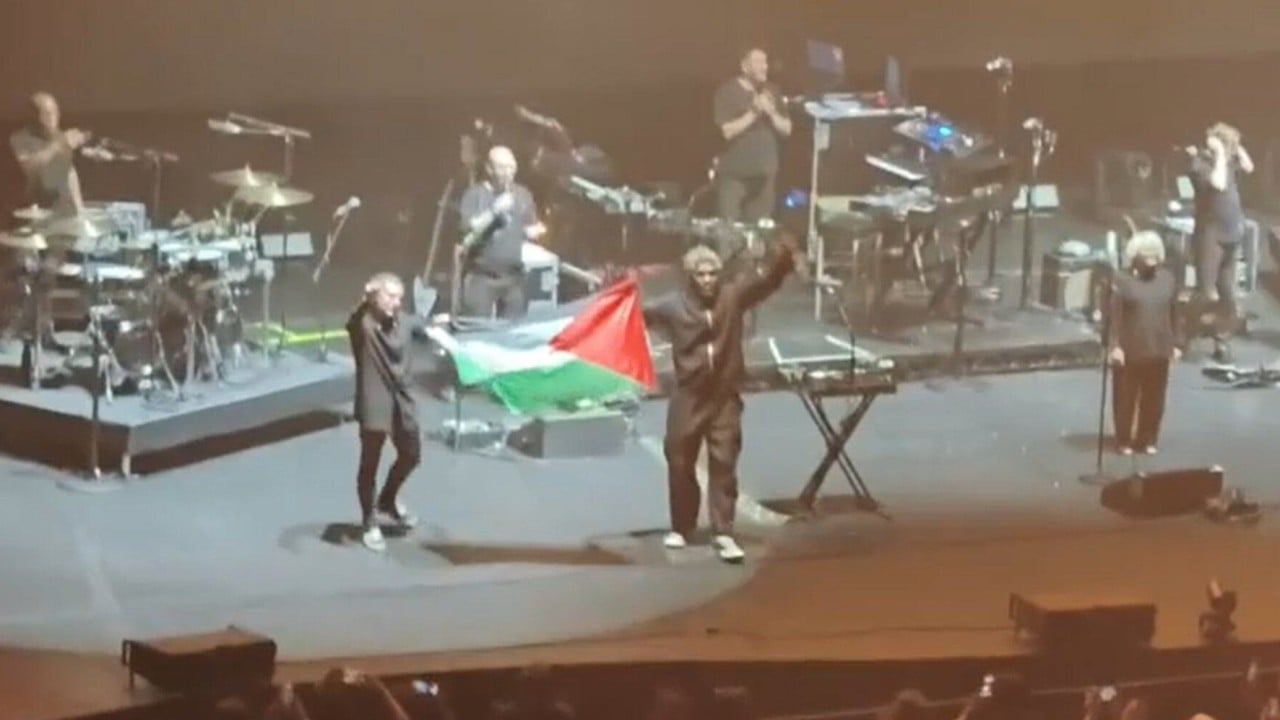
A Palestinian flag unfurled in the gloom, cutting through the strobe lights like a blade. To the crowd, it was a moment of solidarity, a visceral reaction to distant violence broadcast daily onto the screens in their pockets. To the state, it was something entirely different. It was a line crossed. It was a breach of a strict, unyielding law regarding foreign emblems, a statute designed to keep external geopolitical fires from burning on domestic soil.
Silence followed. Not the quiet of peace, but the heavy, suffocating silence of an intervention.
To understand why a piece of fabric could halt a multi-national tour, you have to understand the architecture of Singapore itself. This is a city-state built on a knife-edge of absolute order. Walking down Orchard Road or standing beneath the towering geometries of Marina Bay, you feel the profound weight of a contract. The trade-off is clear. You surrender certain chaotic freedoms—the messy, loud, unpredictable expressions of public dissent common in Western democracies—in exchange for profound safety, cleanliness, and economic stability.
Order is the oxygen here.
When you live in a place where ethnic and religious harmony is treated not as a happy accident but as a fragile, engineered miracle, foreign symbols are never just symbols. They are accelerants. The Public Assemblies and Processions Act, alongside regulations governing foreign national emblems, is the firewall. The government’s stance is stark: Singapore is not a canvas for external conflicts.
Imagine standing in that crowd, watching the security guards move with swift, practiced efficiency. You feel the sharp drop in temperature in the room. The music is cut. The house lights glare, exposing the sweat on people's faces, the sudden confusion, the abrupt shift from euphoria to alienation.
This is where the abstract concept of state censorship collides with human reality.
For the touring artist, a flag is an extension of conscience. It is an artistic obligation to speak truth to power, to use a platform to highlight human suffering thousands of miles away. Robert del Naja and his bandmates operate from a tradition where music and politics are fused at the hip. They come from a British counter-culture that expects rebellion. They view compliance as a form of complicity.
But for the local authorities, context is everything. Singapore’s Media Development Authority and police forces do not look at intent; they look at impact. They see a spark near a tinderbox. They see a multi-ethnic, multi-religious population that requires careful calibration to maintain peace. When an artist brings unapproved political messaging onto a stage, they are breaking the rules of engagement that allow millions of people to live side by side without friction.
Consider what happens next. The ban descends. The doors close. The social media feeds light up with outrage, dividing neatly into camps of absolute condemnation of the state and fierce defense of national sovereignty.
We have seen this dance before. It is a collision between globalized artistic expression and hyper-localized sovereignty. Artists expect the world to be a borderless internet cafe where every voice carries equal weight. Governments know the world is actually a patchwork of heavily guarded fortresses, each with its own alarm system.
The tragedy of the moment isn't just a cancelled concert or confiscated flags. The tragedy is the total breakdown of translation between two completely different worldviews.
To the fan standing near the front, crushed by the sudden void, the ban feels like a personal betrayal. They came for transcendence. They found bureaucracy. They wanted to feel connected to the wider world's pain, only to be reminded that their immediate world insists on shutting that pain out to preserve its own fragile bubble.
Yet, step back for a moment and look at the map. Look at the region's history. Singapore’s founders watched neighboring nations tear themselves apart along ethnic and religious lines in the decades surrounding independence. They made a solemn vow: never here. Every law, every fine, every rigid prohibition on foreign flags is rooted in that ancestral trauma. It is a scar that never fully faded.
When Massive Attack showed that flag, they weren't just breaking a rule about permits or emblems. They were poking at the foundational anxiety of an entire nation. They were asking a tightly wound society to loosen its grip, even just for the duration of a guitar solo.
And the state said no.
The trucks loaded the gear back into crates in the humid loading bay. The fans drifted out into the pristine, sterile streets, checking their phones, absorbing the news snippets already flashing across the global web. The music had stopped. The color had been put away.
What remains in the aftermath is the uncomfortable friction of our modern era. We want our artists to be brave, but we demand our cities be safe. We want the freedom to scream into the void, but we expect someone else to clean up the mess when the echoes bounce back.
The stage is dark now. The gear is halfway to the next port of call, where a different set of rules will apply, where another crowd will wait in the dark, entirely unaware of how thin the ice really is beneath their feet.