The Western media has a fetish for the "funding gap." They treat African infrastructure like a leaky bucket that Washington forgot to fill and Beijing is suddenly patching with gold-plated cement. It’s a convenient narrative. It pits the "negligent" West against the "predatory" East while treating 54 sovereign nations as passive bystanders waiting for a check to clear.
But the premise is a lie.
The obsession with the billions Trump cut or the billions Xi Jinping just pledged at the Forum on China-Africa Cooperation (FOCAC) ignores the most uncomfortable truth in global macroeconomics: Africa doesn't have a funding problem. Africa has a cost of capital problem and a sovereignty problem.
When analysts moan about a "gap" left by American isolationism, they assume that more debt is the solution to a debt crisis. It isn't. China isn't "stepping up" out of the goodness of its heart or even purely for resource extraction. It is engaging in a sophisticated swap of liquidity for long-term geopolitical optionality.
The Infrastructure Trap No One Talks About
The competitor's take is that China is filling a void. This suggests a vacuum exists. In reality, the space is crowded with high-interest Eurobonds and aging colonial financial structures.
China’s recent pivot isn’t about building more "vanity projects"—the stadiums and parliament buildings of the 2010s. It is about digital and green energy hegemony. They aren't just laying asphalt; they are laying the nervous system of the continent.
When you control the 5G towers and the subsea cables, you don't need to worry about who sits in the president's office. You own the data. You own the rails. Most "aid" is actually a vendor finance scheme for Huawei and ZTE.
- Misconception: China provides "cheap" money.
- Reality: The interest rates might be lower than a junk-bond market, but the collateral is often strategic autonomy or future resource flows.
I’ve sat in rooms where "development" deals were signed. The spreadsheets don't look like charity. They look like venture capital for empires. If a project fails, the debt doesn't disappear; it converts into influence.
The "Trump Cuts" Are a Red Herring
The idea that Africa is suffering because of a specific U.S. administration’s budget cuts is peak Western-centrism. It assumes African growth is a derivative of the American taxpayer.
The U.S. never competed with China on infrastructure. Washington doesn't have state-owned enterprises that can deploy 10,000 workers to build a railroad in Kenya. Washington has private equity and USAID. One wants 20% returns; the other wants to give away condoms and democracy pamphlets. Neither builds power plants.
The "funding gap" isn't a hole left by Trump; it's a structural refusal by the West to treat African nations as peers rather than charity cases. China wins because they show up with a blueprint and a crane while the U.S. shows up with a lecture and a quarterly report.
The Debt Sustainability Hoax
We need to stop using the term "debt trap" as if it's a secret Chinese invention. The West invented the debt trap in the 1970s via the IMF and World Bank.
What we see now is a Refinancing Game.
African nations are using Chinese credit to pay off Western bondholders, and then using the threat of Western "realignment" to negotiate better terms with Beijing. It’s a high-stakes shell game.
Consider the math of a standard $5 billion port project:
- Phase 1: Chinese bank lends the money.
- Phase 2: Chinese state-owned firm builds the port (using Chinese steel and labor).
- Phase 3: The port fails to hit revenue targets because local trade isn't ready.
- Phase 4: The "Crisis."
The competitor article calls this a "gap" that needs filling. I call it a CapEx Sinkhole.
Adding more money to this cycle doesn't help the person on the street in Lagos or Nairobi. It helps the elites who skim the contracts and the banks that collect the interest. The real "gap" is the distance between the cost of the project and the actual economic value it generates for the local population.
Why "Small is Beautiful" is a Lie
There’s a new trend in "ethical" investment circles claiming that we should focus on "small-scale, high-impact" projects. This is patronizing nonsense.
You cannot industrialize a continent of 1.4 billion people with "small-scale" solar lanterns and micro-loans. You need heavy rail. You need massive baseload power. You need the very things China is willing to fund and the West is too "risk-averse" to touch.
The tragedy isn't that China is lending too much. It's that they are the only ones lending for the things that actually matter for industrialization.
The Green Energy Hypocrisy
The most egregious part of the current discourse is the "Green Gap."
Western nations tell Africa: "Don't use your coal. Don't use your gas. Use our expensive, intermittent wind turbines (which we will lend you the money to buy)."
China, meanwhile, is happy to build the coal plant and the solar farm. They are hedging. They recognize that energy sovereignty is the only thing that creates true independence.
If you want to understand the next decade, look at Critical Minerals. The "aid" being discussed isn't about development; it’s a down payment on cobalt, lithium, and copper. China isn't filling a funding gap; they are securing a supply chain for the 22nd century.
Stop Asking "How Much?" and Start Asking "For What?"
When you see a headline about "China stepping up aid," your first instinct should be to check the commodity prices.
- Is oil up?
- Is copper in demand?
- Is there a strategic port on the Indian Ocean that needs "modernizing"?
The "gap" isn't a financial metric. It's a measure of Western irrelevance. While Washington debates "de-risking" and "de-coupling," the rest of the world is just "coupling" with the highest bidder.
The Brutal Reality of the 2.5%
Most African nations pay significantly higher interest rates on the international market than they should based on their actual default risk. This "Africa Risk Premium" is the real funding gap.
If the West wanted to help, they wouldn't send aid. They would fix the credit rating agencies that treat a stable African democracy like a subprime mortgage. But they won't, because a high risk premium keeps the capital flowing back to New York and London.
China knows this. They use it. They offer 2% or 3% when the market demands 10%. Is it a "trap"? Only if you think the 10% was "fair."
The Pivot to "Soft Power" is a Retreat
The competitor piece mentions "cultural exchanges" and "training." Whenever an empire starts talking about "soft power," it's because they can no longer afford the "hard" stuff.
China is shifting to training African scientists and engineers not because they want to be nice, but because they want the next generation of African tech to be built on Chinese standards.
If you learn to code in Mandarin-based environments, using Alibaba Cloud, on a Huawei backbone, you are a Chinese consumer for life, regardless of who your president is.
The Advice Nobody Wants to Hear
If you are an investor or a policymaker, stop looking for the "gap."
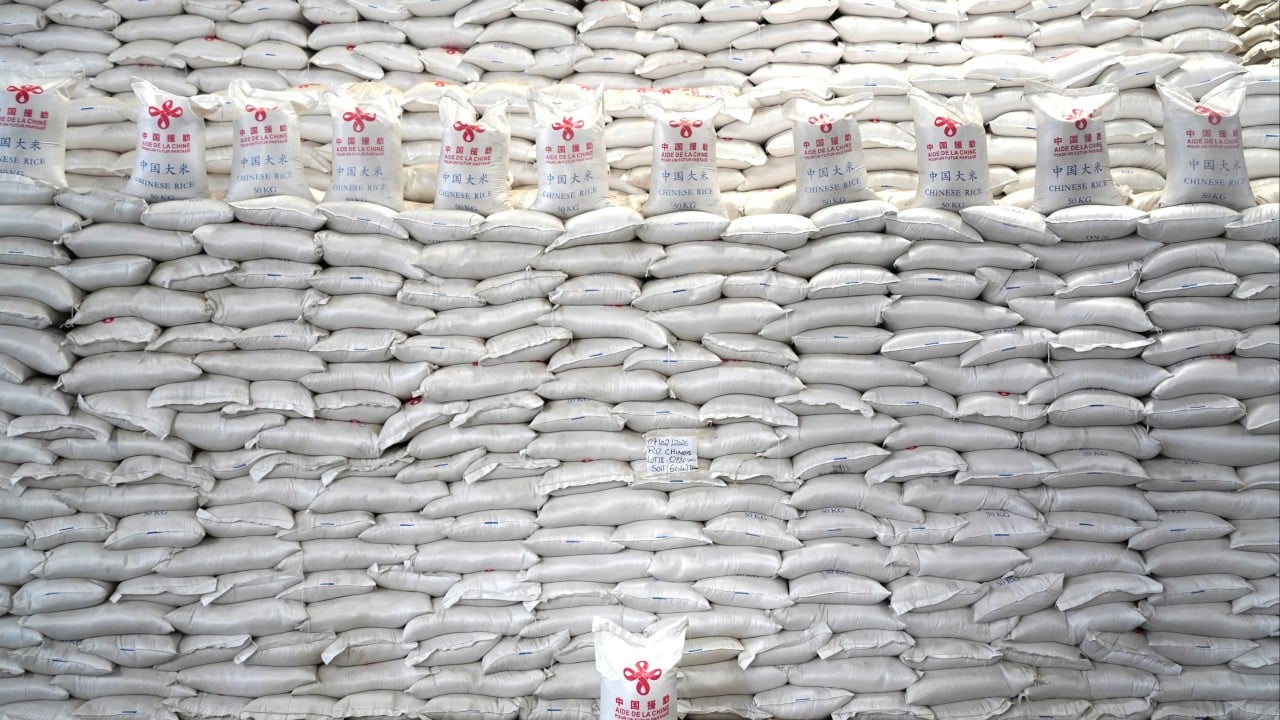
- Ignore the Dollar Totals: A $50 billion pledge is just a ceiling. Look at the disbursement rate. Most of this money never leaves China; it goes from a bank in Beijing to a contractor in Shanghai who then builds something in Ethiopia.
- Watch the Energy Mix: If a country is forced into a "Green Only" path by Western donors, they will remain de-industrialized. Betting on countries that ignore the West and build mixed-energy grids with Chinese help is the only logical play.
- Follow the Minerals: "Aid" is just a euphemism for "Access." Look at where the roads lead. If they lead from a mine to a Chinese-owned port, it’s not a development project. It’s a conveyor belt.
The status quo isn't a competition between two systems of help. It’s a competition between a system that wants to manage Africa’s poverty (the West) and a system that wants to utilize Africa’s assets (China).
Until the West decides it wants to actually build things again, the "funding gap" will remain exactly what it is today: a convenient excuse for losing.
Africa doesn't need a savior. It needs a better price for its labor and its dirt. China is offering a price. The West is offering a lecture.
The choice isn't hard. It’s inevitable.