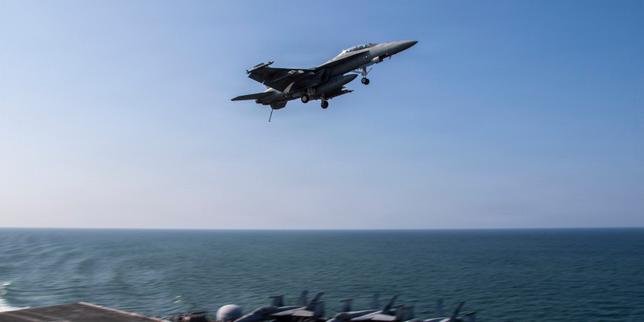
Geopolitics is currently obsessed with the romantic notion of the "David vs. Goliath" tech stack. Pundits look at Iran’s recent salvos and see a masterclass in eroding American dominance. They claim that cheap drones and proxy militias have permanently neutralized the carrier strike group.
They are wrong.
What we are witnessing isn't the erosion of a superpower by a clever underdog. It is the self-imposed paralysis of a hegemon that has forgotten how to use its own shadow. Iran hasn't discovered a "secret hack" to global power; they’ve simply exploited a temporary vacuum of will. If you think Tehran is winning the long game, you’re reading the scoreboard upside down.
The Drone Delusion
The most common "lazy consensus" is that Iran's Shahed-136 drones have rewritten the cost-benefit analysis of modern warfare. The argument goes: why build a $100 million jet when a $20,000 lawnmower with wings can force the enemy to fire a $2 million interceptor?
This is a failure of basic math.
In a total war scenario, "cost-per-kill" metrics shift. When the United States or its allies engage in defensive operations, they aren't just "losing" $2 million per missile. They are buying time to maintain global trade routes that generate trillions. The real cost isn't the interceptor; it's the cost of a closed Red Sea.
Furthermore, the "asymmetric drone" argument ignores the inevitability of the electronic warfare (EW) curve. History shows that every "invincible" cheap tech has a shelf life of about 24 months before the counter-measures become commoditized. We are already seeing the saturation of microwave-directed energy weapons and high-frequency jamming.
The drone "advantage" is a technical debt that Iran is racking up. They are betting their entire national security strategy on a window of opportunity that is slamming shut as autonomous interceptors and AI-driven targeting systems come online. By the time Tehran perfects its current swarm tactics, the target will have evolved into an automated, multi-layered shield that renders "cheap" attacks irrelevant.
The Proxy Trap
Conventional wisdom suggests that Iran’s "Axis of Resistance"—Hezbollah, the Houthis, and various militias—gives them "strategic depth."
Actually, it gives them strategic fragility.
Managing a network of proxies is not like playing a game of Risk. It’s like managing a group of franchise owners who all hate the corporate office. Every time a proxy oversteps—like the Houthis disrupting global shipping to the point of alienating China—Tehran loses a layer of deniability.
The "insider" secret that geostrategists miss is that Iran is now a prisoner of its own successes. They have created a monster they cannot fully control but for which they are fully blamed. When a superpower decides to stop playing the "rules-based order" game and starts targeting the source of the funding, the entire proxy network collapses like a house of cards. Proxies only work when the superpower is too polite to kick down the front door.
The Myth of "Erosion"
Brahma Chellaney and others argue that Iran is "eroding" the advantages of a superpower. This implies a slow, tectonic shift in power.
It’s not erosion. It’s a stress test.
A superpower’s power isn't just its hardware; it’s its credibility. The US hasn't lost its "advantages." It still possesses a combined $1.5 trillion in annual defense spending among its primary alliance. It still controls the global financial plumbing.
What Iran has done is expose a specific, localized software bug: the reluctance of Western democracies to accept any level of risk.
Imagine a scenario where a high-end security system keeps sounding alarms because a squirrel is running across the porch. The owner, tired of the noise, turns the system off. Is the squirrel now "more powerful" than the security system? No. The owner is just being negligent.
The moment the "owner" (the superpower) decides the squirrel is a genuine threat to the house, the power dynamic reverts to its natural state. Iran isn't eroding anything; it’s just making a lot of noise while the giant is trying to nap.
The Nuclear Bluff
We need to talk about the nuclear program. The standard take is that Iran is using its breakout capacity as the ultimate leverage.
Wrong. The "breakout" is Iran’s greatest liability.
A nuclear-armed Iran is a strategically dead Iran. The moment they cross that threshold, their "asymmetric" advantages vanish. They become a conventional target. Their proxies become secondary concerns. Their neighbors—specifically Saudi Arabia and Turkey—will immediately go nuclear, fueled by the realization that the US umbrella is no longer sufficient.
Tehran knows this. They don't want the bomb; they want the threat of the bomb. The threat allows them to extort concessions. The actual weapon invites a preemptive strike that their aging air defenses couldn't stop even if they had a thousand Shaheds in the sky.
The Intelligence Blind Spot
I’ve seen intelligence communities get this wrong for decades. They look at the "boots on the ground" and the "missiles in the silos" and ignore the underlying economic rot.
Iran's economy is a ghost. It survives on black market oil sales to China and a convoluted system of shell companies. This is not the foundation of a rising power. It is the desperate maneuvering of a regime that is one internal revolt away from total collapse.
While the "experts" focus on Iranian geostrategy, they miss the fact that the Iranian youth—the very people who are supposed to man the drones and lead the proxies—are increasingly disconnected from the regime’s ideological mission.
Real-World Math
Let's look at the actual numbers.
$$Total;Defense;Spending = \sum (Hardware + R&D + Personnel)$$
In the case of Iran, their $Hardware$ is largely 1970s-era American tech or 1990s-era Russian/Chinese hand-me-downs. Their $R&D$ is focused almost exclusively on low-tier delivery systems. Their $Personnel$ are increasingly demoralized.
Compare this to the US and its allies. The R&D budget for a single US sixth-generation fighter program exceeds the entire Iranian defense budget.
$$Superpower;Dominance = \frac{Technological;Edge \times Economic;Scale}{Political;Will}$$
The only reason Iran appears to be winning is because the $Political;Will$ variable in the West is currently near zero. But $Political;Will$ is volatile. It can go from 0 to 100 in the span of a single Tuesday. When it does, the math flips instantly.
The Actionable Truth
If you are an investor, a policy maker, or a citizen trying to make sense of the Middle East, stop falling for the "asymmetric" hype.
- Ignore the Drone Counts: Focus on the development of directed energy weapons. That is where the real war is being won.
- Watch the Proxy Friction: Look for signs that the Houthis or Hezbollah are acting against Tehran’s specific interests. That’s the crack in the foundation.
- Internal Stability is the Only Metric: The Iranian regime’s greatest enemy isn't a US carrier; it’s the Iranian Rial.
Iran isn't the new model for how to beat a superpower. It's the last gasp of a regional power trying to stay relevant in a world that is rapidly out-engineering it.
Stop pretending the underdog has a secret weapon. The only thing they have is a superpower that has forgotten how to be one.
The erosion isn't happening to the superpower’s capabilities. It’s happening to your perception of them.
Stop being a victim of the "asymmetric" PR machine.
The giant isn't dying. It’s just bored. And you really don't want to be the one who finally wakes it up.