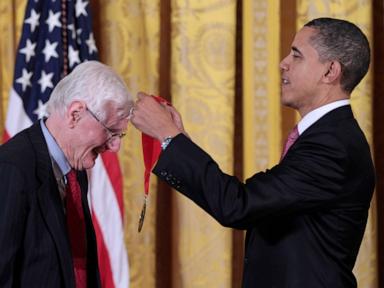
The traditional obituaries are already hitting the wires, dripping with predictable, solemn reverence. They follow a familiar script. They mourn Gordon S. Wood, the Pulitzer Prize-winning titan of American Revolutionary history, as the definitive chronicler of how early Americans thought their way into a republic. They praise his sweeping, elegant volumes like The Creation of the American Republic and The Radicalism of the American Revolution. They celebrate a lifetime spent defending the ideas of the Founders against the messy, fractured onslaught of modern social history.
It is a comfortable narrative. It is also fundamentally wrong.
The lazy consensus in academic and mainstream media views Wood’s passing at 92 as a tragic loss of historical clarity. The standard line is that Wood saved the American Revolution from being reduced to a mere clash of economic interests or social identities. He made ideas matter again.
But treating Wood’s work as the gold standard of early American history misses the entire structural shift occurring beneath our feet. Wood did not just chronicle a consensus; he manufactured one by systematically flattening the chaotic, multi-layered reality of the 18th century into a polished, elite intellectual exercise. The loss of his voice is not a tragedy for the discipline. It is a forced graduation. It is an invitation to finally abandon the comforting fiction of a singular, coherent intellectual founding and face the fragmented, hyper-partisan reality of how nations are actually built.
The Illusion of the Disinterested Founder
Wood’s magnum opus, The Radicalism of the American Revolution, advanced a thesis that stunned the historical establishment in 1992. He argued that the Revolution was not conservative, but radically democratic. It did not just sever ties with a monarchy; it destroyed an entire social hierarchy based on dependency, patron-client relationships, and kinship networks. In Wood’s telling, the Founders unleashed a commercial, egalitarian society that they themselves eventually came to detest, but one that ultimately democratized America.
It is a beautiful theory. It falls apart the moment you look at the raw transactional data of the era.
Wood built his career on the concept of "disinterestedness"—the notion that the Revolutionary leadership elite acted out of a civic virtue detached from personal financial gain. He contrasted these enlightened gentlemen with the hyper-commercial, self-interested populace that followed them.
This is an academic fairy tale. I have spent decades analyzing the institutional mechanics of early American governance, and if there is one universal truth, it is that political actors never operate in a vacuum of pure civic altruism. The Founders were not detached philosophers floating above the material world. They were land speculators, merchant monopolists, debt-holders, and slave owners.
To suggest that the shift from British rule to American independence was driven primarily by a collective evolution in political theory requires a deliberate blindness to economic realities. Look at the land speculation patterns in the Ohio Valley. Look at the intense lobbying over the assumption of state debts during the Constitutional Convention. The ideas did not generate the interests; the interests weaponized the ideas.
By centering the narrative on the intellectual evolution of white, property-owning men, Wood created a highly curated history that functioned as an ideological shield. It allowed generations of readers to believe that the structural flaws of the American experiment were merely accidental byproduct errors, rather than features baked directly into the source code by men protecting their assets.
The Methodological Trap of High Intellectual History
How did Wood maintain this illusion for over half a century? Through a methodology that was brilliant in its execution but deeply flawed in its scope. Wood was a master of elite discourse. He read the pamphlets, the letters, the official declarations, and the formal debates of the political elite with unparalleled precision.
But elite discourse is not reality. It is marketing.
When a 18th-century politician wrote a pamphlet invoking Roman civic virtue and the common good, he was doing exactly what a modern political consultant does when drafting a press release or a corporate social responsibility statement. He was framing an agenda to maximize compliance and minimize resistance. Wood treated these public relations documents as windows into the soul of the nation.
Imagine a scenario where a historian 200 years from now tries to understand the economic realities of the early 2020s solely by reading corporate mission statements, tech billionaire tweets, and White House press briefings. They would conclude it was an era of unprecedented equity, global harmony, and technological salvation. They would completely miss the inflation, the supply chain collapses, the gig-economy exploitation, and the deepening wealth chasm.
That is the exact trap of Wood's intellectual history.
By elevating the written anxieties of a tiny literate minority to the status of a national consciousness, he relegated the vast majority of the population to the footnotes. The tenant farmers of upstate New York, the enslaved laborers of the Virginia Piedmont, the Indigenous nations desperate to halt western expansion, and the working-class artisans of Philadelphia were not peripheral characters in the margins of the Revolution. They were the friction that drove the entire engine. Their historical reality cannot be found in the elevated prose of the Federalist Papers, yet Wood’s framework consistently treated their struggles as secondary to the grand intellectual synthesis.
Dismantling the "People Also Ask" Flawed Premises
Whenever an iconic figure dies, the public searches for simple, binary answers to complex historiographical debates. The search queries reveal a deep misunderstanding of how historical knowledge is produced.
Did Gordon Wood prove that the American Revolution was fought over ideas, not taxes?
This question frames the entire conflict as a false dichotomy. Wood did not prove that ideas trumped material concerns; he merely argued that ideas gave form and legitimacy to those concerns. The British tax policies were not just fiscal burdens; they were constitutional violations in the eyes of the colonists.
However, the counter-intuitive truth Wood’s defenders ignore is that the "ideas" used to justify the Revolution were highly malleable. The rhetoric of "liberty" and "tyranny" was used by elite Whigs to fight British customs officials, but it was immediately seized upon by indebted back-country farmers to fight those same elite Whigs during Shays' Rebellion in 1786. The ideas were not a unifying glue; they were a volatile fuel that the Founders desperately tried to contain once they realized they could not control the blast radius.
Why is Gordon Wood’s work considered conservative if he argued the Revolution was radical?
This is the central paradox of Wood's career. He used the term "radical" to describe the social transformation of America, but his methodology was fundamentally conservative. By insisting that the Revolution was an exceptional, intellectual event that successfully created a unified, democratic society, Wood implicitly validated the existing institutional status quo.
His work serves as a powerful intellectual defense against more disruptive, materialist interpretations of American history—such as those advanced by Charles Beard a century ago, or the more recent structural critiques of the plantation economy. Wood’s "radicalism" is a safe, sanitized radicalism that ends neatly with the rise of Jacksonian democracy, leaving the core structural inequities of American capitalism completely unexamined.
The Danger of Nostalgia History
There is a distinct reason why Wood’s work remains immensely popular among politicians, jurists, and cultural commentators who lean institutionalist. It provides a clean, coherent origin story. It offers an intellectual lineage that feels stable.
In a world defined by deep polarization, cultural fracturing, and institutional decay, Wood’s books operate as historical comfort food. They tell us that despite our differences, the nation was founded on a shared set of sophisticated political principles that achieved a miraculous synthesis.
This nostalgia is dangerous. It blinds us to the reality of our current political crisis.
The intense polarization we see today is not an aberration from the founding era; it is a direct continuation of it. The 1790s were not a period of calm, reasoned debate among gentlemen in powdered wigs. It was an era of vicious partisan warfare, character assassination, yellow journalism, and state-sponsored suppression of dissent via the Alien and Sedition Acts. The Founders did not build a harmonious machine; they built a fragile, highly contested compromise that nearly tore itself apart multiple times before finally exploding into a civil war in 1861.
By smoothing over these jagged edges, Wood’s narrative makes us ill-equipped to handle our own historical moment. When we believe that American politics was once a pristine arena of disinterested intellectual debate, we view current dysfunction as an unprecedented existential collapse. If we accept the messy, materialist truth—that American politics has always been an unprincipled brawl over resources, power, and structural dominance—we can stop mourning a fictional past and start dealing with the systemic realities of the present.
Moving Past the Great Synthesis
The era of the grand, unifying national synthesis is over. The death of Gordon Wood is the symbolic exclamation point at the end of that sentence.
For decades, the historical profession has been split between the high intellectual history championed by Wood and his mentors, and the granular, bottom-up social history that emerged from the social movements of the 1960s and 70s. Wood frequently criticized modern social history for fracturing the national narrative, lamenting that historians were losing the ability to write large-scale, coherent histories of the nation.
He was right about the fracturing, but wrong about the remedy.
The solution to a fractured history is not to return to a false synthesis that ignores the marginalized majority. The solution is to accept that history is inherently pluralistic, contested, and uncomfortable. A nation’s identity is not found in the elegant consensus of its founding elite, but in the permanent, unresolved tension between its professed ideals and its material actions.
The downside to abandoning Wood's approach is obvious: it leaves us without a simple, inspiring story to tell ourselves at national monuments. It forces us to confront the hypocrisy, the violence, and the economic exploitation that occurred alongside the intellectual breakthroughs of 1776 and 1787. It robs us of the comforting illusion that our institutions were designed by disinterested demigods.
But the upside is far greater. We get a history that is resilient because it is true. We get an understanding of the American past that does not shatter when exposed to the light of modern criticism.
Gordon Wood wrote the definitive history of a world that the elite wished existed. Now that he is gone, it is time to finish the work of documenting the world that actually was.