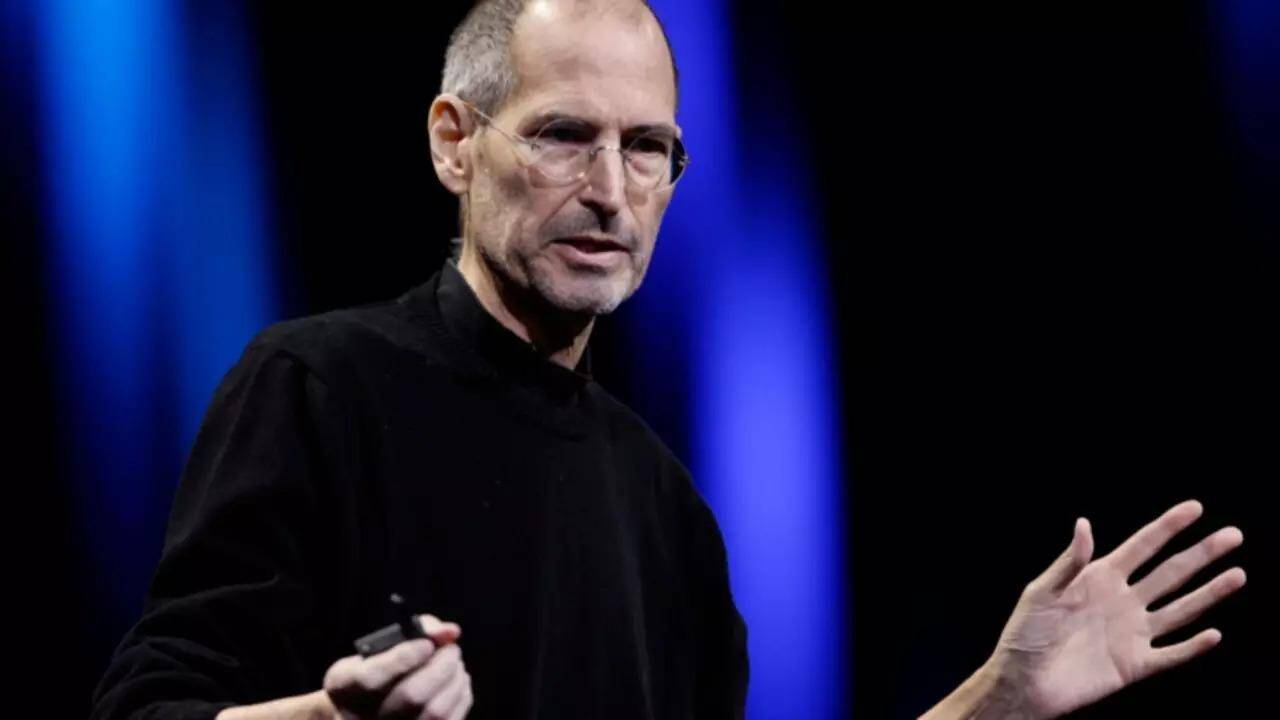
Steve Jobs stood before a crowd of Stanford graduates in June 2005 and delivered what would become one of the most culturally recycled soundbites of the modern era. Death is very likely the single best invention of life, he told them. It clears out the old to make way for the new.
Decades later, that single phrase has been co-opted, sanitized, and printed on motivational posters. It is treated as profound wisdom by people who have never had to face a terminal diagnosis while holding a quarterly earnings report.
Strip away the poetic cadence of a Silicon Valley commencement address, and a much colder reality emerges. Jobs was not sharing a timeless existential truth. He was rationalizing an inevitable biological collapse using the exact same utilitarian logic he applied to product lifecycles.
Every company must die so the next one can be born. Every product must be deprecated so the consumer can buy its successor. This corporate philosophy treats human mortality as an efficiency metric.
When a visionary leader weaponizes their own impending expiration to justify creative destruction, the public eats it up. We love a clean narrative where tragedy serves a functional purpose.
The trouble starts when we confuse corporate optimization with human philosophy.
The Engineering of Obsolescence
To understand why Jobs framed mortality as an invention, you have to look at how Apple operated under his watch. The core engine of Cupertino was planned obsolescence disguised as innovation.
Products were deliberately engineered with finite lifespans. Batteries were glued shut. Ports were abandoned. Software updates were calibrated to slow down older hardware just enough to trigger a replacement cycle.
Jobs did not just apply this to iPhones and Macintoshes. He applied it to people.
In his worldview, employees who could no longer ship revolutionary products were legacy hardware. They were bugs in the operating system of hyper-growth.
When a executive or engineer burned out, they were quietly pushed aside. The system absorbed the shock, recycled the remaining talent, and booted up the next iteration.
This is why calling death an invention makes sense within a strictly capitalist framework. In a market economy, the cessation of life or business is simply market clearance.
Unsold inventory must be written off. Defective units must be recalled.
Jobs viewed biological death through the lens of inventory management. If old models do not clear the shelves, there is no physical or economic space for the new ones.
Yet, humans are not inventory. We do not depreciate on a straight-line schedule over five years.
The Stanford Speech as a Distraction
History is written by the survivors, or in this case, by the master marketers who managed to turn their own mortality into a brand asset.
When Jobs gave that speech, he was already battling the neuroendocrine tumor that would eventually kill him. He knew the clock was ticking.
Instead of hiding the diagnosis, he transformed it into a marketing campaign for his own legacy. He positioned himself not as a dying man fighting a losing battle against biology, but as a prophet who had transcended earthly concerns.
This was a brilliant PR maneuver. It diverted attention away from the darker operational realities of Apple during his second tenure.
During those exact years, Apple was facing intense scrutiny over labor practices in its overseas supply chains. Workers in Shenzhen were collapsing under grueling hours to assemble the very devices Jobs would unveil with a triumphant grin.
By framing life and death as a grand, philosophical cycle of innovation, Jobs elevated corporate survival above human cost. If death is just life's best invention, then preventable industrial accidents, supply chain exploitation, and corporate burnout are merely unfortunate externalities of the creative process.
We forgive the cruelty because the machinery produces sleek rectangles of glass and aluminum.
The Cult of the Disposable Worker
Silicon Valley internalized the Jobs doctrine with terrifying precision. Today, the tech industry operates on the assumption that employees are temporary fuel for a perpetual motion machine.
Burnout is not treated as a systemic failure. It is treated as proof that the employee was not innovative enough to survive the cycle.
Look at the waves of mass layoffs that sweep through major tech conglomerates every few quarters. Executives stand on stages, sometimes channeling Jobsian cadence, to explain that these cuts are necessary to "clear out the old" and refocus on agility.
They use the language of biological renewal to mask the harsh reality of spreadsheet economics.
The worker is told that losing their livelihood is an opportunity for personal reinvention. They are fed the same line Jobs gave Stanford: the end of the old way is just the birth of the new.
Except there is a vast difference between a billionaire CEO choosing how to frame his own mortality and a middle-aged engineer being cast adrift in a volatile labor market with a mortgage to pay and a family to feed.
The conflation is obscene. Yet it persists because it serves the interests of capital accumulation.
Rethinking the Legacy
We need to stop romanticizing how corporate titans talk about dying.
Steve Jobs was a genius, a tyrant, a visionary, and a master manipulator. He built tools that changed how humanity communicates, but he also left behind a culture that devalues human endurance in the pursuit of infinite scale.
Death is not an invention. It is a full stop.
It is the irreversible cessation of consciousness, experience, and potential. Treating it as a clever feature in a cosmic product roadmap diminishes the actual grief of those left behind and excuses the systemic exploitation of those whose lives are chewed up by the gears of industry.
The next time someone quotes that Stanford speech as proof of deep wisdom, remember what it was actually doing. It was a dying man selling the illusion that everything, even human extinction, is just another product launch.
We do not need more romanticized views of our own disposability. We need to build systems that value human life long before the warranty expires


