.jpg?width=1200&auto=webp&trim=1%2C0%2C1%2C0)
The sea does not care about treaties. It does not care about the stroke of a pen in air-conditioned capitals, or the heavy rumble of armored limousines moving through the dust of Muscat. The water here is a narrow throat, a sun-hammered trench where the world's ancient engine draws its breath.
Imagine standing on the deck of a container ship sliding silently through the Strait of Hormuz at dawn. The air is thick enough to chew. The horizon shimmers with a blinding, white-hot glare that flattens the distinction between sea and sky. To your left, the jagged, copper-colored mountains of Oman rise like sleeping dragons. To your right, the flat, industrial sprawl of the Iranian coastline hums with quiet, watchful tension. Every mile of this narrow channel is a choke point, a digital and physical needle through which a staggering fraction of the globe's petroleum must pass to keep modern civilization from seizing up in the cold.
People talk about geopolitics as if it were a game of chess played by polite men in tailored suits. It is not. It is a knife fight in a dark closet, where the blade is held by leaders whose rhetoric can spike the price of a tank of gas in Peoria or plunge a cargo vessel into a sudden, terrifying firefight.
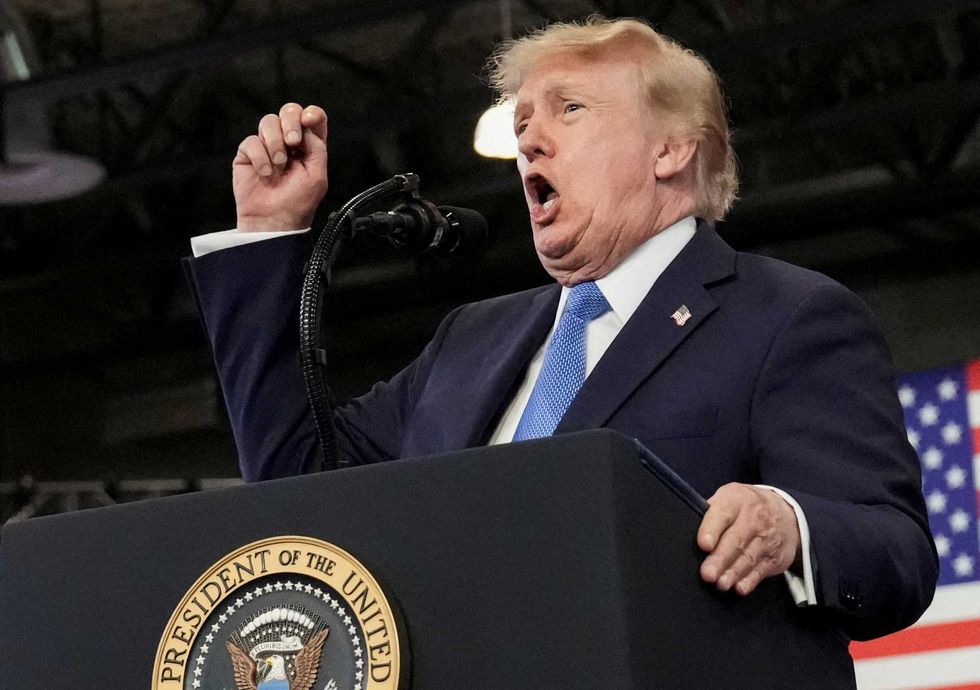
Recently, the political vocabulary took another violent, jarring leap. A familiar voice, loud and unfiltered, echoed across the global airwaves with a threat directed squarely at Oman—a nation historically known for quiet diplomacy, a soft-spoken mediator in a region of roaring fires. The declaration was blunt, crude, and dripping with casual menace: a promise to bomb an ally over the control and security of these vital waters.
Why Oman? Why now?
To understand the friction, you have to look at the map not as a graphic designer, but as a sailor. The Strait of Hormuz is barely twenty-one miles wide at its narrowest point. The inbound and outbound shipping lanes are only two miles wide each, separated by a two-mile buffer zone. It is a highway of glass running through a minefield. Oman sits at the southern gate of this maritime bottleneck, sharing control of the passage with Iran. For decades, Muscat has played the role of the patient, neutral whisperer, keeping channels open when everyone else was screaming.
When that quiet stability is threatened by casual ultimatums, the ripple effects are immediate and profound.
Consider what happens next in the control room of a supertanker captain. The satellite phone rings. The shipping company's risk assessment team, sitting safely in a skyscraper in London or Singapore, delivers a grim update. Insurance premiums for traversing the Persian Gulf spike by millions of dollars in a single afternoon. Crew members look at their families on scratchy video calls, wondering if their next voyage will be intercepted by fast-attack boats or shadowed by drones. The cost of a geopolitical insult is paid not by the politicians shouting into microphones, but by the ordinary mariner smelling diesel and salt a thousand miles from home.
We have seen this script before. The language of total destruction is tossed around like confetti. It plays well on television screens, feeding a 24-hour appetite for shock and awe. But beneath the bluster lies a terrifying vulnerability. The global economy is a delicate, interconnected web of thin glass. You do not need to shatter the whole building to cause a catastrophe; you just need to crack the one pane holding up the roof.
The threat to bomb an ally—even rhetorically, even in the heat of a campaign rally or a late-night social media post—fundamentally alters the architecture of trust. Alliances aren't built on concrete alone; they are built on the silent, boring assumption that friends do not threaten to blow up friends because a shipping lane gets crowded. When that assumption breaks, the consequences ripple outward in widening, unpredictable circles.
Diplomacy requires a delicate touch, like defusing a bomb with cold sweat dripping down your nose. Megaphone diplomacy does the exact opposite. It hands a sledgehammer to someone standing in a room full of porcelain.
The sun sets fast in the Gulf. There is no long, lingering twilight. One moment the world is blindingly bright, and the next, the indigo cloak of night drops over the water, pierced only by the navigational lights of passing oil carriers moving like ghost ships through the dark. Beneath those hulls, the oil flows, oblivious to the threats hurled across the waves. But the men and women watching the radar screens know better. They know how thin the ice is. They know that the distance between a harsh word and a smoking ruin is often shorter than anyone dares to admit.