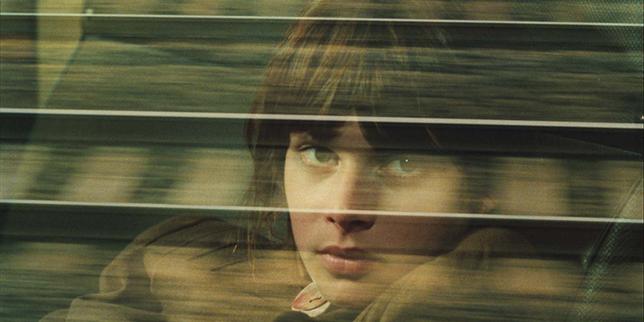
The media loves a neat, retrospective morality tale. When news broke that Nastassja Kinski was pursuing legal action to remove images of her teenage nudity from Wim Wenders’ 1977 film Wrong Move (Falsche Bewegung), the commentary machine immediately defaulted to its factory settings. The narrative was set in stone within hours: an exploited minor reclaiming her agency against the historic excesses of an unchecked male auteur.
It is a clean, comforting framing. It is also entirely wrong about how cinema, copyright, and archival preservation actually work.
To view the Kinski-Wenders dispute purely through the lens of modern retrospective consent is to misunderstand a fundamental legal and artistic reality. The industry consensus views this as a binary battle between survivor rights and artistic freedom. In reality, it represents a catastrophic collision between evolving privacy norms and the irreversible nature of film history. Trying to scrub a masterwork from 1977 to fix a 2026 cultural sensibility does not heal past trauma; it simply breaks the foundational mechanics of archival integrity. We are asking the wrong questions about ownership, consent, and the permanence of art.
The Illusion of Retroactive Erasure
Let's look at the mechanics of what is actually being demanded. Kinski’s legal team isn't just asking for a content warning. They want physical and digital alterations to a film that has existed in the global cultural canon for nearly half a century.
I have spent two decades dealing with the messy realities of film distribution, intellectual property rights, and archival restoration. Here is the brutal truth that entertainment lawyers whisper behind closed doors but never say on a panel: you cannot retroactively retro-fit historic art without triggering an archival domino effect.
When an actor signs a contract, delivers a performance, and a film is legally distributed, that piece of celluloid ceases to be a fluid, living document. It becomes an artifact. If we establish the legal precedent that an artist can revoke consent forty or fifty years later because the cultural zeitgeist changed—or because their personal relationship with their past self evolved—the entire economic framework of independent cinema collapses.
Imagine a scenario where every actor who regrets a scene, a political stance, a terrible accent, or a moment of nudity can sue Criterion, StudioCanal, or the French Cinémathèque to have the negatives digitally altered.
- Film preservation funds will evaporate under the weight of liability insurance.
- Distributors will refuse to handle historic retrospectives.
- The physical history of 20th-century cinema will be rewritten by corporate legal departments trying to avoid lawsuits.
This isn’t a defense of exploitative practices in the 1970s. The conditions under which teenage actors worked in New German Cinema, classical Hollywood, and French New Wave were frequently abhorrent by modern standards. But weaponizing the legal system to mutilate the final product is an exercise in historical revisionism that solves nothing.
Dismantling the Right to Be Forgotten in Art
The core legal argument deployed by proponents of rewriting Wrong Move relies heavily on an aggressive expansion of the "Right to be Forgotten." This principle works well for expunging revenge porn from Google search indices or removing outdated bankruptcy notices from local newspapers. It fails spectacularly when applied to collaborative, copyrighted works of art.
A motion picture is not a personal photograph. It is a massive, multi-layered corporate and artistic entity involving writers, cinematographers, editors, producers, and directors.
[Film Production] ──> [Copyright Assignment] ──> [Global Distribution] ──> [Historical Artifact]
                                                                                  │
                                            (The Right to be Forgotten Fails Here) ┘
When Nastassja Kinski appeared in Wrong Move at age 13, directed by Wenders and written by Peter Handke, she was part of a complex creative ecosystem. The film won multiple German Film Awards. It helped define an entire era of European cinema.
To suggest that one participant—even the subject of the imagery in question—holds the unilateral right to alter the collective output of that entire ecosystem decades later is a radical distortion of intellectual property law.
If a court grants an injunction to cut those scenes from Wrong Move, it does not just affect Wenders. It penalizes the estate of Peter Handke. It alters the work of cinematographer Robby Müller. It compromises the historical record for film scholars who study the specific, uncomfortable alienation that New German Cinema captured. The consensus views this as a localized correction of a past wrong. The reality is an act of cultural vandalism that establishes a terrifying precedent for censorship.
People Also Ask: The Flawed Premise of "Fixing" Old Movies
The public discourse surrounding this case is littered with questions that reveal a total ignorance of film history and legal mechanics. Let’s answer them honestly.
Can’t we just use CGI to clothe actors in old films?
This is the most common tech-utopian solution proposed by digital commentators. "Just use AI or advanced digital tools to add a shirt, like they did for television cuts in the 90s."
This argument misses the entire point of historical preservation. The moment you introduce revisionist digital alterations to a historical master negative, it ceases to be a historical document. It becomes an anachronistic hybrid. If we accept the normalization of digital fig leaves on 1970s cinema, we open the floodgates for studios to alter anything deemed uncomfortable by contemporary marketing standards. It is a short leap from clothing Nastassja Kinski to removing cigarettes from French New Wave films or digitally erasing problematic language from the scripts of the 1930s. History is supposed to be uncomfortable. It is not a product that should be continuously updated like an operating system.
Didn't she lack the capacity to consent as a minor?
Yes. By 2026 legal and ethical standards, a 13-year-old cannot consent to artistic nudity. Her parents or guardians signed the contracts. This is the moral heart of Kinski's argument, and it is a heavy one.
But the hard truth of international law is that you cannot retroactively apply modern statutory definitions of criminal or civil liability to actions that were legally sanctioned under a different jurisdiction and era fifty years ago. In 1974, when the film was shot, the legal frameworks of West Germany permitted these productions under parental consent laws. To overturn a valid historical contract based on a retroactive shift in global ethics creates absolute chaos for international copyright stability. It is an emotional argument masquerading as a viable legal strategy.
The Real Enemy: The Streaming Era's Lack of Context
The real reason this issue has boiled over now isn't because Wrong Move changed. It is because the context of consumption changed.
In 1977, if you wanted to see Wrong Move, you had to go to an art-house theater or a specific retrospective. You understood the context of New German Cinema. You knew the film was a bleak, intellectual deconstruction of Goethe's Wilhelm Meister's Apprenticeship.
Today, that scene can be ripped, isolated, and uploaded to a streaming platform or an adult website completely stripped of its artistic framework. That is the real harm Kinski is fighting.
But notice where the legal crosshairs are aimed. They aren't aimed at the tech platforms hosting isolated, non-consensual clips. They are aimed at the film itself and the director who made it.
The Actual Supply Chain of Harm:
[Original Film Negative] ──> [Tech Platforms/Bad Actors] ──> [Isolated, Algorithmic Exploitation]
         │                                                                   ▲
         └─────────────────── (Targeting this solves nothing) ───────────────┘
Targeting the film negative is a lazy, performative solution. It is much easier to sue an octogenarian director and a boutique distributor than it is to force global tech monopolies to police the algorithmic distribution of isolated clips. By focusing on erasing the film from history, the current legal strategy protects the real exploiters—the platforms thriving on contextual degradation—while punishing the preservation of art.
The Cost of True Consistency
If you want to support the total, unconditional removal of these images based on modern consent ethics, you must be prepared for the cultural scorched-earth policy that follows.
You cannot make an exception for Nastassja Kinski without applying the exact same rule across the board.
- You must prepare to pull Louis Malle’s Pretty Baby from every archive and streaming service on earth.
- You must prepare to censor or destroy significant portions of European avant-garde cinema from the 1960s through the 1980s.
- You must accept that a massive chunk of film history will simply become illegal to screen, preserve, or study.
Are film festivals, universities, and archives prepared to comply with that? Because that is the logical conclusion of this trajectory.
The industry is currently congratulating itself on taking a progressive stand by backing Kinski’s demands. It is a cheap, short-sighted moral victory. They are trading the long-term integrity of global film preservation for a fleeting moment of contemporary validation.
We must find ways to support aging actors who were subjected to the wild, unregulated environments of 20th-century filmmaking. We can mandate contextual framing, fund independent foundations controlled by former child actors, and aggressively prosecute the platforms that distribute decontextualized clips.
But the film negative itself must remain sacred. Once we allow the legal system to chop up classic cinema to appease the moral demands of the present day, we no longer possess a history. We possess a curated corporate myth. Stop trying to fix history by destroying its evidence.