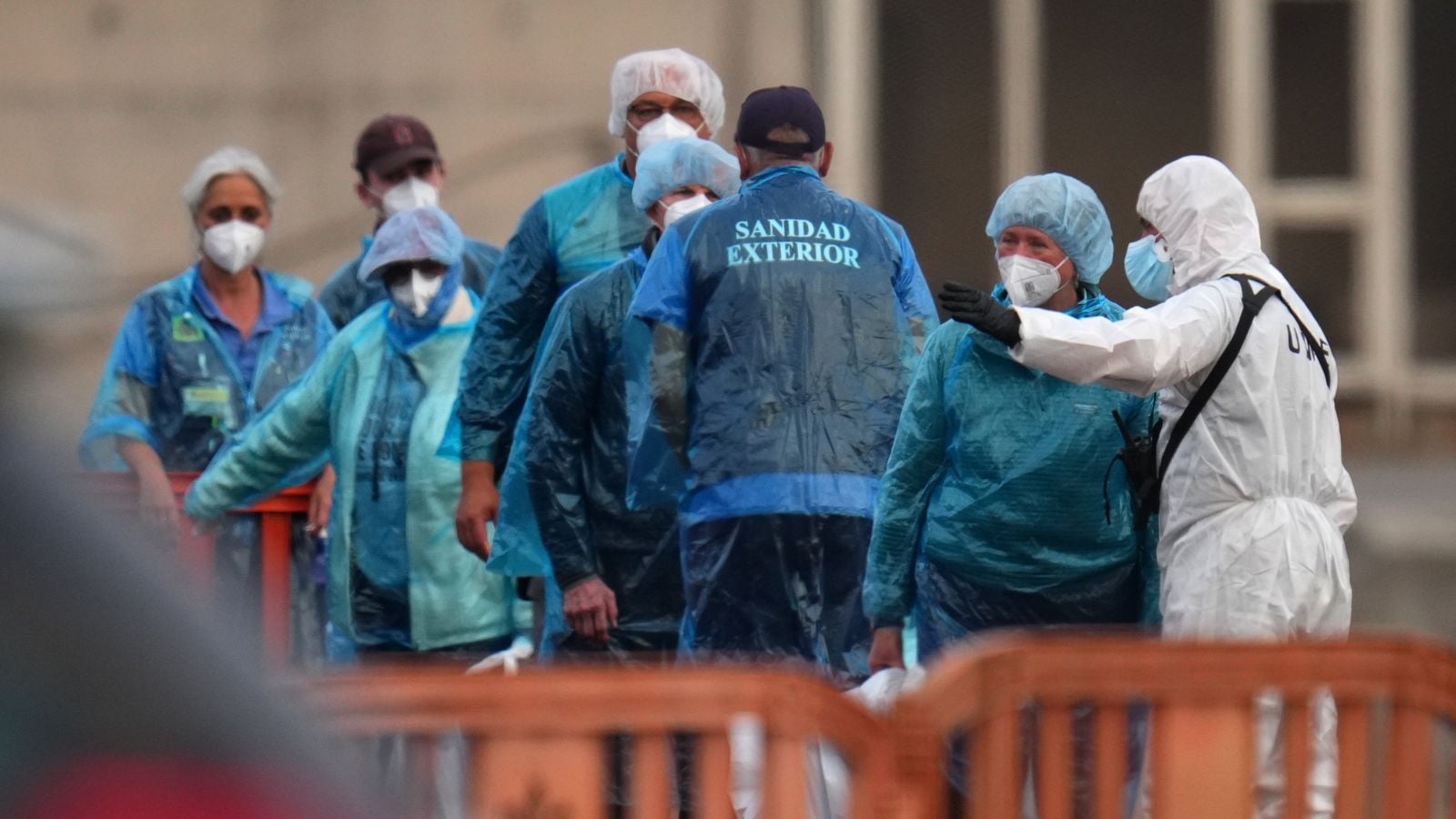
The isolation of a cruise ship physician at the University of Nebraska Medical Center (UNMC) represents more than a single medical case. It is a stark reminder of the fragile biological barrier between international waters and domestic soil. While the physician’s condition was linked to hantavirus—a pathogen typically associated with rodent droppings rather than person-to-person transmission—the decision to utilize a federal Biocontainment Unit signals a heightened state of alert within the global health infrastructure.
The physician was transported from a vessel to the Omaha facility after showing symptoms consistent with a severe viral infection. UNMC’s Global Center for Health Security is one of the few places on earth capable of handling high-consequence pathogens with absolute certainty. The move wasn't just about treating one patient; it was about preventing a logistical and medical nightmare from spilling into the general population.
The Logic of High Level Isolation
When a doctor becomes the patient, the risk assessment changes. On a cruise ship, the medical officer is the first and last line of defense against outbreaks. If that individual is incapacitated by a rare or aggressive virus, the entire vessel becomes a floating incubator. Hantavirus is not usually a candidate for extreme biocontainment because it lacks the respiratory spread seen in influenza or Coronaviridae. However, in the tight, recycled-air environments of a modern cruise liner, medical protocols demand the highest level of caution.
Transporting a potentially infected person from a ship to a land-based hospital is a sequence of high-stakes handoffs. Each transition—from the ship’s infirmary to the transport vehicle, and finally to the specialized ward—offers a window for error. By selecting Nebraska’s Biocontainment Unit, health officials chose to over-prepare rather than risk a containment breach. This facility gained international fame during the Ebola crisis, and its activation for a hantavirus case suggests that the specific strain or the patient’s viral load presented unique challenges that standard hospitals could not manage.
Why Hantavirus on a Ship is a Modern Mystery
Hantavirus Pulmonary Syndrome (HPS) is a severe respiratory disease. You don't catch it from a cough. You catch it by breathing in air contaminated with the virus, which is shed in the urine, droppings, and saliva of infected rodents. This raises the uncomfortable question of how a high-end passenger vessel became a habitat for the specific rodent species capable of carrying the virus.
Ships are industrial machines. They have miles of ducting, crawl spaces, and food storage lockers. If a single deer mouse or cotton rat hitches a ride in a crate of supplies at a port of call, the ship’s internal climate control can distribute aerosolized particles throughout the crew quarters. The physician, who likely visited the ship’s lower decks or storage areas to conduct inspections, became the "sentinel case."
The Vector Problem
Most maritime health scares revolve around Norovirus or Legionnaires' disease. These are predictable. They are managed with bleach and water temperature regulation. Hantavirus is different. It carries a mortality rate of nearly 40 percent. It is a silent killer that mimics the flu until the lungs begin to fill with fluid. For an industry that relies on the perception of total safety and luxury, the presence of a New World hantavirus is a public relations disaster and a biological failure.
The investigation into the ship’s hygiene standards will be grueling. It involves tracing every port of call over the previous 30 days and inspecting the integrity of the vessel’s food supply chain. If the virus was found in the physician’s quarters or the infirmary, it points to a systemic failure in pest control that could affect thousands of passengers.
The Nebraska Standard
The University of Nebraska Medical Center does not accept patients on a whim. The facility uses a specialized airflow system that ensures air only moves from clean areas to contaminated areas, never the reverse. It uses HEPA filtration and rigorous chemical decontamination protocols for every staff member entering the "hot zone."
Negative pressure is the key. By keeping the air pressure in the patient’s room lower than the hallways, any airborne particles are sucked into the filtration system rather than drifting out when a door opens. This is why the physician was flown across the country rather than being treated at the nearest coastal hospital. The level of expertise required to manage a patient in these conditions is rare. It involves specialized nursing teams who train for hundreds of hours to master the art of donning and doffing personal protective equipment (PPE) without touching their own skin.
Economic Ripples of Maritime Infection
The cruise industry is a multibillion-dollar engine that operates on thin margins of error regarding health and safety. A single high-profile isolation case can lead to mass cancellations and a plummeting stock price. But the hidden cost lies in the "grey zone" of maritime law. When a ship is at sea, it is a sovereign entity. When it docks, it is subject to the laws of the port.
This case highlights the tension between international commerce and national security. The physician’s isolation was a coordinated effort between the CDC, the cruise line, and state health departments. It proves that the "bubble" of a cruise ship is an illusion. The moment a biological threat is identified, the ship’s autonomy vanishes, and the heavy machinery of the state takes over.
The Liability Gap
Who pays for a chartered medical flight to Omaha? Who covers the cost of a biocontainment wing that costs tens of thousands of dollars per day to operate? Usually, the cruise line’s insurance bears the brunt, but the legal fallout from passengers who may have been exposed is a different matter. If the investigation reveals that the ship’s management ignored signs of rodent infestation, the class-action lawsuits will be swift.
The industry currently uses a "Health Challenge" model where passengers are screened via questionnaires. This case proves that such measures are useless against zoonotic diseases that incubate for weeks before showing symptoms. The physician may have been asymptomatic for up to 21 days while interacting with hundreds of people.
Redefining Shipboard Medicine
The role of a ship’s doctor is often viewed as a semi-retirement gig for aging GPs or a way for young doctors to see the world. This incident should change that perception. A ship’s doctor is a public health officer in a high-density environment. They must be experts in epidemiology, waste management, and emergency response.
Future ship designs may need to incorporate "quarantine-lite" zones—sections of the ship that can be physically isolated and switched to independent ventilation. Relying on land-based facilities like Nebraska is a luxury that won't be available if a larger outbreak occurs. The medical infrastructure on these vessels is designed for broken bones and heart attacks, not for containing a 40 percent mortality rate pathogen.
The Global Health Security Trap
We are currently seeing a shift in how we handle rare diseases. In the past, a hantavirus patient would have stayed in a local ICU. Today, the world is smaller. A virus in a port in South America can be in a Nebraska hospital bed in 48 hours. This speed is our greatest vulnerability.
The physician in the Nebraska unit is a symbol of a world that is over-connected and under-prepared. While the individual is receiving world-class care, the system that allowed the infection to occur remains largely unchanged. We continue to build larger ships and visit more remote ports, all while relying on a handful of specialized beds in the American Midwest to catch us when we fall.
The physician’s recovery is the immediate goal, but the long-term objective must be a total overhaul of maritime biosecurity. We cannot treat every ship as a vacation paradise if we do not also treat it as a potential laboratory for emerging diseases. The walls of the Nebraska Biocontainment Unit are thick, but they are not a substitute for better standards at sea.
The vessel remains in operation. The passengers continue to dine. Somewhere in the ventilation shafts, the source of the infection may still be lurking, waiting for the next person to breathe in.