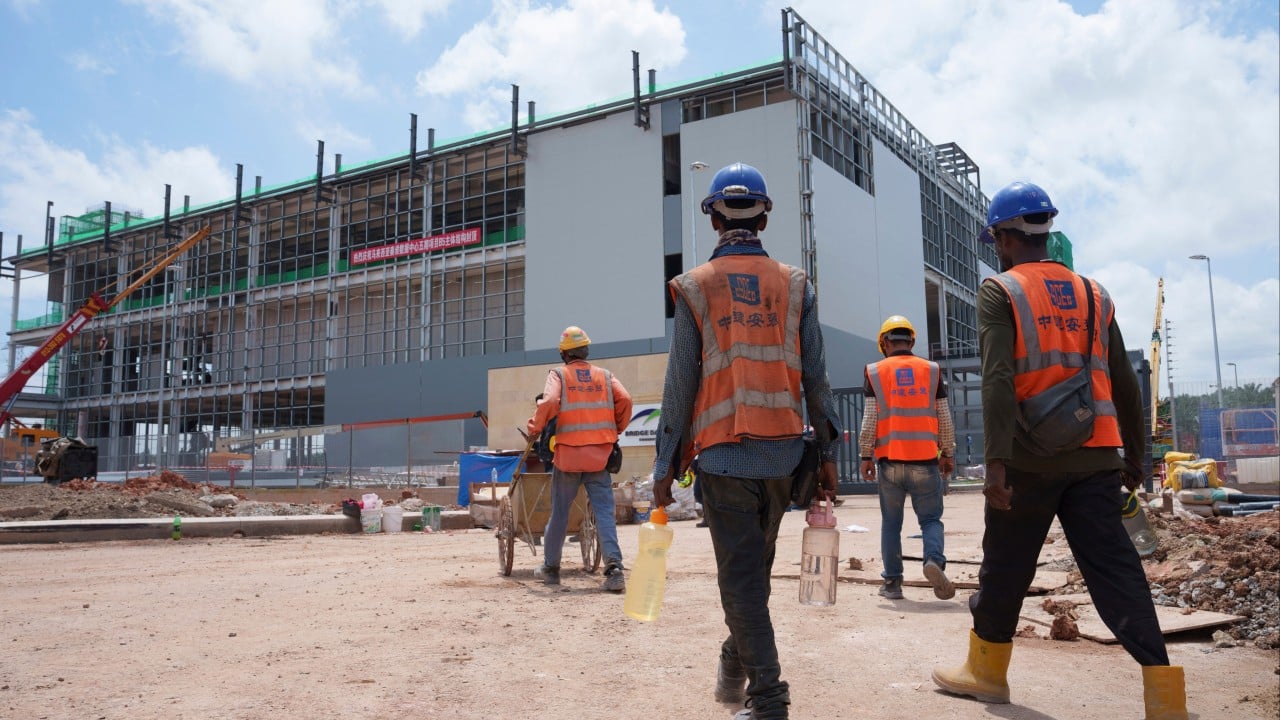
The humidity in Johor sticks to your skin like a wet wool blanket. Step outside for two minutes, and your shirt is soaked. Stand near the new data centers rising from the red earth just north of Singapore, and you hear something else entirely. A relentless, bone-rattling roar.
It is the sound of millions of servers breathing. Millions of silicon brains chewing through calculations, training neural networks, streaming videos of cats and financial spreadsheets across the Pacific, all while generating enough heat to cook an egg on a motherboard.
To cool those servers, those hyper-scale concrete fortresses need water. Millions of gallons of it. Every single day.
Meet Amin. (This is a hypothetical portrait based on engineers managing municipal infrastructure in the region, but his dilemma is entirely real.) Amin sits in a control room in Johor Bahru, staring at a computer monitor that charts reservoir levels. The lines are dropping. They have been dropping for months. When the tech boom arrived, bringing billions of foreign dollars and a skyline bristling with crane towers, everyone cheered. Jobs appeared. Land values spiked. The digital gold rush had finally found the Malay Peninsula.
Then the taps stuttered.
This is the hidden friction of our modern convenience. We treat the cloud as if it lives in the sky, weightless and ethereal. In truth, the cloud is heavy. It weighs tons of steel, copper, and glass. It drinks rivers. And in a country like Malaysia, which has rapidly positioned itself as Southeast Asia's primary digital warehouse, the collision between relentless technological expansion and finite ecological limits has forced a reckoning.
Malaysia did not slam the door.
That is the crucial distinction. When government regulators introduced new rules for data centers—mandating stricter energy efficiency metrics, water usage effectiveness targets, and green building certifications—the panic button was slammed in corporate boardrooms from Silicon Valley to Beijing. Critics whispered that the red tape would choke the golden goose. They argued that strict mandates would send billions of dollars fleeing to friendlier, laxer jurisdictions.
They misread the situation entirely.
Consider what happens when you build a massive server farm without guardrails. It drinks cheap electricity. It burns fossil fuels at local power plants. It sips potable water that local communities desperately need for rice paddies and morning showers. It takes, and takes, and takes, leaving behind high-end jobs for a lucky few and a stressed utility grid for everyone else.
The new regulatory framework changes the equation. It says: You are welcome here. Your servers can hum. Your profits can multiply. But you must pay the actual cost of your existence.
Efficiency is no longer optional. Energy-hungry architectures are being forced to adopt liquid cooling, closed-loop water systems, and direct integration with renewable energy grids. Operators who planned to drop a standard cookie-cutter warehouse full of servers onto a paddy field now have to think about solar integration and waste-heat capture.
It is messy. It is expensive. It is entirely necessary.
History shows us a clear pattern. Every industrial revolution begins as a smash-and-grab. The steam engine fouled the Thames. The early automotive age choked cities in smog. We always build first and apologize later. But digital infrastructure is scaling at a velocity that previous generations could not fathom. A single artificial intelligence training cluster consumes as much power as a small town. Multiply that by dozens of facilities stretching across Johor, Cyberjaya, and Penang, and you realize that an unregulated digital boom would literally drain the grid dry.
Amin looks back at his monitor. The red line of the reservoir level stabilizes slightly, not because the servers stopped working, but because the new efficiency standards forced developers to rethink their intake valves. They had to innovate. When you make resource consumption expensive, engineers suddenly figure out how to do more with less.
The irony of the digital age is that it requires the most physical, grounded sacrifices. To keep our screens glowing and our models learning, real rivers flow through real turbines, and real communities bear the environmental footprint.
Malaysia’s approach offers a sobering blueprint for the rest of the world. Growth without boundaries is just a slow-motion catastrophe. By setting the bar high, the nation is filtering out the reckless speculators while welcoming the builders who care enough to engineer a sustainable footprint.
The servers keep roaring in the humid night. The red earth continues to give way to concrete and glass. But somewhere in the hum, a new balance is being struck—proving that the future does not have to eat the earth to keep its lights on.