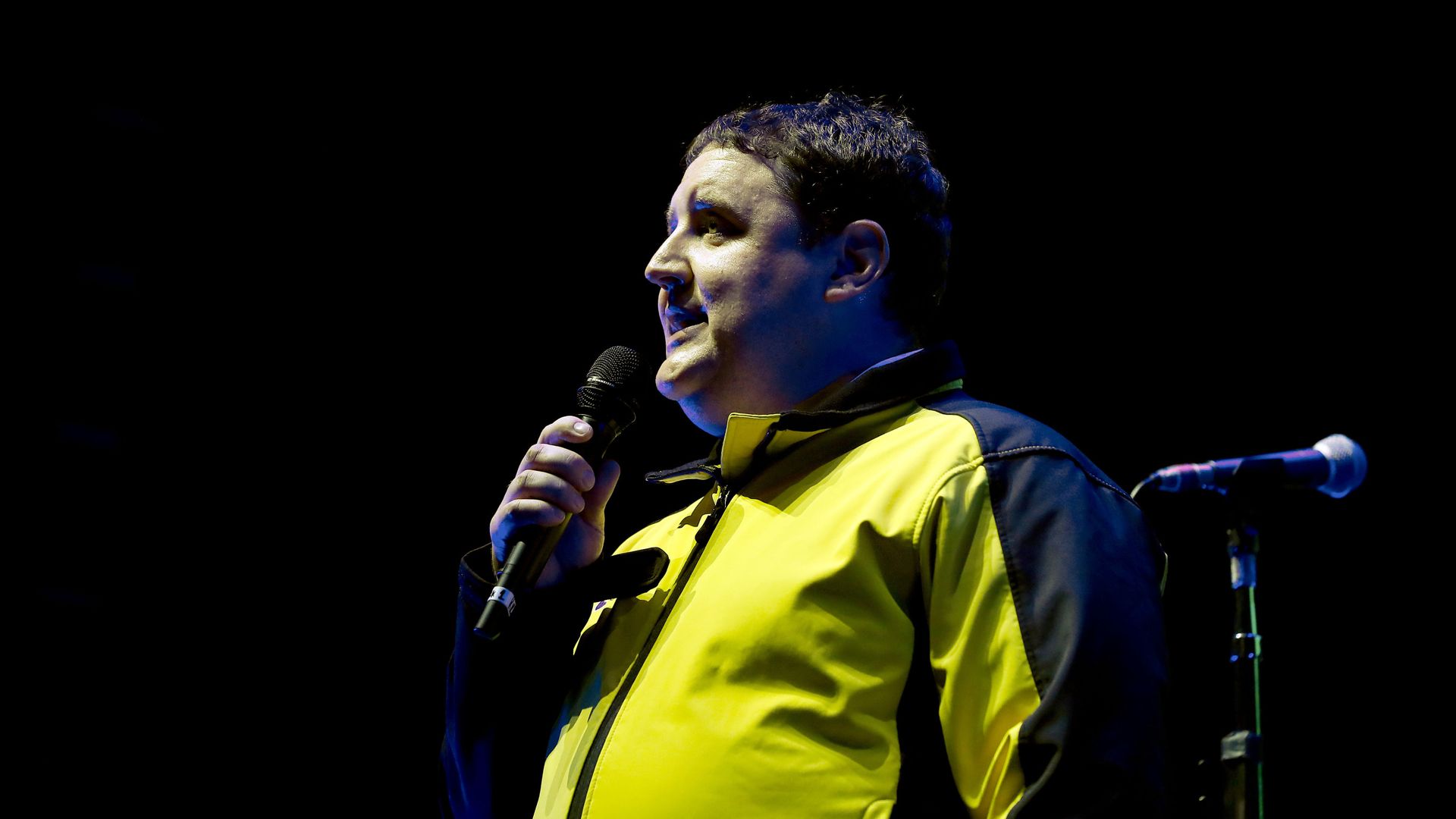
The air inside the AO Arena carried that specific, electric hum of twelve thousand people who had spent years waiting for a single moment. It is a scent made of cheap beer, expensive perfume, and the collective warmth of bodies packed tight into rows of plastic seating. Peter Kay was on stage. For a city like Manchester, that isn’t just a comedy gig. It is a homecoming. It is a secular mass led by a man who turned the mundane act of dipping a biscuit into tea into a national heritage site.
Then, the lights changed. Not the theatrical shift of a punchline or a planned blackout, but a sudden, jarring correction of reality.
Kay was mid-flow, weaving a tale that felt like a conversation over a garden fence, when the invisible machinery of public safety ground into gear. There was no slow fade. There was no graceful exit. Security personnel appeared like ghosts at the edge of the spotlight. In an instant, the man who had spent decades perfecting the art of the slow-burn joke was being ushered—bundled, as the witnesses would later describe it—off the stage.
The laughter didn't stop all at once. It curdled. It turned into that low, nervous murmur that happens when a crowd realizes the script has been shredded in front of them.
The Weight of the Unspoken
Everyone in that room carries a ghost. In Manchester, a large-scale evacuation of an arena isn't just a logistical headache or a ruined Friday night. It is a psychological trigger. When the overhead speakers crackled to life with a pre-recorded instruction to leave the building immediately, the collective memory of May 2017 didn't just flicker; it roared.
Imagine being the person in Row K. You’ve paid a week’s wages for these tickets. You’ve arranged the childcare. You’ve laughed until your ribs ached for forty minutes. Suddenly, the most famous man in Britain is gone, and a disembodied voice is telling you to find the nearest exit. You don't think about your lost money. You think about the exit. You think about the person sitting next to you. You feel the sudden, sharp chill of a reality where the walls are no longer solid.
The staff at the arena are trained for this. They move with a rehearsed, flat-eyed efficiency designed to prevent the one thing more dangerous than a fire or a threat: a stampede. Panic is a liquid. It flows into every gap and fills every lungs. To keep twelve thousand people moving in an orderly fashion, you have to be firm. You have to be fast.
But for the fans, the "bundling" of Peter Kay felt like a violation of the evening's contract. The performer is supposed to be the captain of the ship. When the captain is removed first, the passengers feel the tilt of the deck.
The False Alarm and the Real Cost
The culprit was a fire alarm. A technical glitch. A sensor in a backroom or a kitchen tripped a wire, and the system did exactly what it was designed to do. It prioritized life over art. In the cold light of the following morning, the "all-clear" felt like an anticlimax. People stood on the pavement outside, shivering in their coats, looking back at the darkened concrete hull of the stadium.
We live in an age of hyper-vigilance. The "bundle" was a symptom of a world that no longer takes "it's probably nothing" as a valid risk assessment. The physical act of removing Kay from the stage was a visceral demonstration of the stakes involved in modern entertainment.
Consider the logistical nightmare of a reset. A comedy show is a delicate clockwork mechanism of timing. You cannot simply restart the joke from where you left off. The tension is gone. The intimacy is shattered. When the audience was eventually allowed back in, the atmosphere had shifted from joy to a strange, relieved exhaustion. Kay, ever the professional, returned to the stage to try and stitch the evening back together.
"I’m sorry," he told the crowd. "I was just as confused as you were."
That vulnerability is what saved the night. He didn't pretend it was a prank. He didn't complain about the interruption. He acknowledged the absurdity of it. By admitting his own confusion, he re-established the bond that the alarm had broken. He wasn't a superstar being protected by a phalanx of guards anymore; he was just another guy who’d had his night ruined by a faulty sensor.
The Invisible Safety Net
We often complain about the bureaucracy of modern life. We moan about the bag searches, the metal detectors, and the "unnecessary" drills. Yet, the sight of Peter Kay being hurried into the wings is a reminder that there is a silent, massive infrastructure dedicated entirely to the preservation of our boring, ordinary lives.
The security team didn't check to see if the joke was finished. They didn't wait for a convenient break in the set. They acted on a protocol that views a human being as a unit of risk. It is a cold way to look at a comedian, but it is the reason why everyone went home that night.
There is a strange comfort in the ruthlessness of that evacuation. It suggests that even in our most frivolous moments—screaming at a punchline or singing along to a finale—somebody is watching the dials. Somebody is ready to end the fun to ensure there is a tomorrow.
The story of the night isn't really about a fire alarm. It's about the fragility of our shared spaces. We gather in these giant cathedrals of noise because we want to feel connected. We want to be part of something larger than ourselves. But being part of a crowd means surrendering a piece of your autonomy to the system.
When the lights came back up for the second time, the laughter was louder. It was more defiant. It was the sound of twelve thousand people deciding that they weren't going to let a technical error be the final word.
Peter Kay stood under the heat of the lamps, a little disheveled, a little out of breath, and began again. He chose a different story. He found a new rhythm. Outside, the Manchester rain began to fall on the empty streets, but inside, the clock had been wound back. The world was safe, the doors were locked, and for a few more hours, the only thing that mattered was the next line.
He didn't need to be bundled anymore. He just needed to be heard.
The arena stayed standing. The fans stayed in their seats. The joke, eventually, landed.