The steel underfoot never truly stays still. On a modern container ship, the vibrations of the massive two-stroke diesel engines hum through the soles of your boots, a constant, reassuring reminder of forward momentum. For merchant mariners, that low rumble is the sound of routine. It means the schedule is being kept. It means the coffee in the mess room stays warm.
But out in the southern expanse of the Red Sea, that routine has evaporated.
Picture a container vessel—let us call her the Mariner’s Grace, a hypothetical proxy for the dozens of real hulls currently navigating these waters. Her crew is a microcosm of the global economy: Filipino deckhands, Eastern European engineers, a British captain. They are not combatants. They do not wear uniforms. Their cargo isn't munitions; it is sneakers, washing machines, and the components required to keep automotive assembly lines moving in Europe.
Suddenly, the bridge radar blips. A fast-approaching silhouette cuts through the swells. Then comes the flash.
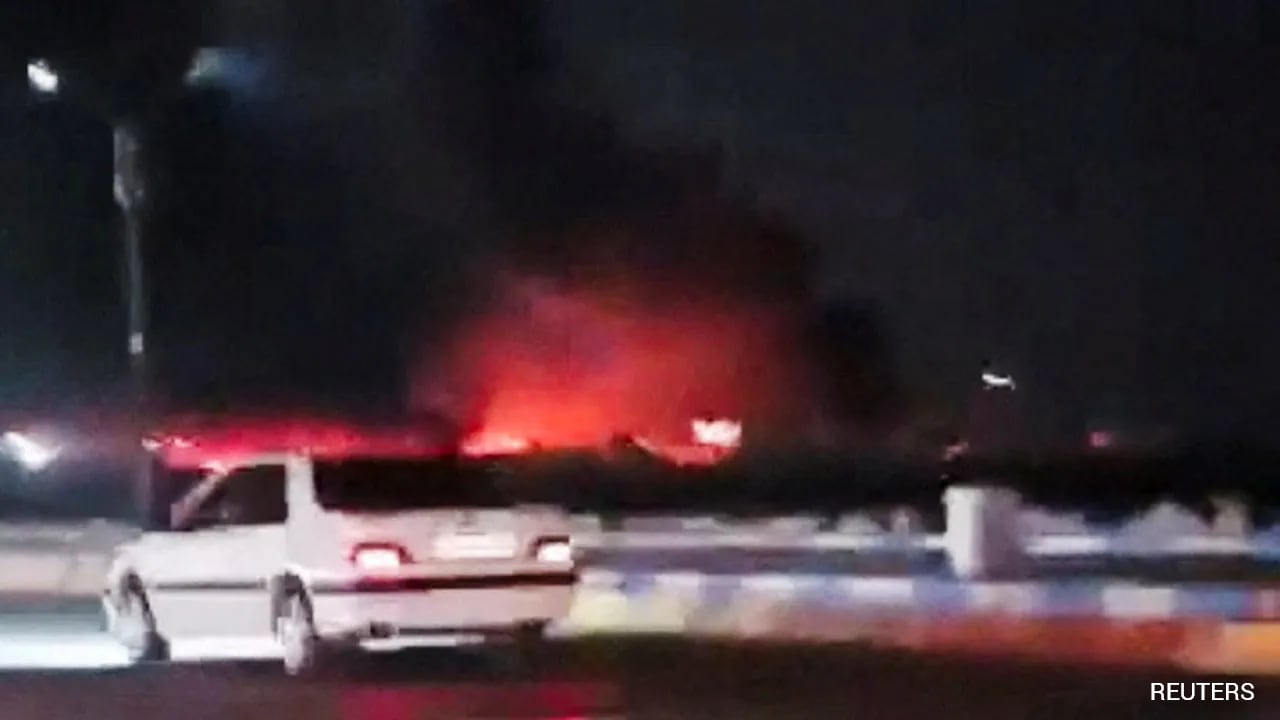
When an anti-ship ballistic missile or an explosive drone detonates near a merchant hull, the sound is unlike anything experienced on land. It is a metallic, tearing shriek that reverberates through the hollow steel caverns of the ship. In that instant, the global supply chain ceases to be an abstract concept debated by economists on cable news. It becomes a terrifying reality of fire, smoke, and water.
This is the invisible friction behind the recent headlines. When the United States military conducts fresh airstrikes against Houthi targets in Yemen, citing attacks on international shipping lanes, the official press releases speak of deterrence, degraded capabilities, and strategic stability.
They rarely mention the saltwater stinging the eyes of a terrified twenty-something sailor holding a fire hose on a burning deck.
The Choke Point
To understand why American Tomahawk missiles and F/A-18 Super Hornets are dropping ordnance onto remote launch sites in Yemen, you have to look at a map through the eyes of a merchant captain.
The Bab el-Mandeb strait is a narrow geographic bottleneck. The name translates from Arabic as the "Gate of Tears"—a moniker earned centuries ago from its treacherous navigation, but one that feels grimly appropriate today. It is a mere eighteen miles wide at its narrowest point. Through this slender corridor passes roughly fifteen percent of all global maritime trade, including a massive chunk of the energy supplies destined for Europe and Asia.
It is an economic artery. Cut it, and the world bleeds.
For months, Houthi forces backed by Iranian intelligence and weaponry have used this bottleneck as a shooting gallery. They claim their actions are a protest against military actions in Gaza, targeting ships with links to Israel. The reality on the water, however, is far more chaotic. Missiles do not read manifests. Drones do not check the ownership history of a corporate shell company registered in Panama. Hulls flying flags from nations with zero involvement in Middle Eastern geopolitics have found themselves in the crosshairs.
The calculus for shipping companies shifted from financial risk to human survival.
Consider the alternative. When a shipping line decides the Red Sea is too dangerous, they do not just pause operations. They reroute. Instead of cutting through the Suez Canal, massive vessels are forced to turn south, hugging the coast of Africa and rounding the Cape of Good Hope.
This detour adds roughly ten to fourteen days to the journey. It burns thousands of tons of additional fuel. It delays shipments of critical medical supplies, electronics, and food. The cost of a single shipping container skyrockets, a financial shockwave that travels from the docks of Rotterdam all the way to the price tags at your local grocery store.
The world runs on the assumption that the oceans are a shared, open common. When that assumption breaks down, everything breaks down.
The Invisible Stakes of a Cold War Made Hot
The American response has been a series of calibrated, violent interventions. Precision-guided munitions find their targets: radar installations, drone assembly warehouses, coastal missile sites hidden in the rugged terrain of Yemen. The Pentagon lists the statistics with clinical precision. So many radars destroyed. So many launch pads neutralized.
But tactical success can mask strategic quicksand.
The tension inherent in these strikes lies in the asymmetrical nature of modern warfare. A Tomahawk cruise missile costs millions of dollars. The drone it is designed to destroy, or the launch site it flattens, can often be assembled for the price of a used sedan using off-the-shelf commercial technology and smuggled components. It is an expensive game of whack-a-mole played on a global stage.
Behind the immediate conflict is a deeper, more shadow-drenched chess match. This is not just a localized insurgency throwing rocks at passing ships. The technology turning the Red Sea into a no-go zone—the anti-ship ballistic missiles, the long-range loitering munitions—requires sophisticated targeting data. It requires maritime surveillance. It requires an infrastructure that traces its lineage directly back to Tehran.
By striking the launch sites, the United States is attempting to draw a line in the sand, or rather, in the water. The message is intended for the regional backers of these proxy forces: freedom of navigation is a non-negotiable pillar of the modern world order. If the international community allows a non-state actor to dictate who can sail through an international strait, the entire framework of global maritime law dissolves.
Yet, for the crews on the water, the geopolitical messaging matters far less than the immediate horizon.
Imagine standing watch at 3:00 AM. The night is pitch black, the stars obscured by dust blowing off the desert. You are scanning the water for small skiffs, checking the sky for the telltale drone signature that looks like a slow-moving star until it begins its steep, final dive. You know that a few hundred miles away, fighter jets are launching off the deck of an aircraft carrier to suppress the threat. But right now, in the dark, you are acutely aware of how thin that steel hull actually is.
The Ripple Effect on Land
It is easy to compartmentalize these strikes as distant events, flashpoints in a volatile region that we can choose to ignore. But the oceans connect us in ways that are hard to comprehend until the link is severed.
The modern economy operates on a philosophy known as "just-in-time" manufacturing. Companies no longer maintain massive warehouses filled with months of spare parts. Instead, the supply chain is the warehouse. Components are timed to arrive at a factory precisely when they are needed on the assembly line. A delay of two weeks means factories in Germany or Ohio idle. It means workers are sent home.
The strikes by the US and its allies are an attempt to prevent this systemic cardiac arrest. They are trying to keep the blood pumping through the global economy.
But the friction is growing. Insurance premiums for transiting the Red Sea have soared to prohibitive levels. Some crews are demanding double pay just to enter the zone, while others are exercising their legal right to refuse transit through the area entirely. You cannot blame them. No one signs up to move commercial cargo expecting to play a role in a missile defense simulation.
The situation remains fluid, dangerous, and profoundly uncertain. The strikes may degrade the capabilities of the forces on the coast, but they have not yet extinguished the intent. The drones keep flying, the missiles keep launching, and the U.S. Navy keeps patrolling, its gray hulls standing between the merchant ships and the fire from the shore.
The next time you look at a simple product on a store shelf, consider the journey it took to get there. Think of the thousands of miles of open ocean, the quiet professionalism of the mariners who navigate the dark waters, and the fragile, violent balance of power required to keep those waters open. The true cost of our interconnected world is not measured in currency alone. It is measured in the sleepless nights of crews watching the horizon, waiting to see if the night sky will stay dark.