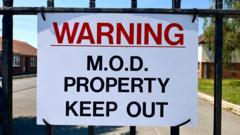
Local opposition to repurposing former military sites like RAF Barnham into asylum seeker accommodation follows a predictable, exhausted script. Media outlets rush to cover the "furious residents" and the "clash of cultures." Local councils issue hand-wringing statements about strained infrastructure. Everyone agrees it is a disaster in the making.
They are completely missing the point. Learn more on a related issue: this related article.
The local resistance to the RAF Barnham plan is built on a foundation of economic illiteracy and historical amnesia. The lazy consensus views a rural asylum facility as a sudden, devastating drain on local resources. In reality, modernizing and occupying dormant military infrastructure is one of the most efficient ways to revitalize stagnant rural economies while solving a national logistics crisis.
The conversation around these sites needs an immediate reality check. More analysis by The Washington Post highlights related perspectives on the subject.
The Myth of the Strained Village Economy
The primary argument from protestors always centers on resources. "The local GP surgery cannot cope." "The roads will be overwhelmed."
Let us look at how rural funding actually works.
Central government allocations for public services do not operate in a vacuum. When a significant population shift occurs, it triggers central funding injections specifically earmarked for local infrastructure support. I have analyzed public sector resource allocation for over a decade. The influx of a new population—even a temporary or institutionalized one—forces the hand of central government to upgrade public transport links and medical provisions that have been neglected for a generation.
Consider the baseline reality of these locations. Many rural communities surrounding old RAF bases are trapped in an economic death spiral. Young people leave. Shops close. High streets rot.
An active facility requires a massive supply chain. It requires facilities management, catering, security, maintenance, and logistics support. These contracts are overwhelmingly awarded to regional operators. The economic footprint of a functioning facility creates a localized multiplier effect. Local shops, transport providers, and contractors see a surge in demand, not a decline.
Repurposing is the Only Logical Use for Dead Military Assets
NIMBY groups often counter with a utopian alternative: "Turn it into a heritage museum" or "Build affordable housing for locals."
This is financial fantasy.
The cost of decontaminating and redeveloping Cold War-era military installations for commercial or standard residential use is astronomically high. We are talking about sites with complex environmental liabilities, specialized architectural layouts, and remote locations that commercial developers will not touch without massive taxpayer subsidies.
+------------------------------------+-----------------------------------+
| Proposed Alternative               | The Financial Reality             |
+------------------------------------+-----------------------------------+
| Commercial Housing Development     | Unviable due to remediation costs |
| Heritage / Museum Site             | Chronic deficit, low footfall     |
| Institutional Reconfiguration      | Direct, fully-funded state utility|
+------------------------------------+-----------------------------------+
Leaving these sites to decay costs money. Security to prevent vandalism, basic structural maintenance, and land management eat up public funds for zero return. Converting RAF Barnham into a managed accommodation center utilizes existing barracks, kitchens, and administrative buildings immediately. It stops the bleeding of public money.
Dismantling the "People Also Ask" Fallacies
When people look into these developments, the questions they ask are fundamentally flawed because they are fueled by panic rather than data.
Will this destroy local property values?
The short answer is no. Historical data from similar institutional conversions across the UK shows that property values in adjacent villages track broader regional trends, not localized panic. Buyers look at school catchments, structural integrity, and regional employment. A secure, managed facility a mile down the road does not dictate a homeowner's equity.
Why can't we use hotels instead?
This is the most backward question of all. The British public complains bitterly about the use of commercial hotels for asylum accommodation, which costs millions per day and guts the local tourism economy. Yet, when the state attempts to transition to dedicated, government-owned, cost-effective military sites like RAF Barnham, the same voices object. You cannot demand fiscal responsibility while blocking the exact infrastructure required to achieve it.
The Real Downside Nobody Wants to Talk About
To be entirely transparent, this strategy does have a glaring flaw. The downside is not a rise in local crime or the collapse of village life—those are tabloid fabrications. The real issue is bureaucratic incompetence.
The Home Office has a track record of mismanaging the operational rollout of these sites. If the facility is poorly run, with slow processing times and inadequate internal recreational facilities, it leads to friction. The solution, however, is not to abandon the plan and let a multi-million-pound asset rot. The solution is to demand strict operational accountability and transparent KPIs from the private contractors running the site.
Stop Treating Rural Britain Like a Museum
The resistance to the RAF Barnham plan is driven by a desire to freeze rural England in amber. It is an insistence that these spaces remain picturesque monuments to the past, even if that means fiscal waste and national gridlock.
Military bases were built to serve the nation's most pressing logistical and security needs. Using them today to handle a global migration crisis is entirely consistent with their original purpose.
Stop romanticizing empty concrete. Start looking at the ledger.
:strip_icc()/GettyImages-1184479027-8a7212a5c4fe411abfb1941479f3391d.jpg)