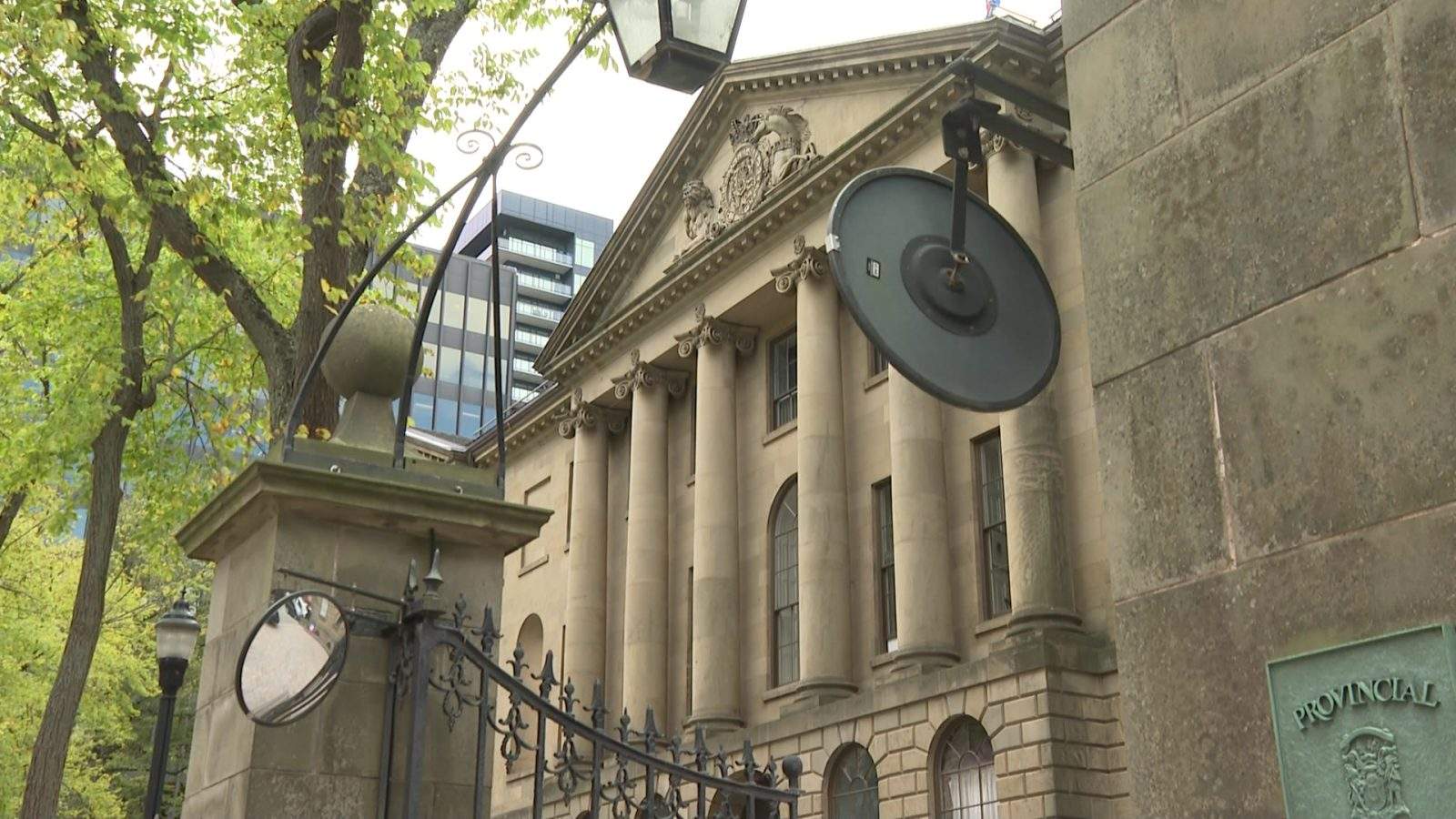
The delivery of thirty-six registered letters to citizens across Nova Scotia marks a dark shift in how public dissent is managed at Province House. Nearly six months after a chaotic spring legislative session where a provincial budget vote was derailed by singing demonstrators, the Speaker of the House has officially slapped temporary bans ranging from three months to a full year on three dozen individuals. Among them are prominent community advocates, policy directors, and environmental leaders. Official statements frame these bans as routine administrative housekeeping designed to maintain institutional order. Reality points to a much harsher truth. When the people's house closes its doors to the very public it claims to represent, democracy stops being a living practice and transforms into an exclusionary performance.
The Anatomy Of A Legislative Breakdown
To understand why thirty-six people are currently barred from entering Province House, look back to the late-night hours of March 24. The provincial budget—laden with controversial cuts that sparked widespread fury among disability communities, environmental groups, and social advocates—was heading toward a final reading. Public gallery occupants began to sing, filling the chamber with coordinated sound that effectively paralyzed the proceedings and forced an abrupt adjournment. Discover more on a related topic: this related article.
Things escalated outside the chamber walls. Vehicles carrying Members of the Legislative Assembly were temporarily blocked from exiting the grounds, tempers flared, and the physical security of the historic building was called into question. Speaker Danielle Barkhouse subsequently closed the legislature to the public for a week and initiated a thorough review of security footage, access databases, and open-source media.
Months later, that investigation bore administrative fruit. Chief Clerk James Charlton outlined a tiered penalty system: More analysis by The New York Times delves into comparable perspectives on this issue.
- Three months for individuals who remained in the gallery after an evacuation order was issued.
- Six months for active participants in the vocal demonstration.
- Twelve months for those accused of crossing the line into verbal abuse against elected officials.
On paper, this sounds structured and measured. Officials even pointed out that jurisdictions like Ontario routinely impose lifetime gallery bans for similar disruptions, making Nova Scotia's temporary exclusions look lenient by comparison.
This comparison falls apart under scrutiny.
Parliamentary Privilege Versus Public Access
The legal defense for these bans rests squarely on parliamentary privilege. This ancient constitutional doctrine grants legislative bodies the autonomous authority to regulate their own internal affairs, proceedings, and security without outside interference. Courts have long maintained that standard constitutional checks, such as portions of the Charter of Rights and Freedoms, do not easily pierce the walls of legislative privilege when a Speaker decides how to run their house.
Privilege was never meant to insulate politicians from accountability. It exists to protect the independent functioning of the legislature against executive or judicial overreach, not to give a Speaker the power to curate who gets to watch their elected representatives vote on public funding.
Consider the case of Christine Saulnier, the Nova Scotia director for the Canadian Centre for Policy Alternatives. Saulnier received a six-month ban after security identified her humming along with the gallery protest before she left the building voluntarily. Nina Newington, president of Save Our Old Forests, received a similar prohibition. Neither individual was accused of violence, property destruction, or threatening behavior inside the chamber. They were present, they voiced discontent, and they bore witness to a government pushing through a contested fiscal plan.
By targeting policy analysts and community organizers rather than focusing strictly on property obstruction or genuine safety threats, the legislature has crossed a dangerous line. The message sent to the electorate is clear. Dissent is acceptable only when it is quiet, orderly, and entirely ignorable.
The Chilling Effect On Civic Participation
Legislatures are not corporate boardrooms or private clubs. They are public trust spaces funded by taxpayers. When citizens are locked out for months at a time—just as a new legislative session prepares to resume—the broader public participation loop breaks down.
People watch these decisions. When advocacy leaders who spend their careers parsing provincial budgets and healthcare allocations are barred from setting foot on legislative grounds, regular citizens take notice. The immediate result is a profound chilling effect. Why show up to question a minister? Why sit in the gallery to monitor a committee hearing if an unexpected outburst from a neighboring seat can land you on a secret security blacklist months later?
Legislative defenders argue that rules must be enforced, stating that an interruption of a court or a restaurant carries consequences. This analogy misses the foundational distinction between a public legislature and a private enterprise. A restaurant can refuse service; a democratic parliament cannot selectively choose to refuse the public its physical presence without eroding the very legitimacy of its laws.
As the doors of Province House stay shuttered to these thirty-six individuals, the government may believe it has successfully restored order to the chamber. What it has actually done is institutionalize alienation, ensuring that the next time public anger boils over, the distance between the governed and the governing will be wider, colder, and far more difficult to cross.