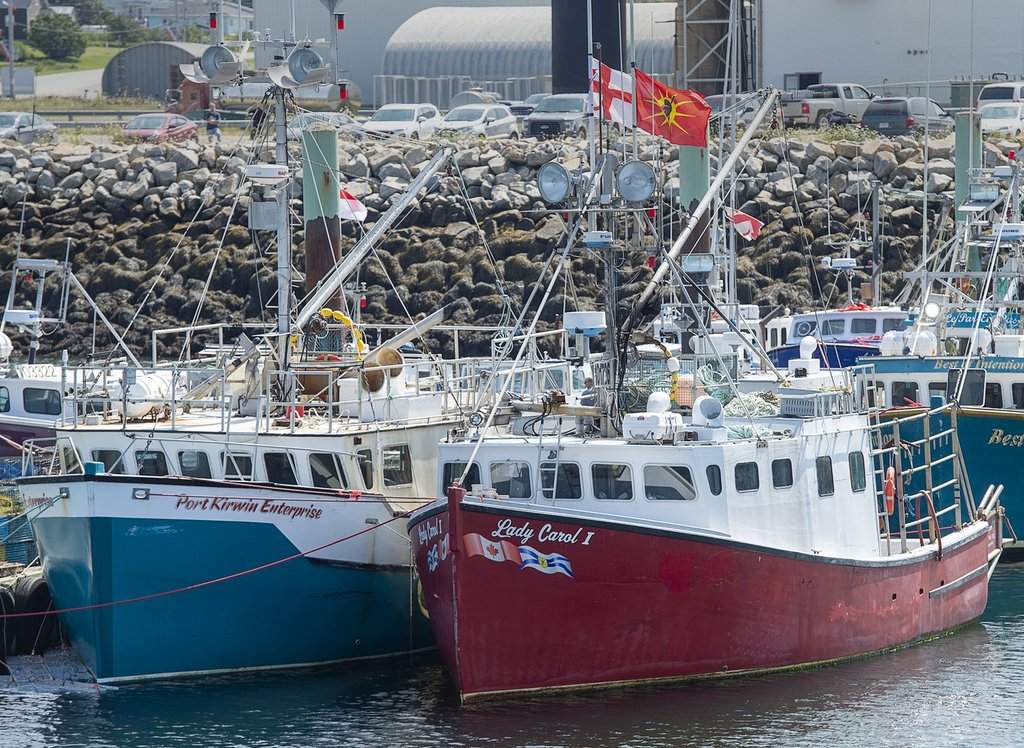
The maritime waters off the coast of Nova Scotia have become a staging ground for a conflict that refuses to die. When the Nova Scotia Supreme Court recently dismissed a lawsuit brought by the Unified Fisheries Conservation Alliance (UFCA), it did not provide a resolution. Instead, it effectively told the combatants to continue their standoff. The alliance, representing commercial fishers, sought a definitive ruling that would have effectively stripped Sipekne’katik First Nation members of their asserted treaty rights to conduct a self-regulated lobster fishery outside of federal seasons. The court’s rejection, based on a lack of standing, leaves the central tension—the definition of a "moderate livelihood"—unresolved and arguably more volatile.
For decades, the ghost of the 1999 Marshall decision has haunted these waters. That landmark Supreme Court of Canada ruling affirmed that Mi’kmaq, Wolastoqey, and Peskotomuhkati fishers possess treaty rights to harvest and sell fish to support a moderate livelihood. Yet, a quarter-century later, the federal government has failed to provide a clear, legislative definition of what constitutes such a livelihood, or how it should be exercised within the bounds of a multi-billion-dollar commercial industry. This vacuum of leadership is the primary driver of the current crisis. Building on this theme, you can also read: Humanitarian Diplomacy in Sino-US Relations A Clinical Assessment.
When the state refuses to act, individuals feel compelled to step into the void. The UFCA’s move to sue was a clear signal of desperation from commercial operators who believe their own livelihoods are being undermined by an unregulated, out-of-season fishery. They argue that the environmental and economic impacts of fishing in St. Mary’s Bay, outside of federally mandated conservation windows, threaten the very stocks everyone depends on. However, the legal system has repeatedly signaled that these third-party, adversarial lawsuits are not the venue for settling constitutional questions. Justice Ann Smith was blunt, labeling the alliance’s claim “fatally flawed” and insisting that negotiation between the Crown and First Nations remains the only path forward.
The trouble with this judicial guidance is that negotiations have been, at best, glacial and, at worst, non-existent. The federal government’s tendency to treat treaty rights as a political football rather than a legal mandate has left communities on both sides of the wharf in a state of perpetual anxiety. For First Nations, the enforcement actions by the Department of Fisheries and Oceans—such as the seizure of traps—are viewed as direct infringements upon constitutionally protected rights. For the commercial fleet, the lack of a clear regulatory framework creates a perception of lawlessness that invites confrontation. Experts at NPR have provided expertise on this trend.
We are witnessing a failure of governance that spans multiple administrations. The reliance on the courts to adjudicate what is fundamentally a political and treaty-based negotiation is a stalling tactic that serves no one. Every time a new lawsuit is filed, legal fees mount, bitterness hardens, and the opportunity for a collaborative resource management strategy evaporates. The Sipekne’katik First Nation has, at various times, attempted to negotiate, yet they have also faced the constant threat of having their rights curtailed by bureaucratic fiat or public pressure.
The appeal planned by the UFCA will likely follow the same trajectory as the original claim. By focusing on standing and the mechanics of civil litigation, the appellate court will almost certainly avoid the substantive question of treaty interpretation. This means the cycle of violence and litigation will continue unabated. The real story here is not the dismissal of a lawsuit; it is the abandonment of a regional economy by a federal authority that refuses to define the rules of engagement.
There is a hypothetical scenario where this could be solved. Imagine a regional management board, composed of representatives from both commercial fishing associations and First Nations, empowered by Ottawa to co-manage the fishery based on shared biological data rather than political expediency. Such a model exists in other sectors of Canadian resource management, yet the political will to implement it in the Atlantic fishery remains absent. As long as the government hides behind the skirts of the judiciary, the water will remain a site of conflict.
The commercial fishers demanding answers are right to be frustrated, even if their legal strategy is misguided. They are operating in an environment where the absence of clear regulations creates winners and losers based on who can make the most noise or cause the most disruption. When the legal system shuts the door, it does not bring peace. It merely shifts the conflict back to the docks, the boats, and the open sea.
The failure to define "moderate livelihood" is an institutional choice, not an accident. Every year that passes without a legislative framework creates more friction. The costs of this are not just measured in legal bills or seized traps. They are measured in the fraying social fabric of coastal communities, where neighbors who have worked the same tides for generations now find themselves on opposite sides of a constitutional divide.
The appeal will bring more headlines, more lawyers, and more posturing. It will not bring the clarity that is desperately needed. Until the federal government accepts its responsibility to define the exercise of treaty rights, the tension in St. Mary’s Bay will remain a ticking clock. The courts have made it clear they will not write the policy. The burden of leadership rests squarely on those who continue to look the other way. The sea will not wait for them to decide, and the fish do not recognize the jurisdiction of a courtroom.