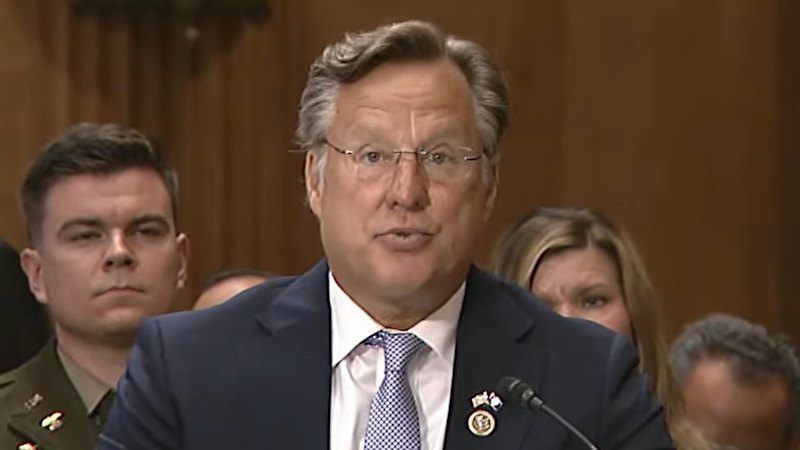
Every few years, Washington goes through the exact same predictable performance. A Senate confirmation stalls, media outlets obsess over diplomatic protocol, and pundits act as though the fate of the free world hinges on which career bureaucrat or political donor gets handed the keys to the mission in Canberra.
The breathless coverage treats the post like an imperial proconsulship.
It is not.
Stop pretending a new ambassador changes the underlying mechanics of the alliance. The diplomatic machinery moves forward regardless of who occupies the grand residence in Yarralumla.
The Myth of the Heavyweight Envoy
The lazy consensus in international relations reporting is straightforward: send a big personality, a close personal friend of the president, or a seasoned negotiator, and bilateral ties flourish. Send a placeholder, and the alliance drifts.
This is bureaucratic astrology.
I have watched embassies operate from the inside. I have seen multi-million-dollar defense frameworks and intelligence-sharing pacts negotiated entirely by mid-level civil servants, defense attachés, and desk officers in Washington and Canberra while ambassadors spent their days cutting ribbons and schmoozing at Canberra cocktail circuits.
The ambassador is a figurehead with a loudspeaker, not the architect of foreign policy.
When major security architectures like AUKUS are constructed, they are forged out of raw geopolitical necessity, industrial capacity constraints, and shared strategic panic regarding the Indo-Pacific balance of power. They are not written on the back of a napkin because an ambassador whispered sweet nothings into a senator's ear.
To believe otherwise is to misunderstand modern statecraft.
What the Media Misses About Canberra and Washington
Let us look at the actual mechanics of the relationship.
The conventional narrative focuses on personal chemistry between the envoy and the Australian prime minister. We get endless profiles analyzing whether the new pick understands "mateship" or can handle a VB beer. It is patronizing performance art.
The real friction points in the bilateral relationship are structural, not interpersonal:
- Defense industrial base integration bottlenecks under ITAR regulations.
- Divergent timelines for nuclear-powered submarine acquisition schedules.
- Differing tolerances for economic coercion by Beijing.
None of these challenges yield to charm offensive diplomacy. You cannot handshake your way past the fact that the United States shipyards are backlogged for a decade, or that Australian supply chains remain deeply entangled with its largest export market.
An ambassador can tweet polished talking points or deliver smooth speeches at the National Press Club. None of that builds a single vertical-launch missile cell or accelerates nuclear propulsion training by a single week.
The Bureaucratic Inertia Trap
Imagine a scenario where the ambassadorial post sits vacant for an entire presidential term.
Would the alliance fracture? No. The cables would still flow between the Department of Foreign Affairs and Trade in Canberra and the State Department in Foggy Bottom. Joint exercises like Talisman Sabre would still execute with ruthless precision. Intelligence would still cross networks via Pine Gap and Five Eyes nodes.
The career diplomats running the desks do the heavy lifting while political appointees pose for portrait photographs.
The obsession with who gets the nod is a distraction designed for cable news segments and diplomatic gossip columns. It creates the illusion of democratic oversight and active management over a relationship that runs mostly on autopilot because the strategic alignment is so deeply baked into the institutional DNA of both nations.
If you want to understand where the Australia-U.S. alliance is actually heading, ignore the ambassador's confirmation hearings. Look instead at shipbuilding capacity metrics, rare earth mineral processing agreements, and the quarterly budget allocations for regional infrastructure projects in the Pacific.
That is where the math happens. Everything else is theater.
Stop tracking the personnel changes. Start watching the logistics.
The Real Power Dynamic
The uncomfortable truth is that Australia often finds itself managing American domestic political volatility more than benefiting from American strategic vision. Administrations change, priorities shift, and Congress stumbles through legislative paralysis.
A skilled ambassador's primary job is not convincing Canberra to follow Washington's lead; it is explaining to Washington why Canberra cannot always execute American whims without triggering domestic political blowback.
When an envoy tries to act like an enforcer, the relationship strains. When they act as a realistic translator of political constraints back home, they are useful.
Yet the media treats the arrival of a new envoy as if a conquering hero has landed to fix a broken dynamic. The dynamic was never broken. It is a cold, calculated alignment of maritime interests designed to hedge against a rising peer competitor in Asia.
No single diplomat alters that calculus.
Moving Past the Specter of Protocol
We need to retire the outdated trope that diplomatic personalities dictate structural outcomes in the Pacific.
The next time a profile drops celebrating a high-profile nomination, ask yourself what practical problem that specific individual has the legal authority, budgetary control, or technical expertise to solve.
The answer is almost always zero.
They will manage the embassy staff, host receptions on the Fourth of July, and write cables summarizing local political gossip for desks back home that already read Reuters.
Treating their arrival as a pivotal historical marker is an insult to the thousands of defense planners, engineers, and intelligence analysts doing the actual work of keeping the alliance functional.
Ignore the confirmation noise. Look at the balance sheets and the shipyard schedules. That is the only reality that matters.