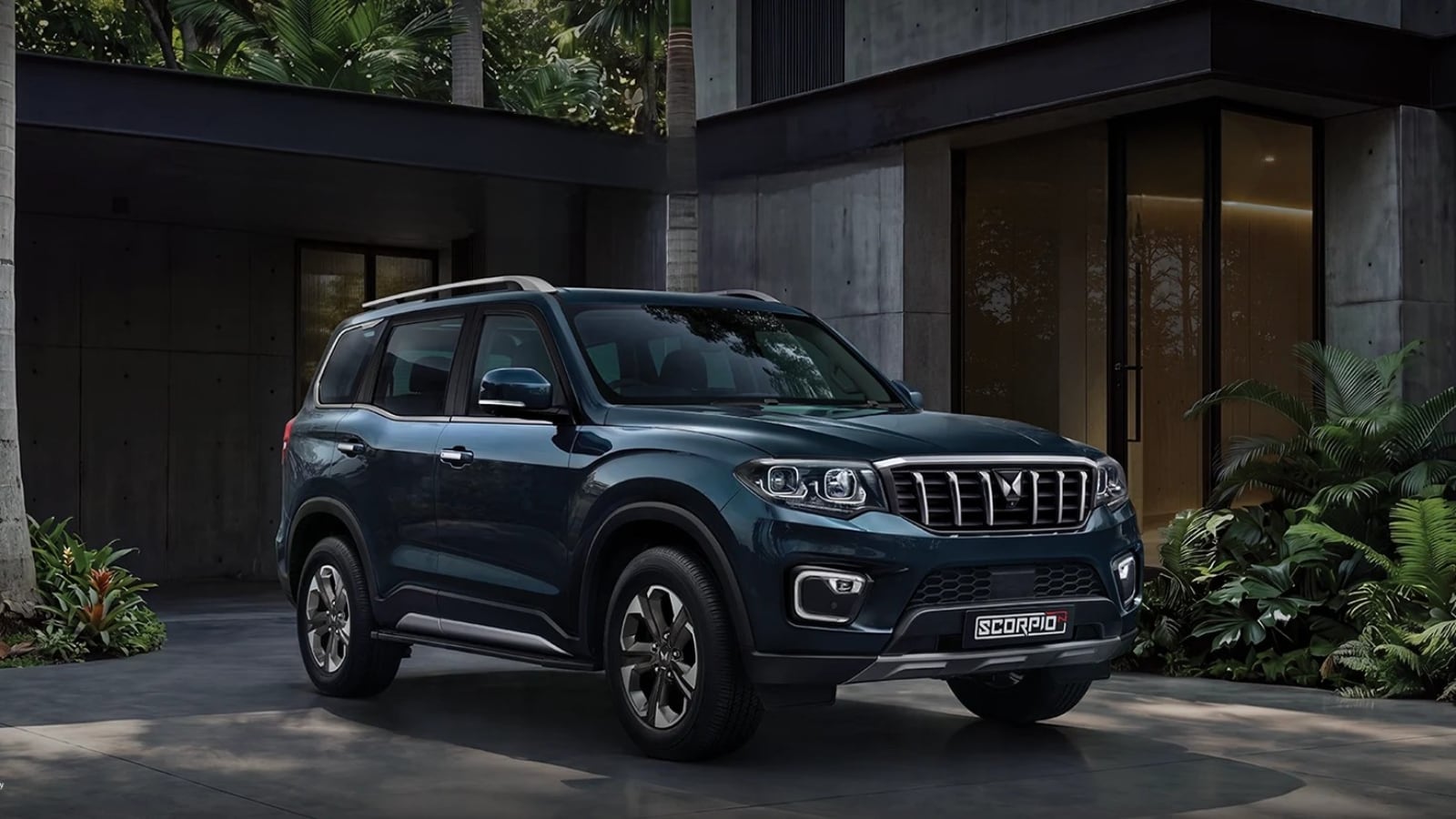
The monsoon arrived in Pune with a sudden, violent theatricality, turning the asphalt into a mirror of slate-gray clouds. I sat behind the wheel of a test mule, the cabin cocooned in heavy leather, listening to the drumbeat of water hitting metal. For years, driving through these downpours meant looking straight ahead, trapped in a steel cave, watching the storm through wipers clearing frantic arcs across glass.
Then came the quiet click of a switch.
The roof parted.
Above the damp dashboard and the hum of the diesel engine, a vast, churning ocean of bruised grey sky opened up. The rain didn't pour in; it framed itself. In that single, breath-catching second, the architecture of the cabin shifted from a utility bunker into an observatory.
That shift in perspective is precisely what happens when an automaker decides to change the rules of engagement mid-game.
The Machine That Refused to Stay Boxy
Let us cast our minds back a few years. When the Scorpio badge first rolled out across Indian highways, it carried a distinct scent of diesel, rugged authority, and unpolished ambition. It was the vehicle of choice for local politicians, estate managers, and anyone who looked at a pothole-ridden dirt track and saw an invitation rather than an obstacle. It was functional. It was loud. It was unapologetically utilitarian.
Then came the structural metamorphosis.
Mahindra didn't just update an old favorite; they engineered a mechanical reinvention. They called it the Scorpio N, positioning it as the big daddy of SUVs. They gave it a ladder-frame chassis that could swallow jagged rocks for breakfast, multi-link rear suspension that managed to soothe the brutal temperament of rural tarmac, and a stance that commanded respect in any rearview mirror.
Yet, something was missing for the urban commuter who also harbored weekend wanderlust. The steel ceiling remained. In a market obsessed with bringing the outside in, the flagship SUV lacked the one feature that modern buyers equated with spatial freedom: the glass ceiling that lets the stars in.
Until now.
The Economics of an Open Sky
To understand why adding a panoramic sunroof to the Mahindra Scorpio N starting at ₹13.69 lakh matters, you have to look past the sheet metal and into the psychology of the modern buyer.
Car manufacturing is an exercise in ruthless compromise. Engineers fight bean counters. Designers fight aerodynamicists. When a vehicle is built with genuine off-road credentials, its roof is a critical structural member. It must bear weight during a rollover. It must resist torsional twist when crossing an axle-deep ditch. Carving a massive hole into that steel membrane and replacing it with laminated glass is not a casual design choice. It is an engineering gamble.
For a long time, the dominant narrative suggested that true-blue ruggedness and lifestyle luxury were mutually exclusive. You could have a utilitarian workhorse, or you could have a Sunday cruiser with an open sky. You could not have both without breaking the bank.
Consider what happens next in the showroom. At the entry price point of ₹13.69 lakh, the addition of this feature fundamentally alters the competitive calculus. It bridges the chasm between the pragmatic family patriarch who wants a sturdy chassis for safety and the younger, experiential driver who judges a car by how cinematic their weekend road trip feels.
Anatomy of a Journey
Let us introduce Sameer. He is thirty-four, living in Bangalore, balancing a high-stress corporate life with a desperate hunger for the Western Ghats. For months, he debated between buying a sleek, city-slick crossover with all the luxury trimmings or a rugged traditional SUV that could handle the treacherous monsoon trails leading to Coorg.
The crossover offered comfort and glass roofs, but he knew it would groan and scrape the moment the tarmac ended. The traditional SUV offered the muscle, but felt claustrophobic, a rolling fortress that kept him walled off from the very nature he was escaping to see.
When specifications shift to include a panoramic glass expanse on a vehicle built on a robust, body-on-frame architecture, Sameer’s dilemma dissolves.
Drive with him up the winding hairpins of Charmadi Ghat. The air turns crisp, smelling of wet earth and crushed cardamom. In an ordinary SUV, you stare straight ahead at the tail lights of a sluggish truck. But with the overhead glass panel retracted, the towering canopy of ancient trees becomes part of your cabin experience. Green leaves blur against the pale sky. The boundaries between machine and mountain blur.
This is the invisible utility of luxury. It does not add horsepower. It does not shorten braking distances. It alters your state of mind while moving from point A to point B.
The Ripple Effect Across the Segment
The introduction of this feature at an aggressive entry threshold forces every rival brand back to the drawing board.
Automotive markets are living ecosystems. When one apex predator adapts a new survival trait, the others must react or risk obsolescence. For years, prospective buyers weighed the mechanical integrity of a heavy-duty chassis against the lifestyle appeal of competitors. By sliding the panoramic glass roof into the mix without alienating the core mechanical pedigree, the manufacturer has effectively removed the compromise.
Critics will argue that sunroofs add weight up top, shifting the center of gravity. They will worry about the tropical heat beating down through the glass during a blistering May afternoon in Delhi. These are valid mechanical anxieties. Yet, modern automotive glass is engineered with advanced UV coatings and infrared-reflective layers that block thermal radiation far more effectively than traditional painted steel can insulate.
The real transformation is cultural. It reflects a maturing consumer base. We no longer buy cars simply to survive the commute. We buy them as mobile living spaces, sanctuaries from the chaos of modern life, and platforms for personal escape.
The Last Light on the Highway
Evening descends rapidly in the hills. The sky transforms from slate-gray to a deep, bruised violet, punctuated by the first hesitant pinpricks of distant stars.
The engine settles into a low, contented purr. The cabin lights are dimmed, leaving only the soft amber glow of the dashboard instrumentation. Looking upward, the vast expanse of the night sky rolls past overhead, framed by the dark silhouette of the vehicle's roof rails.
The road ahead is long, winding, and entirely unmapped. But the ceiling is gone. And for the first time, the journey feels limitless.

:max_bytes(150000):strip_icc()/GettyImages-1134454893-ad4d4f8ecce646e0beb8059f256dfc5d.jpg)