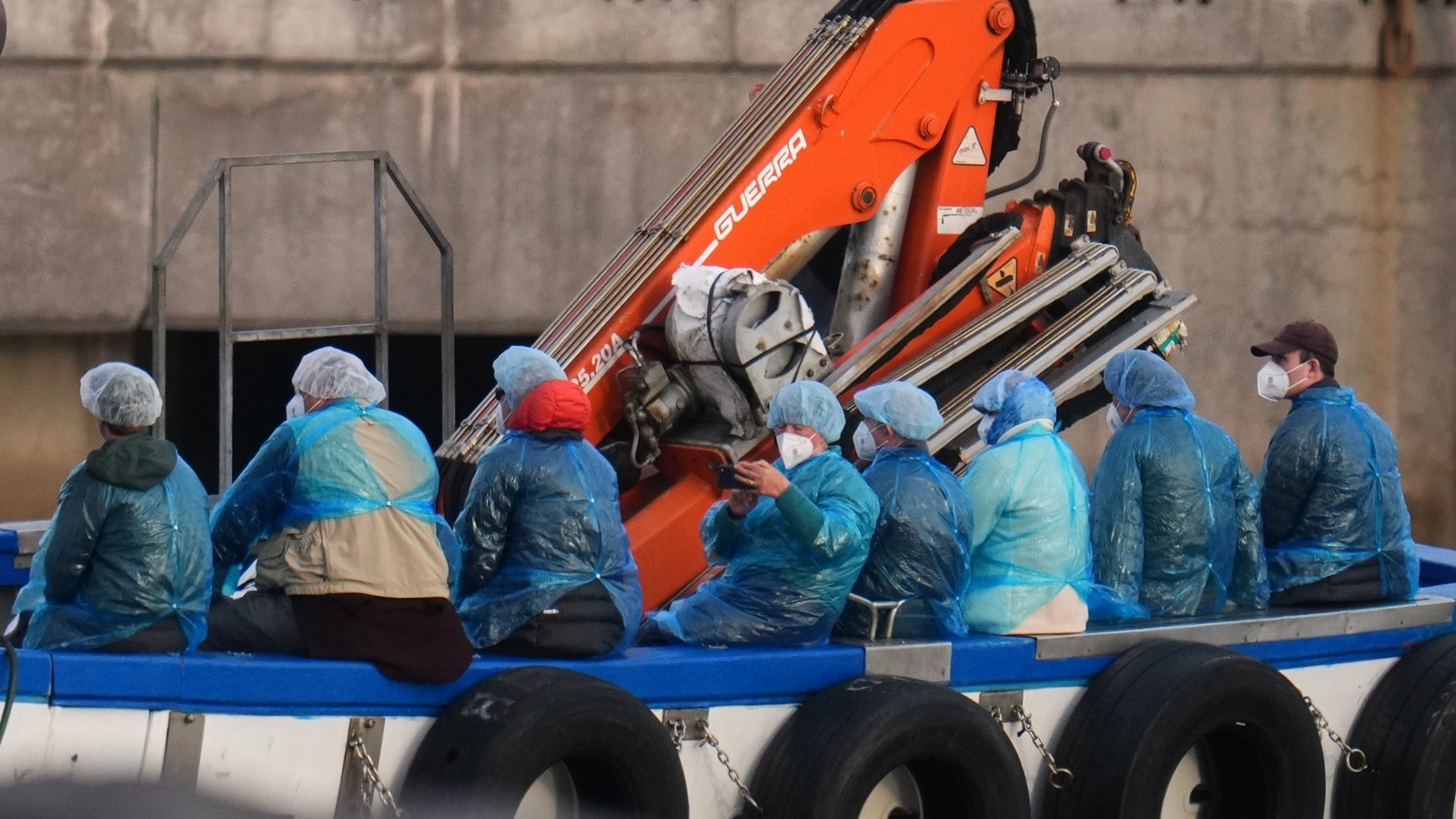
The success of infectious disease containment during international repatriation is not a product of fortune but a function of strict adherence to the Biological Containment Hierarchy. Spain’s recent handling of Hantavirus cases demonstrates a high-fidelity execution of this hierarchy, specifically by neutralizing the transmission vectors before the pathogen could establish a local foothold. While public health narratives often focus on "praise" from international bodies like the World Health Organization (WHO), the structural reality lies in the transition from an uncontrolled environmental exposure to a closed-loop clinical environment.
Hantavirus Pulmonary Syndrome (HPS) and Hemorrhagic Fever with Renal Syndrome (HFRS) represent significant biosafety risks because their primary transmission route—aerosolized excreta from infected rodents—is difficult to monitor in the wild. However, once a patient is identified and transitioned into a controlled medical setting, the transmission dynamics shift fundamentally. Unlike respiratory viruses such as influenza or SARS-CoV-2, Hantavirus rarely exhibits human-to-human transmission. The containment strategy utilized by Spain centers on the Isolation-Incubation-Elimination framework, which effectively severs the chain of infection at the point of entry.
The Triad of Bio-Containment Logic
Effective repatriation of high-consequence pathogens requires the simultaneous management of three distinct variables. Failure in any single node compromises the entire operation.
1. Kinetic Isolation (The Transport Phase)
The most vulnerable point in any repatriation effort is the physical movement of the patient from the site of infection to the treatment facility. Spain’s protocol utilized specialized Aeromedical Isolation Teams (AMIT). These units function as mobile Biosafety Level 3 (BSL-3) environments. The logic here is to treat the transport vehicle not as a vehicle, but as a pressurized extension of the hospital ward. By maintaining negative pressure within the isolation pod, the risk of accidental aerosolization during turbulence or vehicle ingress/egress is mathematically reduced to near-zero.
2. Clinical Sequestration
Upon arrival, the patient is moved to a High-Level Isolation Unit (HLIU). In Spain, facilities like the Carlos III Hospital in Madrid serve as the terminal point for this sequestration. The operational objective is the total separation of the hospital’s general airflow from the isolation suite. This involves:
- HEPA Filtration Cycles: Ensuring air is scrubbed at a rate that prevents any viral particulate accumulation.
- Waste Stream Sterilization: All biological effluent is treated as high-risk hazardous waste, utilizing autoclaving or chemical neutralization before entering the municipal sewage system.
3. Contact Trace Modeling
Because Hantavirus is typically zoonotic, the "spread" mentioned by the WHO refers to the potential for secondary cases among medical staff or close contacts during the pre-symptomatic phase. The Spanish strategy employs a Retrospective Exposure Analysis. This involves mapping every individual who shared the same airspace as the primary patient during the estimated incubation period. By placing these individuals under active surveillance rather than passive monitoring, the health system ensures that if a rare human-to-human jump occurs, the secondary patient is already within the containment loop.
The Mathematical Improbability of Localized Outbreaks
The reason the WHO asserts that spread can be "stopped effectively" is rooted in the virus’s Basic Reproduction Number ($R_0$). For most strains of Hantavirus, the $R_0$ in a human population is significantly below 1.0. This means that, statistically, an infected individual will infect fewer than one other person.
When the $R_0$ is below the critical threshold, any outbreak is self-limiting. The only way for an outbreak to expand is through continued environmental exposure (the "source" problem). By repatriating the patient, Spain removed the individual from the source of the virus—likely a specific rodent population in a different geographic region—and placed them in a sterile environment where the source does not exist.
The risk profile therefore shifts from a Population Health Risk to an Occupational Health Risk. The burden of safety falls entirely on the Personal Protective Equipment (PPE) protocols of the attending clinicians. If the clinicians utilize fluid-resistant gowns, N95 or P100 respirators, and rigorous de-frocking procedures, the virus reaches a biological dead end.
Structural Bottlenecks in Repatriation Strategy
Despite the success of the Spanish model, several systemic constraints limit the scalability of this approach for larger outbreaks or different pathogens.
Resource Concentration
High-level isolation is incredibly resource-intensive. A single Hantavirus patient may require a rotating staff of 20 to 30 specialized clinicians per 24-hour cycle. This concentration of expertise creates a bottleneck; the system can handle two or three simultaneous cases, but a cluster of ten would likely force a downgrade in isolation quality. This is the Capacity-Fidelity Tradeoff: as the number of patients increases, the strictness of individual isolation protocols often decreases due to staff fatigue and equipment shortages.
Diagnostic Latency
Hantavirus symptoms often mimic common pneumonia or late-stage influenza. The delay between the onset of symptoms and the confirmation of Hantavirus via RT-PCR (Reverse Transcription Polymerase Chain Reaction) is a window of high risk. During this period, a patient might be treated in a standard emergency room, exposing healthcare workers before the "Spanish Model" of high-level isolation is even triggered. Spain’s success in this instance was predicated on early identification at the point of origin, allowing the containment loop to be closed before the patient even touched Spanish soil.
The Myth of "Airborne" Hantavirus
There is a common misconception that Hantavirus spreads through the air in the same way as measles. This misinformation complicates public response. Hantavirus is aerosol-susceptible, meaning it can be inhaled if dust containing dried rodent urine is kicked up, but it is not truly airborne-persistent in a clinical human-to-human context. Spain’s communication strategy must distinguish between these two modes to prevent unnecessary public panic while maintaining high-alert status among medical professionals.
Vector Control vs. Clinical Management
The WHO's endorsement of Spain's handling highlights a shift in global health strategy: moving away from reactive border closures and toward targeted clinical excellence. However, the long-term prevention of Hantavirus spread remains an ecological challenge rather than a medical one.
In the regions where the infection originated, the spread is stopped via Environmental Engineering:
- Rodent Exclusion: Sealing structures to prevent the entry of Peromyscus or Apodemus species.
- Disinfection Protocols: Using bleach-based solutions to wet down potential nesting sites before cleaning, which prevents the virus from becoming aerosolized.
- Habitat Modification: Reducing the carrying capacity of the local environment for rodent reservoirs.
Spain’s role in this global framework is that of a "Clinical Safety Valve." By successfully managing the repatriation, they prevent the domestic healthcare system from becoming a secondary site of infection. This allows international health organizations to focus their limited resources on the environmental source of the virus rather than managing a secondary outbreak in a metropolitan center like Madrid or Barcelona.
Institutional Trust as a Containment Tool
The efficacy of Spain's response is also tied to the speed of data sharing. The "Effective Stop" described by the WHO is only possible when there is total transparency between the treating nation and the international monitoring body. Spain's adherence to the International Health Regulations (IHR 2005) ensured that the viral strain was sequenced and shared immediately.
This data transparency allows other nations to:
- Update their diagnostic primers to ensure local tests can detect the specific strain.
- Monitor for potential mutations that might alter the $R_0$ or the severity of the disease.
- Validate that the clinical presentation matches known Hantavirus patterns, ruling out the emergence of a novel co-infection.
The Spanish model proves that high-consequence pathogens can be managed without draconian measures if the initial response is built on Biomechanical Isolation and Rapid Diagnostic Confirmation. The focus now moves to maintaining these high-level units during periods of "biological peace," ensuring that the infrastructure does not atrophy before the next cross-border viral event.
The strategic imperative for other EU nations is the replication of this specialized transport-and-treat infrastructure. Relying on general hospital wards for high-consequence pathogens is a failure of logic; containment requires a dedicated, decoupled system that operates independently of the standard healthcare flow. Spain has provided the blueprint; the challenge for the rest of the continent is the capital investment required to maintain it.
Every nation must now audit its own High-Level Isolation Unit capacity against the Spain-WHO benchmark. This involves stress-testing the transition from aeromedical arrival to sequestration, ensuring that no "cold zones" are accidentally contaminated during the patient transfer. The objective is to make the repatriation of a deadly pathogen as routine and low-risk as any other high-stakes logistics operation.