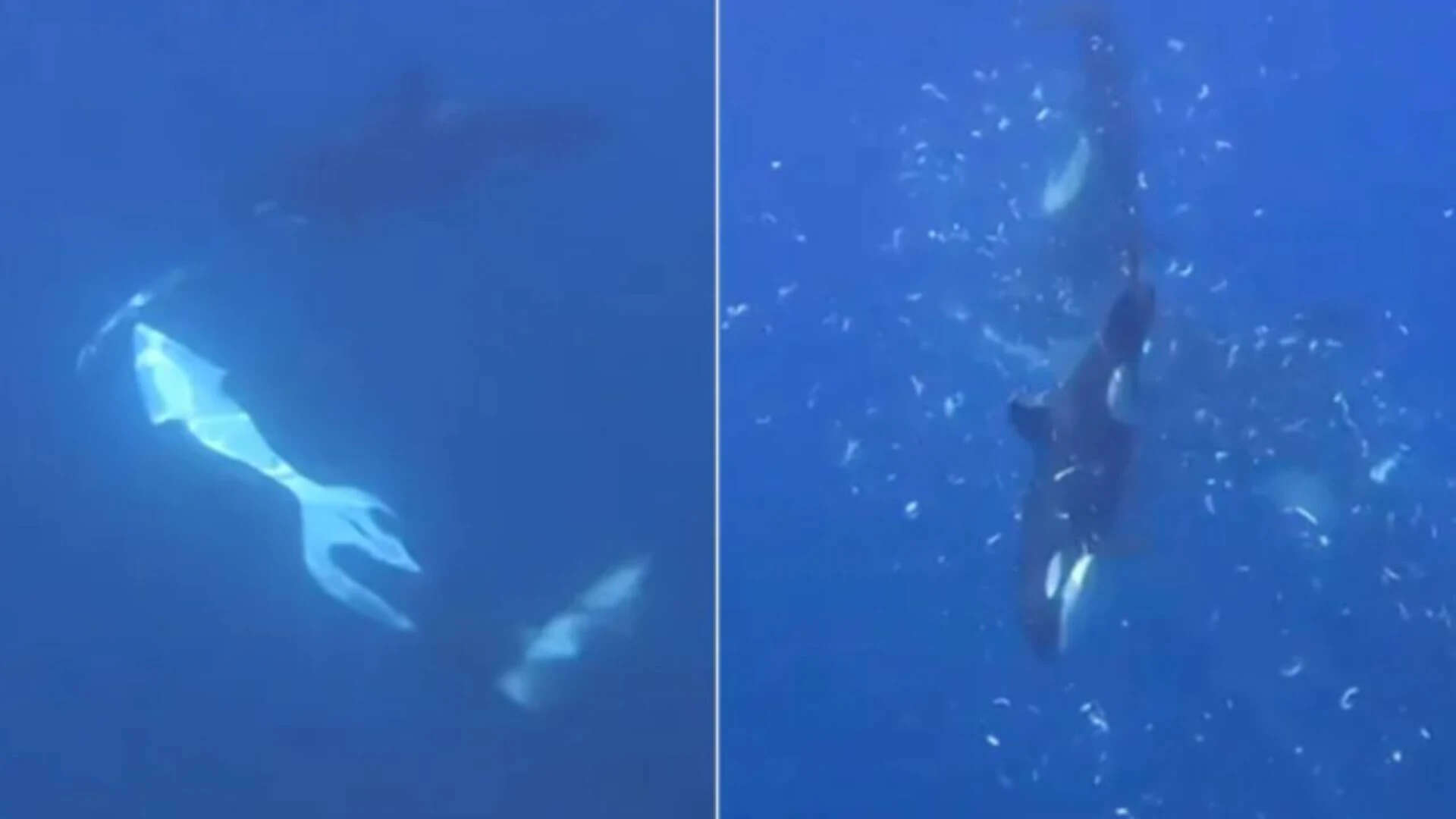
Marine biologists just captured incredible video footage of killer whales using a brutal, highly coordinated tactic to dismantle a giant sunfish. It isn't just about raw power. It's about surgical precision. If you thought apex predators relied purely on brute force, this footage proves otherwise.
Orcas are smart. Very smart. Scientists watching off the coast witnessed a pod systematically target a ocean sunfish, also known as a Mola mola, stripped its fins, and peeled back its thick skin to access the nutrient-rich tissues inside.
Stripping the Prey Piece by Piece
Ocean sunfish look ridiculous, but they aren't easy targets. They're basically giant, swimming discs covered in extremely tough, rubbery skin that acts like armor. Most marine predators don't even bother trying to bite through it.
Killer whales figured out the secret. They don't try to swallow the fish whole, nor do they waste energy tearing at the thickest parts of the torso right away.
Instead, the pod works in shifts. First, they target the dorsal and anal fins. By biting off these massive control surfaces, they completely immobilize the sunfish. The huge fish is suddenly stuck helpless at the surface, unable to dive or steer.
Once the prey is stationary, the pod turns the giant fish over. Orcas deliberate peel back the outer dermal layer, exposing the soft, blubber-rich tissue beneath.
Culture over Instinct
What makes this behavior fascinating isn't just the kill. It's how the knowledge spreads.
Orca pods operate with distinct cultural traditions. One pod might specialize entirely in washing seals off ice floes. Another might focus on ramming blue whales. A third might focus on disabling large pelagic fish like the sunfish.
- Specialized knowledge: Younger pod members observe the elders, learning exact angles to strike without taking damage from thrashing prey.
- Selective feeding: Killer whales are notoriously picky eaters. They often eat only the most energy-dense organs or soft blubber, leaving the rest for scavengers.
- Resource efficiency: Disabling a slow-moving target takes minimal energy compared to chasing fast prey like sea lions or dolphins.
This specific sunfish attack method isn't universal. It's a localized culture, a regional innovation passed down from matriarchs to calves.
Why Ocean Sunfish Aren't Easy Dinners
The Mola mola can weigh well over two tons. Its body is covered in a thick layer of tough cartilage and dense tissue that deters smaller sharks and mammals.
To overcome this natural body armor, orcas use collective force to flip the sunfish onto its side or back. Marine mammals often exploit tonic immobility in prey—a natural paralysis state induced when an animal is flipped upside down. While it's best known in shark hunting, disorienting a sunfish at the surface makes the dismantling process far faster and safer for the hunting whales.
How Scientists Track These Hunting Shifts
Understanding these apex behavior shifts requires constant monitoring by oceanographers and field researchers. If you want to follow these discoveries as they happen, check out resources from marine research bodies like the NOAA Fisheries or watch open-access behavioral studies published through marine biology journals. Keeping track of regional whale populations gives us a front-row seat to evolving animal intelligence.