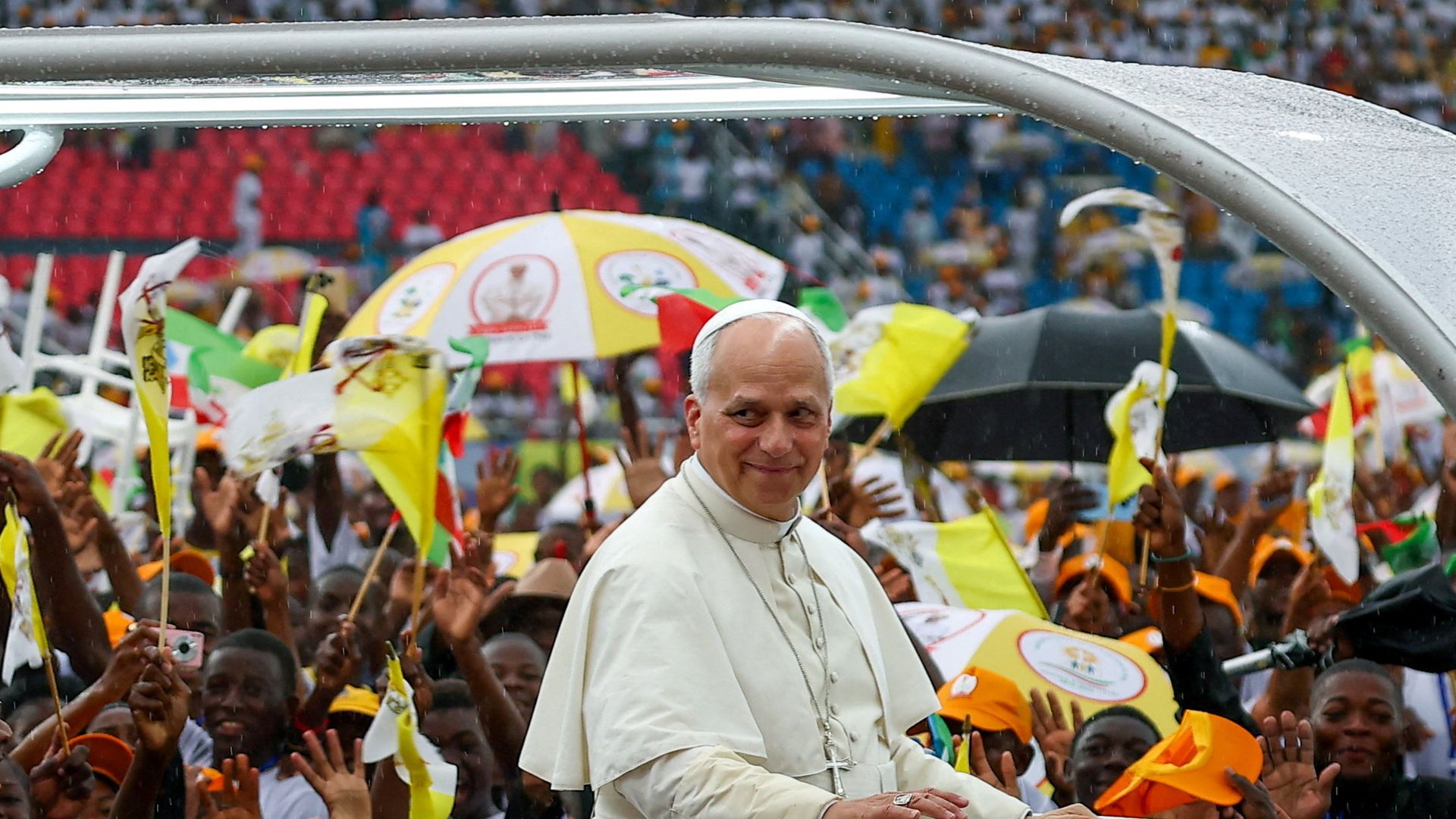
The mainstream media loves a savior narrative. They spent weeks trailing Pope Francis across the African continent, obsessing over the optics of a prison visit or the "war of words" with Donald Trump. It makes for great television. It’s also a complete misunderstanding of how the world’s oldest institution actually functions.
The press sees a frail man in a white cassock visiting the marginalized. I see a CEO conducting a desperate market expansion to save a hemorrhaging brand.
While the headlines fixated on the "unprecedented" nature of his interactions with the American political machine, they missed the cold, hard math. The Vatican isn't fighting for "peace" in a vacuum; it’s fighting for its demographic life. The "eventful tour" wasn't a spiritual victory lap. It was a high-stakes salvage operation designed to pivot the Church’s center of gravity away from a dying European market and toward the only continent where growth isn't just a fantasy.
The Myth of the Trump Feud
The media framed the friction between the Pope and Trump as a clash of civilizations. It wasn't. It was a brilliant, calculated distraction. By engaging in a back-and-forth regarding border walls and Christianity, the Pope managed to frame himself as the moral antithesis to Western populism.
This served a dual purpose. First, it sanitized the Church's image for a younger, more liberal demographic in the West that has largely abandoned the pews. Second, and more importantly, it signaled to the Global South that the Vatican is no longer a tool of Western imperial interests.
The "war of words" was a branding exercise. While pundits argued about the theology of walls, the Pope was busy consolidating power in regions where the Catholic population is projected to reach 450 million by 2050. He wasn't arguing with a politician; he was clearing the deck for a hostile takeover of the religious market share in sub-Saharan Africa.
The Prison Visit as Tactical Theater
The tour ended with a visit to a prison. The "lazy consensus" says this was an act of radical humility.
I’ve spent years analyzing organizational behavior in high-pressure environments. You don't take the leader of a global organization into a prison for a "nice gesture." You do it to create a visual shorthand for institutional reform.
The Vatican is currently drowning in a sea of its own systemic failures. Between the financial scandals of the Secretariat of State and the unending fallout of the abuse crisis, the brand is toxic in traditional markets. By centering his narrative on the "least of these"—prisoners, the displaced, the war-torn—Francis is attempting to reset the clock. He is trying to bypass the bureaucracy by appealing directly to the emotional core of the most vulnerable.
It’s a classic "underdog" strategy used by corporations that have lost their way. When you can’t fix the product, you change the spokesperson’s environment. If the Pope is in a prison, the logic goes, the Church must be for the forgotten. It’s a powerful optic that hides the fact that the institution itself remains a rigid, top-down monarchy with zero transparency.
The Growth Numbers the Media Ignored
Let’s look at the data that the standard "travelogue" reporting ignored.
- European Decay: Mass attendance in countries like France and Germany has plummeted to single digits in many dioceses. The European Church is a museum.
- African Vitality: Between 1900 and now, the Catholic population in Africa grew from roughly 2 million to over 200 million.
- Vocations: The "priest shortage" is a Western phenomenon. In Africa, seminaries are overflowing.
The Pope didn't go to Africa because he was "concerned" in a general sense. He went because Africa is the only thing keeping the lights on at St. Peter’s. The tour was a recognition that the "center" has moved. The Euro-centric model of Catholicism is dead. The future is African, and the Pope knows he has to secure that loyalty before local, charismatic movements or Islam fill the void.
Stop Asking if the Trip was a Success
People keep asking: "Did the Pope bring peace to the DRC or South Sudan?"
That is the wrong question. It assumes the Pope is a diplomat with a magic wand. He isn't. He is a moral influencer. The success of the trip shouldn't be measured by the cessation of hostilities—which didn't happen—but by the strengthening of the institutional infrastructure.
If you want to know if the trip worked, don't look at the peace treaties. Look at the number of new bishops appointed. Look at the flow of capital from African dioceses back to the Vatican Bank. Look at the shift in the College of Cardinals.
The real story isn't the "clash" with Trump or the "mercy" in the prison. The real story is the final, agonizing transition of the Catholic Church from a European colonial relic to a Global South powerhouse.
The Dangerous Nuance of "Neutrality"
The Vatican’s insistence on "neutrality" in conflict zones is often praised as a noble stance. In reality, it’s a survival mechanism that allows them to play both sides of any political fence. By remaining "above" the fray, the Church ensures it remains a permanent fixture regardless of who wins the local power struggle.
This isn't moral clarity; it's institutional self-preservation. While the Pope speaks about the "scourge of weapons," the Vatican remains one of the most opaque financial entities on the planet, often benefiting from the very global systems that perpetuate the poverty he decries.
You can't have it both ways. You can't be the "voice of the poor" while presiding over a sovereign state with billions in assets and a history of protecting its own interests at the expense of justice.
The Africa tour was a masterclass in distraction. It gave the world a "hero" to root for while the actual work of maintaining a global empire continued behind the scenes, untouched by the cameras or the "war of words."
The media bought the ticket. The Vatican took the ride. Africa, as always, provided the backdrop for a Western narrative that refuses to see the continent as anything other than a stage for someone else’s redemption.
Stop looking at the white smoke. Start looking at the ledger.
The Church isn't changing its heart. It’s changing its zip code.