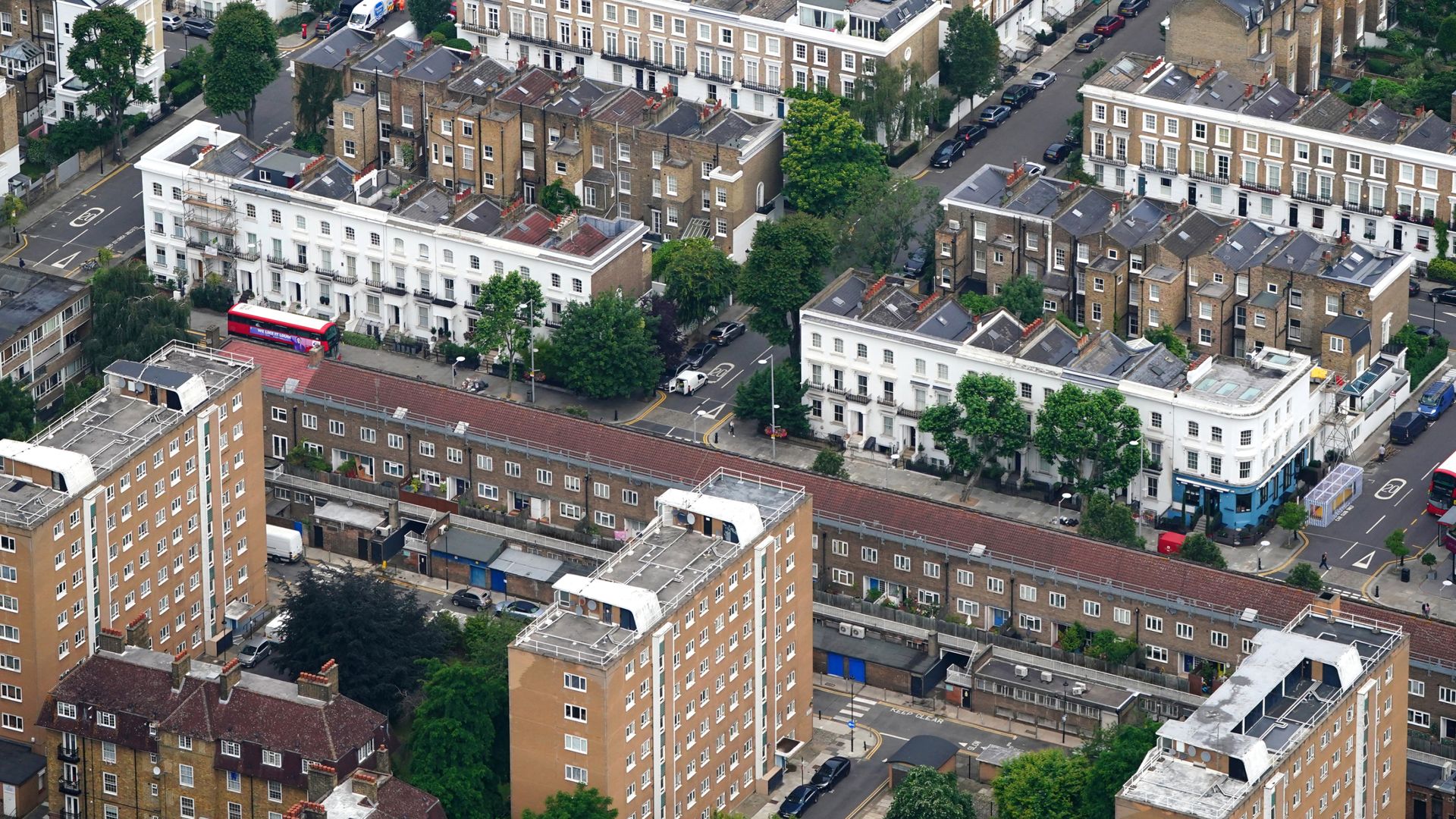
The key turns in the lock of a flat in South London, but the sound isn’t one of sanctuary. For Sarah, a thirty-something nurse who poured a decade of overtime into a deposit, that click is a reminder of a ticking clock. She doesn’t own the bricks. She doesn’t own the dirt beneath them. She owns a slice of time—a lease—that is slowly evaporating.
Sarah is one of millions caught in the gears of the British leasehold system, a feudal hangover that treats homeowners like glorified tenants. For months, she and countless others have looked toward Westminster with a flickering hope. They were promised a liberation. They were told the "feudal" era of new leasehold houses would end and that the process of buying their freedom would become cheaper and simpler.
Then came the cold water. The Housing Minister recently signaled what many feared: the comprehensive ban on new leaseholds is unlikely to become law before the next general election. The promised land has been moved behind a curtain of parliamentary scheduling and political maneuvering.
The Weight of a Wasting Asset
To understand why this delay feels like a physical blow, you have to understand the inherent anxiety of the leasehold. Imagine buying a car, but being told you must pay the original dealership a yearly "ground rent" for the privilege of parking it in your own driveway. Imagine needing their permission, and paying them a fee, just to change the upholstery.
Now, imagine that car losing value not just because of wear and tear, but because a calendar in an office somewhere is nearing a specific date.
In the UK property market, a lease is a "wasting asset." When a lease drops below eighty years, the cost to extend it skyrockets due to something called "marriage value." It is a mathematical trap. For people like Sarah, the news that reform is stalled isn't just a political headline. It is a financial sentence.
The government’s Leasehold and Freehold Reform Bill was supposed to be the sledgehammer that broke these chains. It aimed to ban new leasehold houses—though notably not flats—and make it significantly easier for existing leaseholders to extend their leases to 990 years at a peppercorn rent. It was a promise of permanence in an unstable world.
The Legislative Bottleneck
The reality of lawmaking is rarely as noble as the rhetoric used to sell it. The Bill is currently weaving its way through the House of Lords, a place where interests often collide with urgency. The Housing Minister’s admission that the clock is running out reveals a grim truth about political priorities.
With a general election looming on the horizon like a storm front, the parliamentary calendar is becoming a zero-sum game. There are only so many days left to debate, amend, and pass legislation. When a minister says a ban is "unlikely" to come into force in time, they are acknowledging that the leasehold reform has been pushed to the back of the queue.
But why? The complexity of the Bill is staggering. It isn't just about banning a practice; it’s about untangling centuries of property law and navigating the "human rights" of freeholders—the often-faceless investment firms that collect ground rents as guaranteed income streams. These firms have lobbyists. They have lawyers. They have a vested interest in ensuring the "Paper Kingdom" remains intact.
The Human Cost of "Unlikely"
While politicians discuss "legislative windows" and "parliamentary cycles," the people on the ground are living in a state of suspended animation.
Consider the "Cladding Scandal" survivors who are already trapped in unsellable flats. For them, leasehold reform was the second half of a rescue mission. Without the ability to cheaply extend their lease or manage their own buildings, they remain tethered to a burning ship.
There is a specific kind of exhaustion that comes from being told help is on the way, only to see the rescue boat drop anchor a mile offshore. It breeds a profound cynicism. When the rules of the game are rigged, and the people in charge of changing the rules say they simply "ran out of time," the message to the homeowner is clear: your life's biggest investment is a secondary concern.
The delay also creates a vacuum of uncertainty in the housing market. Buyers are hesitant to step into a system that might change tomorrow—but might not change for five years. Sellers are holding off, hoping for reforms that would make their properties more attractive. The result is a market of ghosts, where everyone is waiting for a signal that never comes.
The Myth of the Simple Fix
We often treat property law as a dry, technical subject. We talk about "peppercorn rents," "enfranchisement," and "reversionary interests." But these are just fancy words for power.
The leasehold system survives because it is profitable for people who do not live in the houses. It turns a basic human need—shelter—into a financial derivative. The struggle to end it is a struggle to redefine what it means to "own" something in Britain.
The government argues that they are doing more than any previous administration to tackle these issues. They point to the Leasehold Reform (Ground Rent) Act 2022, which successfully banned ground rents on new leases. They frame the current Bill as a massive undertaking that requires careful scrutiny to avoid unintended consequences.
There is truth in that. A poorly drafted law can be worse than no law at all, creating loopholes that clever lawyers will exploit within minutes of Royal Assent. But for the person watching their lease tick down from 82 years to 81, "careful scrutiny" looks a lot like foot-dragging.
The Invisible Stakes of the Next Election
By signaling that the ban won't happen before the election, the government has effectively turned leasehold reform into a campaign chip. It is no longer a matter of urgent justice; it is a promise to be renewed on a manifesto.
This shifts the burden onto the voter. It forces millions of leaseholders to weigh the promises of a weary incumbent against the pledges of an opposition that has vowed to go even further. The Labour Party has signaled they would abolish the system entirely within the first term of government.
But leaseholders have heard big promises before. They remember 2017. They remember 2019. Each cycle brings a new "landmark" announcement that somehow gets diluted by the time it reaches the floor of the House.
The stakes are invisible because they are buried in the fine print of mortgages and the quiet conversations held at kitchen tables late at night. They are the missed holidays because a "service charge" unexpectedly doubled. They are the retirement plans put on hold because a flat cannot be sold without a lease extension that costs forty thousand pounds.
A System Running on Fumes
The Paper Kingdom is built on the idea that the land is more important than the people who live on it. It is a system that views a home not as a place of rest, but as a stream of revenue for an entity in a distant boardroom.
The Minister's admission is a crack in the facade. It reveals that despite the speeches and the "tough" talk on developers, the momentum of the status quo is a powerful force. It suggests that the ghost of the feudal past isn't ready to leave the building just yet.
Sarah still has the key in her hand. She looks at the walls she painted, the floor she scrubbed, and the windows she cleaned. To her, this is home. To the system, it is a contract with an expiration date.
The wait continues. The clock ticks. The promises of Westminster remain, like the leases they seek to reform, temporary and subject to change without notice. The only thing that remains permanent is the anxiety of the millions who are told to keep waiting for a freedom that is always one election away.
The sun sets over a thousand rooftops, each one a leasehold, each one a testament to a promise deferred. In the corridors of power, the lights stay on as the schedule is reshuffled. The bill sits on a desk, a collection of pages that could change lives, gathering dust while the calendar turns.
Silence falls over the Paper Kingdom, broken only by the sound of a ticking clock.