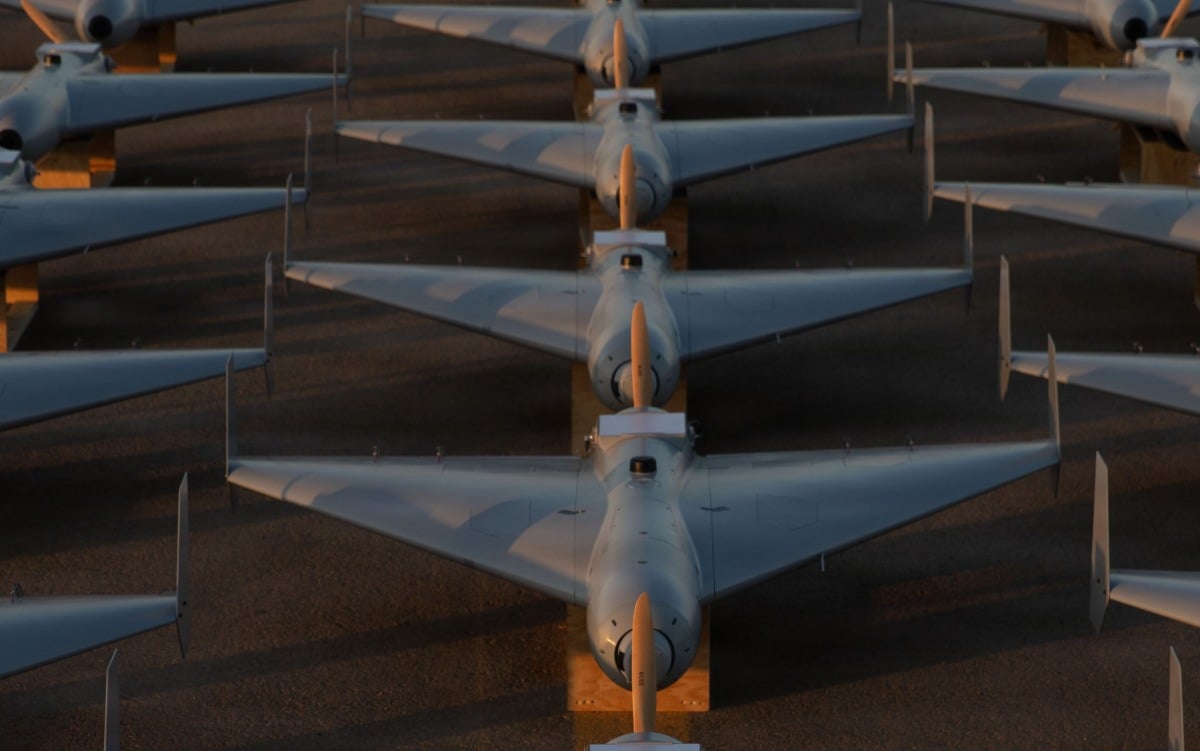
The defense tech sector is swooning over NODA AI’s shiny new $10 million Pentagon contract to make military drones "think and act as one team." Silicon Valley venture capitalists are popping champagne, defense bloggers are breathlessly proclaiming the era of autonomous swarm dominance, and military procurement officers are quietly ticking another box on their innovation checklists.
It is a complete illusion.
Handing $10 million to a software startup to build collaborative autonomous swarms sounds like the future of war. In reality, it is a classic defense acquisition trap—a high-tech vanity project designed for clean, interference-free test ranges rather than the brutal, electronically denied realities of real-world battlefields.
I have watched defense contractors burn through tens of millions of dollars on algorithmic coordination tricks that crumble the moment an adversary turns on a modern high-power jammer. Throwing autonomous flight controllers together in a cloud-simulated sandbox looks brilliant on a PowerPoint deck presented to procurement committees. Put those same systems inside a heavily contested airspace over Eastern Europe or the Taiwan Strait, and the entire high-tech house of cards comes tumbling down.
Here is the inconvenient truth about autonomous drone swarming that defense tech cheerleaders refuse to tell you.
The Jamming Trap: Swarms Require Bandwidth You Do Not Have
The baseline assumption behind collaborative autonomy is simple: individual drones must constantly share location data, target priorities, and telemetry to coordinate effectively. To act as "one team," they need to communicate.
That single assumption is a fatal flaw.
In a high-intensity conflict against a peer adversary, the electromagnetic spectrum is not an open highway. It is a brick wall. Modern electronic warfare suites do not merely disrupt standard radio frequencies; they flood entire battle spaces with broad-spectrum noise, directional radio frequency disruption, and GPS spoofing.
When five autonomous drones fly into a heavily jammed environment, one of two things happens:
- They lose inter-node comms and freeze up. Their algorithms, built on the assumption of real-time data sharing, panic. Without a consensus mechanism, the swarm degrades into five isolated, confused quadcopters flying blindly into radar range.
- They blast high-wattage RF signals to burn through the jamming. By doing this, they instantly transform themselves into giant glowing beacons for anti-radiation missiles and directional detectors. The swarm effectively shouts, "Here we are! Shoot us down!"
If your operational concept relies on continuous peer-to-peer data links across a battle space, you have not designed a resilient weapon. You have designed an expensive light show that works exclusively in New Mexico tests.
Algorithmic Fragility: Why "Swarm Intelligence" Fails in the Dirt
Proponents of multi-agent reinforcement learning like to point to nature. Look at starlings murmuring in the sky, or ants finding the shortest path to food. It looks hypnotic. It looks efficient.
It is also fundamentally terrible doctrine for air combat.
Nature tolerates massive attrition because biological units are biologically cheap. An ant colony does not care if 80% of its workforce dies finding a sugar cube, because reproducing costs virtually nothing. Military hardware—even cheap attritable hardware—carries a supply chain cost, a logistical footprint, and a finite transport capacity.
More importantly, emergent behavior in multi-agent algorithms is notoriously unpredictable. When you deploy machine learning models trained in simulated environments, subtle real-world anomalies create cascading edge-case failures.
Imagine a scenario where a single drone in a five-agent swarm suffers sensor damage from near-miss shrapnel. Its optical sensor misinterprets smoke as a hard obstacle, forcing it to make an aggressive evasive maneuver. Under standard distributed swarm algorithms, the surrounding four drones re-calculate their flight paths to accommodate their "teammate." Within milliseconds, a single damaged sensor triggers a feedback loop that scatters the entire formation directly into an active anti-air engagement zone.
That is not hypothetical logic; it is the mathematical reality of complex adaptive systems. Small inputs yield chaotic, catastrophic outputs.
The Real Cost Problem: Attritable Drones That Are Not Actually Attritable
The military industrial complex loves the word "attritable"—a military euphemism for "cheap enough that we do not care if it gets blown up."
Yet, when you stuff a small airframe with advanced compute modules, multi-spectral sensors, encrypted radio hardware, and proprietary mesh-networking flight software, that drone is no longer cheap. It becomes a boutique piece of hardware costing tens of thousands of dollars per unit.
When a $50,000 "attritable" drone gets shot down by a $5,000 shoulder-fired missile or brought down by a $50 passive RF detector, the cost exchange ratio works entirely against you.
We are making the same structural mistake with software-defined drone swarms that we made with legacy stealth platforms: over-engineering tiny tactical assets until their unit price prevents commanders from ever risking them in combat.
How to Actually Win the Autonomous Air War
If spending millions on networked AI swarms is a dead end, how do you win an air war against a modern adversary?
Stop trying to make drones talk to each other. Make them smart enough to shut up and execute on their own.
1. Zero-Bandwidth Autonomy
Instead of relying on peer-to-peer communication arrays to coordinate movements, each individual asset must operate on completely isolated, deterministic mission parameters using edge compute. They do not need to form a collective mind; they need single-target recognition, onboard terrain-matching navigation that does not rely on GPS, and absolute radio silence. True autonomy is not a hive mind—it is an ensemble of deaf-mute assassins.
2. Brute-Force Mass Over Complex Intelligence
Ten dirt-cheap, single-purpose kinetic strike drones with zero swarm capabilities will always out-perform two hyper-intelligent, networked drones that cost five times as much. When eight of those cheap drones are destroyed or jammed, two will still hit the target through sheer mathematical probability. Mass creates its own quality; complex software merely creates single points of failure.
3. Open Architectures, Not Monolithic Contracts
Awarding $10 million checks to single software vendors locks the armed services into proprietary frameworks that cannot adapt when tactics change on the ground. Battlespace software needs to be modular, open-source, and field-reprogrammable by software engineers sitting in tactical operations centers, not locked behind corporate intellectual property walls in Silicon Valley.
The Brutal Reality Check
The defense industry remains addicted to clean, high-margin software promises that sound impressive in Senate hearings and investor pitch decks. Networked, collaborative AI swarms make for fantastic marketing campaigns, but they are built for an era of warfare that no longer exists.
Until tech founders and defense buyers build hardware and software that assumes total communications blackouts, zero GPS access, and massive physical loss rates, these multi-million-dollar contracts are little more than high-tech corporate welfare.
Modern warfare does not care about your drone swarm’s consensus algorithm. It will jam the signal, destroy the link, and leave your ten-million-dollar team flying in circles until the battery runs out.