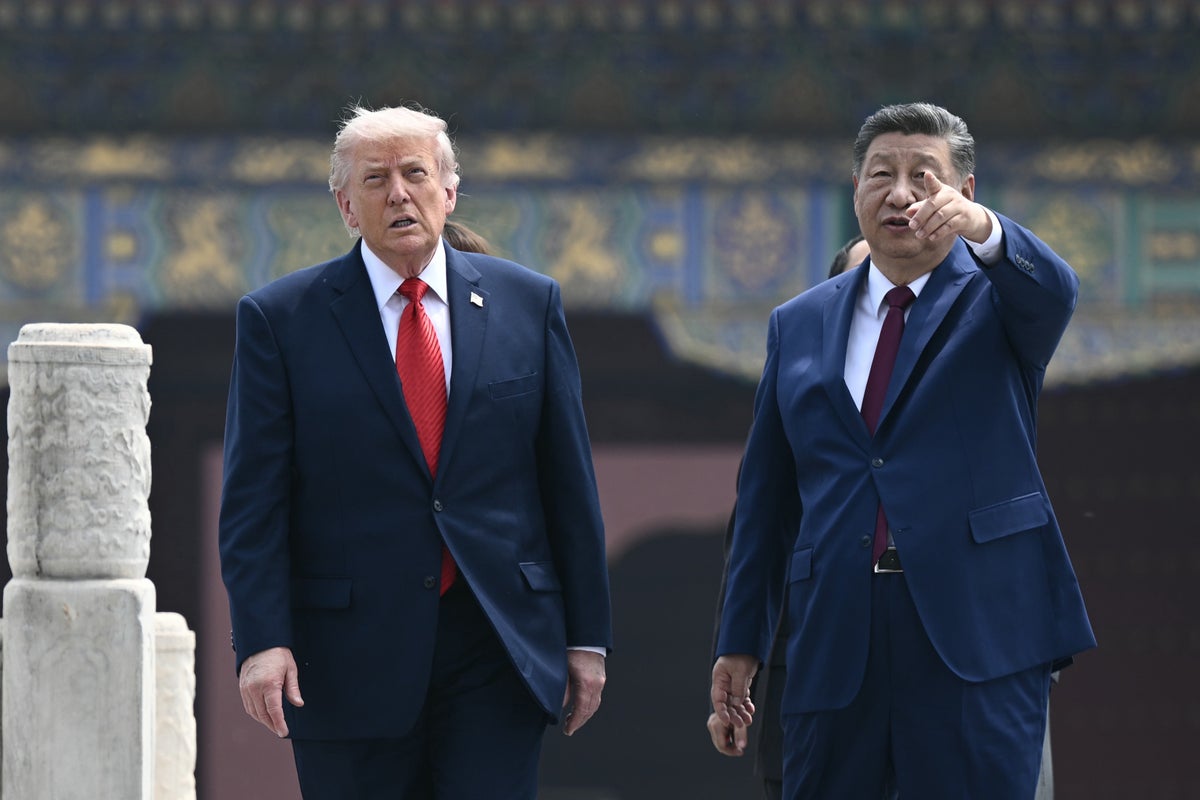
You don't usually see "soft and cuddly" in the same sentence as a high-stakes trade war, but that's exactly the card Donald Trump played during his recent summit in Beijing. While the world watched for news on tariffs and the Strait of Hormuz, Trump leaned into a much more personal angle. He stood in the Great Hall of the People and spent a surprising amount of time praising the "happy and beautiful" children of China.
It wasn't just a throwaway line. This was a calculated move to humanize a relationship that's been on life support. By focusing on the "amazing" children at the welcome ceremony, Trump attempted to build a bridge that numbers and trade figures simply can't touch. Honestly, it’s a tactic he’s used before, and it works because it catches everyone off guard.
The Strategy Behind the Praise
Politics is often a game of rigid handshakes and cold readouts. But in Beijing, Trump swapped the typical aggressive rhetoric for something far more disarming. He told reporters the reception was one of the most memorable he’d ever seen, specifically highlighting the school children who lined the path with American and Chinese flags.
Why does this matter? Because in Chinese culture, family and the next generation are everything. When Trump calls the children "beautiful" and says he knows they "mean a lot" to President Xi Jinping, he's speaking a language of respect that resonates more deeply than a standard press release. It's a way to signal that despite the friction over Taiwan or fentanyl, there's a shared human foundation.
A Throwback to the Arabella Diplomacy
This isn't the first time Trump has used the "family card" to smooth over relations with Xi. Back in 2017, his granddaughter, Arabella Kushner, became an overnight sensation in China. Trump showed Xi a video of her singing in Mandarin and reciting ancient Chinese poetry.
- The Result: Xi gave her an "A+" and the Chinese public fell in love with her.
- The Impact: It created a "sweet and warm-hearted" atmosphere that paved the way for $250 billion in commercial deals.
- The Lesson: Personal connections often grease the wheels for massive economic shifts.
During this 2026 summit, Trump’s comments about the "happy" children felt like a deliberate callback to that era of rapport. He’s trying to recapture that lightning in a bottle. He knows that if he can make the interaction feel like two grandfathers talking about the future, the hard-nosed negotiations on oil and market access become slightly less combative.
What Was Actually on the Table
Don't let the talk of beautiful children fool you into thinking this was a vacation. Behind the scenes, the air was thick with tension. While the public saw smiles and praise for the youth, the private meetings were a different story.
Trump and Xi sat down for over two hours to hammer out issues that could shift the global economy. They discussed increasing U.S. access to Chinese markets and the critical need to halt the flow of fentanyl precursors. One of the biggest wins was a shared agreement that the Strait of Hormuz must remain open. Energy security is the one thing both these giants agree on—neither wants a spike in oil prices that could tank their domestic economies.
The Taiwan Elephant in the Room
Despite the "beautiful" optics, the Taiwan issue remains a powder keg. Xi didn't mince words, warning that if Taiwan isn't handled "properly," the two nations will clash. It’s a stark reminder that even the most charming diplomacy has its limits. Trump’s praise for the children is a tool to manage the temperature, but it doesn't solve the underlying territorial disputes.
Why This Approach Still Matters in 2026
Some critics argue that these "soft" moments are just fluff. They’re wrong. In a world where AI and automated trade are making everything feel more robotic, the human element becomes a premium asset. Trump is basically betting that a "bond of respect," as he called it, can act as a safety net when the trade talks get ugly.
He highlighted how Chinese restaurants in America outnumber the top five fast-food chains combined. It’s a quirky stat, but it drives home his point: our cultures are already deeply intertwined. By focusing on children and shared values like hard work and family, he’s reminding both audiences that the stakes are higher than just a balance sheet.
If you’re watching these summits, look past the headlines about "praise" and look at the timing. These comments always come right before the hardest negotiations. It’s the "good cop" routine applied to international diplomacy.
Pay attention to the follow-up readouts on agricultural purchases and energy deals. If those numbers start moving, you’ll know the "happy and beautiful" strategy actually paid off. The next move is seeing if this rapport holds when the talk shifts back to the South China Sea. Keep an eye on the official White House dispatches over the next 48 hours for the concrete results of this "soft" charm offensive.

:max_bytes(150000):strip_icc():focal(819x186:821x188)/Murdaugh-Family-e90854a716884d608fb6fd925e18d840.jpg)
