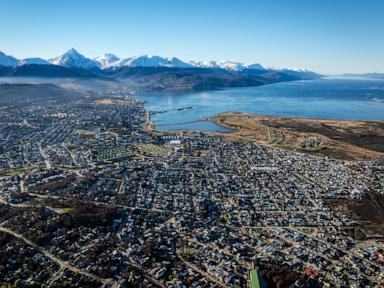
Ushuaia isn't just a dot on the map. It's the "End of the World," the high-stakes gateway where luxury cruises depart for the frozen silence of Antarctica. But right now, the city is fighting a battle that has nothing to do with icebergs. Local officials are pushing back hard against claims that their city is the source of a lethal hantavirus outbreak that has left three people dead and a cruise ship isolated off the coast of Africa.
If you're planning a trip to the tip of South America, you've probably seen the headlines. National health authorities pointed a finger at an Ushuaia landfill, suggesting it’s the place where a Dutch couple first crossed paths with the virus. Local leaders call that a "smear campaign." They aren't just being defensive; they have a massive tourism economy to protect. Honestly, the data might actually be on their side.
The Fight Over the Source
The controversy centers on the Andes virus, a specific hantavirus strain notorious because it's the only one known to jump from person to person. While most hantaviruses require you to breathe in dust contaminated by rodent waste, the Andes variant is a different beast.
Local health director Juan Facundo Petrina hasn't held back. He’s pointed out that Tierra del Fuego has literally never recorded a case of hantavirus in its history. Not one. The long-tailed pygmy rice rat (Oligoryzomys longicaudatus), which carries this specific strain, is a regular resident of the lush forests in central Patagonia, hundreds of miles to the north. It’s rarely, if ever, seen in the harsh, sub-antarctic climate of Ushuaia.
The timeline is the biggest hole in the official story. The Dutch couple spent months traveling through Argentina and Chile before they ever set foot in Ushuaia. They were only in the city for two days before their ship, the Plancius, set sail on April 1, 2026. Given that the incubation period for hantavirus can stretch up to eight weeks, blaming a 48-hour window in a city with zero history of the virus feels like a reach.
Why the Landfill Theory is Falling Apart
The national health ministry's focus on an Ushuaia trash heap as the "ground zero" for bird-watching tourists seems increasingly shaky. Independent epidemiologists are looking elsewhere, specifically at the woodlands of Northern Patagonia. Areas like Bariloche or El Bolsón are iconic tourist stops, but they’re also endemic zones for hantavirus.
Think about the travel patterns. Most people heading to Antarctica don't just fly to Ushuaia and leave. They spend weeks trekking through the Lake District or visiting rural estancias. If you're walking through tall grass or staying in rustic cabins in those northern regions, you're in the crosshairs of the carrier rats.
- Geography: Ushuaia is too cold and lacks the specific vegetation these rats prefer.
- Precedent: Historically, outbreaks happen in the precordillera regions of Chubut and Río Negro.
- The Ship Factor: Once the virus was on the ship, the close quarters of a cruise vessel likely facilitated the rare human-to-human transmission that characterizes the Andes strain.
What This Means for Your Travel Plans
If you're worried about your upcoming Antarctic expedition, don't cancel your tickets just yet. The risk to the average traveler remains incredibly low. This isn't a city-wide plague; it’s a localized tragedy tied to a specific set of circumstances.
However, you should be smart. The World Health Organization (WHO) and the ECDC aren't calling for travel bans, but they are emphasizing hygiene. If you’re hiking in any part of rural Argentina—not just the south—stay on marked trails. Don't go poking around in abandoned sheds or sleeping in non-ventilated rustic shelters where rodents might nest.
Steps to Stay Safe in Southern Argentina
- Stick to the path: Avoid "bushwhacking" through tall grass or dense undergrowth where rodents live.
- Ventilate your stay: If you’re renting a remote cabin that’s been closed up for a while, open the windows and leave for 30 minutes before spending time inside.
- Watch for symptoms: If you’ve been in rural South America and develop a sudden fever, muscle aches, or shortness of breath within six weeks, see a doctor immediately. Mention your travel history.
- Ignore the panic: Ushuaia is still safer from hantavirus than most of the mainland. The city's infrastructure is built for thousands of visitors, and the current "outbreak" is largely a maritime issue now.
The local government is currently waiting for experts from the Malbran Institute to finish their testing. They’re betting that the results will clear Ushuaia's name. Until then, the "End of the World" remains open for business, even if the politics of public health are getting a bit messy. Keep your boots on the trail and your food in sealed containers, and you'll be fine.