The air inside a server room does not smell like ozone or electricity. It smells like hot dust and stale carpet, a dry, flat scent that settles at the back of your throat when you stay too long. I remember standing in one seven years ago, watching rack-mounted fans scream at three thousand rotations per minute, listening to engineers argue over whether a cluster of GPUs could process a natural language model before the cooling towers failed. Back then, artificial intelligence was a heavy, lumbering beast. It required PhDs, expensive proprietary hardware, and weeks of fine-tuning just to write a coherent paragraph.
Then came the open-source flood. If you enjoyed this piece, you should read: this related article.
Suddenly, the algorithms broke containment. They leaked out of the university labs and the corporate fortresses, spilling into GitHub repositories and Discord servers. At the epicenter of this open-source migration sat Hugging Face, a modest startup with a cute emoji for a logo, quietly building the library where the entire modern world came to borrow its digital brains.
Behind closed doors, the math was changing. The infrastructure required to train and run these expanding models grew astronomical. Power grids strained. Silicon supply chains choked. And somewhere in the upper floors of corporate glass towers, the titans of hardware began looking at the open-source community not as an eccentric digital commune, but as the engine room of the entire future economy. For another perspective on this event, check out the recent coverage from Engadget.
Weeks before a staggering twelve-point-nine-billion-dollar acquisition began dominating the financial tickers, a quiet conversation took place. Clement Delangue, the CEO of Hugging Face, picked up the phone and dialed Jensen Huang.
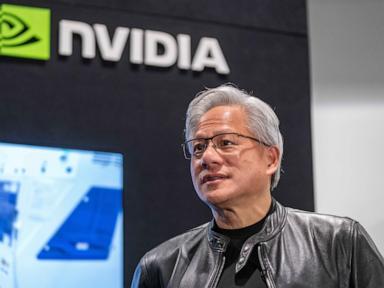
Think about the weight of that moment. Huang, the leather-jacketed architect of Nvidia, a man whose chips had suddenly become more valuable than sovereign currencies. Delangue, the keeper of the open-source flame, whose platform democratized the very models running on Nvidia silicon. They were two poles of a rapidly magnetizing world. One controlled the metal; the other controlled the code.
When Delangue later revealed to CNBC that this dialogue happened well before the massive deal materialized, it sent a ripple through the industry. Everyone wanted to know what two generals discussed before the battlefield shifted entirely.
To understand why that phone call matters, you have to look past the valuation numbers. Financial headlines love commas and zeros. They love to reduce human ambition to a ticker symbol. But the real story is about gravity.
Imagine two massive planetary bodies orbiting each other in the dark. As their mass increases, their gravitational pull bends the space around them. Nvidia had the physical mass—the H100s, the Blackwell architecture, the sheer thermodynamic power to melt silicon and freeze markets. Hugging Face had the social mass—the developers, the models, the million-strong community of tinkerers who decided what the code actually did every morning.
If hardware is the skeleton of the AI revolution, open-source models are the nervous system. You cannot have one without the other. Nvidia needed to ensure that the code being written in dorm rooms and garages worldwide was optimized for their chips. Hugging Face needed to ensure that the hardware powering the future remained accessible, or at least navigable, to the masses who didn't possess sovereign wealth funds.
When Delangue talked to Huang, they weren't just negotiating business terms. They were mapping out the pressure points of a new industrial revolution.
We have seen this movie before. Every technological leap follows a familiar human script. First comes the wild west—the era of chaotic freedom where anyone with a laptop and an internet connection can build a cathedral of code. That is where Hugging Face lived. It was messy, brilliant, collaborative, and gloriously unmonetized in the traditional sense.
Then comes the consolidation. The bills come due. Training a frontier model costs hundreds of millions of dollars in electricity and compute alone. The open-source dream hits the hard wall of thermodynamics and capital economics. You cannot run a global infrastructure on idealism and community goodwill forever. Eventually, the hardware kings arrive at the door.
This is where fear enters the room. Developers who built their careers on open platforms grew nervous. They whispered in forums and chat channels about co-optation. They worried that the corporate handshake would lock the digital commons behind paywalls, turning the great democratization of technology into just another subscription service.
Yet, the reality of the Nvidia-Hugging Face dynamic points to something more nuanced. Total isolation is a death sentence in modern tech. Nvidia's dominance relies entirely on an ecosystem that actually knows how to use its hardware. If developers stop building, the chips sit idle in warehouses. Conversely, without elite compute, open-source models hit a hard ceiling, unable to scale against the proprietary fortresses of tech monopolies.
Consider what happens next when these two forces lock arms. The boundaries between proprietary and open blur. The hardware adapts to the community, and the community bends toward the hardware.
The twelve-point-nine-billion-dollar figure bandied about in the wake of these corporate tremors is staggering, but it is also a distraction. It measures the cost of the real estate, not the value of the conversations happening in the hallways. The phone call between Delangue and Huang represents the moment the ecosystem realized it had grown too large to remain fragmented.
I think back to that server room from seven years ago. The heat. The noise. The arrogant assumption that we could predict where all of this was heading. We couldn't. None of us knew that a chatbot library would eventually command valuations rivaling traditional aerospace and energy conglomerates.
When the history of this era is written, the financial spreadsheets will fade. The quarterly earnings reports will yellow and dissolve. But the structural alliances forged in private phone calls between silicon titans and open-source stewards will remain visible in every line of code our children execute, and in every machine that quietly hums away in the dark.