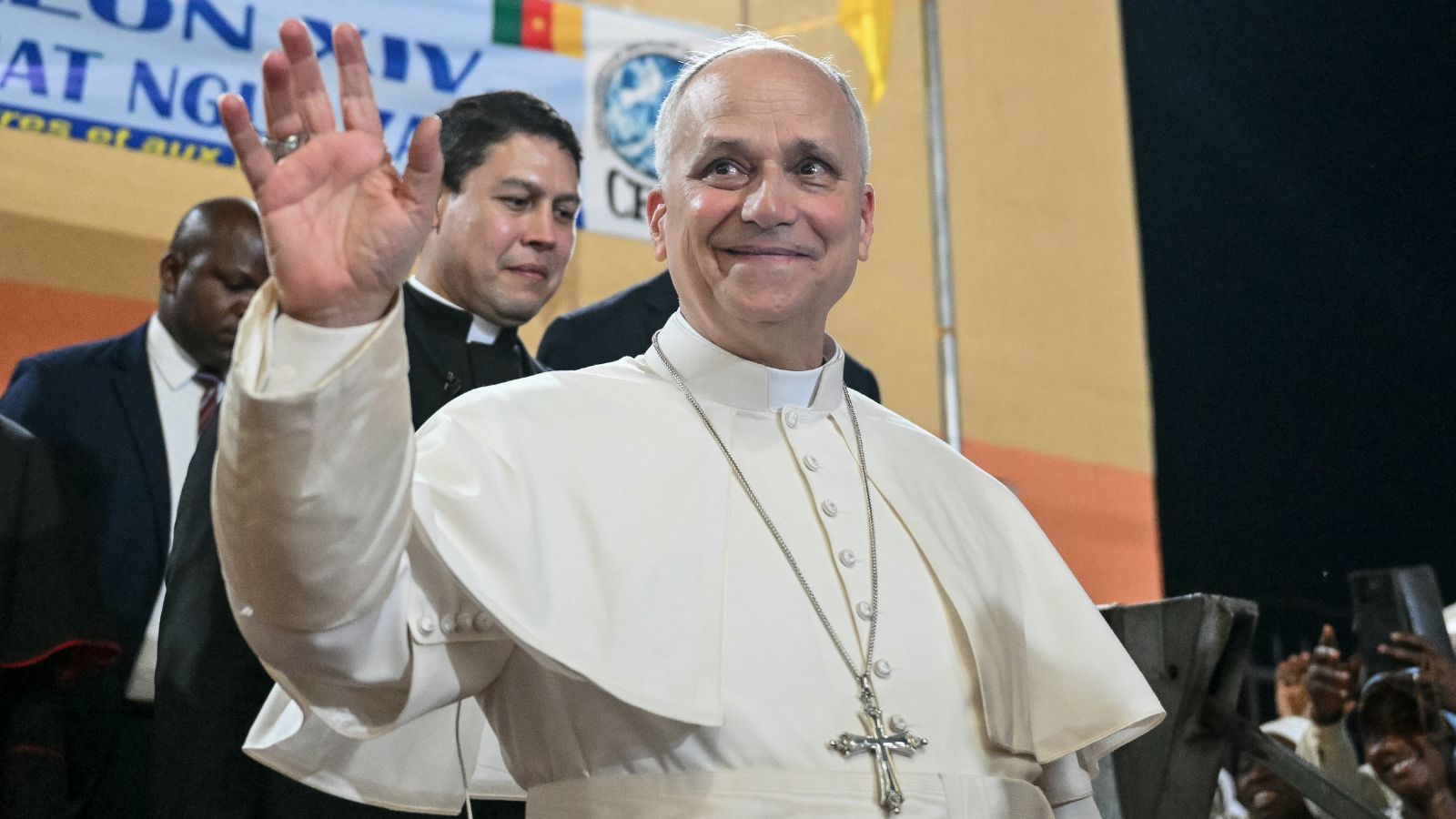
Pope Leo just wrapped up a high-stakes journey across the African continent, and if you think it was just about photo ops and standard blessings, you haven't been paying attention. This wasn't a victory lap. It was a calculated, gritty attempt to hold a fracturing global church together while the ground shifts beneath his feet. He stepped off the plane in Nairobi facing a bizarre reality where his biggest critics aren't necessarily the secular world, but a vocal, well-funded faction of the Catholic Church back in the United States.
The central friction point is simple but heavy. While Western dioceses are increasingly focused on progressive social inclusion, many African bishops are leaning hard into traditionalism. They aren't just disagreeing; they’re openly questioning the Vatican’s direction. Pope Leo’s response? He didn't blink. He spent the week preaching a message of radical unity that essentially told both sides they’re missing the point.
The Massive Gap Between DC and Kinshasa
We need to be honest about the cultural chasm here. In the United States, the backlash against Pope Leo often stems from a feeling that he’s too "liberal" or that he’s softening doctrine to appease modern sensibilities. You’ll hear it on certain cable news networks and in specific corners of the internet where traditionalist bloggers treat every papal encyclical like a personal affront.
Then you look at the situation in sub-Saharan Africa. The Catholic Church is actually growing here—unlike in much of the West—but it’s growing in a landscape where local leaders are fiercely protective of traditional family structures. When the Vatican released Fiducia Supplicans—the document allowing for non-liturgical blessings of same-sex couples—the reaction from African clergy wasn't just cold; it was a flat-out "no."
Pope Leo didn't go to Africa to scold these leaders. That would’ve been a disaster. Instead, he leaned into the idea of "synodality." It’s a fancy word for listening, but in practice, it means he’s trying to let local churches maintain their cultural identity without breaking away from Rome. He’s walking a tightrope. If he pushes too hard toward Western progressivism, he risks a schism in Africa. If he moves too far toward the African traditionalists, he loses the youth in Europe and America.
Addressing the US Backlash Without Naming Names
During his address in Kinshasa, Leo made a comment that felt like a direct shot at his American detractors. He spoke about the "temptation of rigidity" and the danger of turning faith into a political ideology. He didn’t mention any US cardinals by name, but he didn't have to. Everyone knew who he was talking to.
The American backlash is unique because it’s so intertwined with partisan politics. For many US critics, the Pope isn't just a religious leader; he’s a political actor who doesn't align with their specific brand of conservatism. Leo’s strategy in Africa was to remind everyone that the Church is global, not an American country club. He pointed to the "blood of martyrs" and the suffering of the poor in conflict zones like the eastern Congo to put Western "culture wars" into perspective. It was a "get over yourselves" moment delivered with a heavy dose of papal grace.
Why the Unity Message Matters Now
The timing isn't accidental. We’re seeing a rise in "nationalist" Catholicism. You see it in Poland, you see it in parts of the US, and you see it in various African nations. This is the idea that the local church’s national or cultural identity is more important than the universal connection to Rome.
Leo knows this is a death sentence for a global institution. His speeches throughout the tour focused on the "tunic of Christ," which the Bible says was seamless and not torn. He’s using that imagery to tell bishops in Kenya, Congo, and beyond that if they tear the church apart over regional disagreements, they’re failing their primary mission.
It’s a tough sell. Honestly, it might be an impossible one.
The Economic Reality No One Mentions
Most news outlets focus on the social issues because they’re easy to turn into clicky headlines. But Pope Leo spent a significant amount of time talking about "economic colonialism." This is where he actually finds common ground with his African audience.
He criticized the way global powers—including the US and China—treat the African continent like a "mine to be stripped" rather than a partner to be respected. This message resonates deeply in places like the DRC, where the wealth of the land rarely reaches the hands of the people. By leaning into this, Leo isn't just being a "social justice warrior." He’s performing a very traditional role of the papacy: defending the vulnerable against the powerful.
This creates a weird paradox for his US critics. Many of the same people who call him too "woke" for his social stances actually agree with his critiques of globalist corporate overreach. But because he wraps it in a message of environmental stewardship and migrant rights, the message gets lost in the noise of the Atlantic.
The Success or Failure of the Mission
Did he actually bridge the gap? Probably not entirely. The African bishops are still largely unified in their refusal to implement the blessings Leo’s Vatican recently authorized. They’re sticking to their guns, citing "cultural context."
However, Leo did manage to prevent an open revolt. By showing up, by being physically present in their streets and cathedrals, he made it much harder for local leaders to paint him as some distant, out-of-touch European liberal. He showed he understands the specific pressures they face, like the rise of aggressive evangelical movements and the influence of radical groups in the Sahel.
The US critics will keep shouting. They have the platforms and the funding to do so. But Leo’s Africa tour proved he’s looking at a 500-year timeline, not a 24-hour news cycle. He’s betting that the future of the church is in the Global South, and he’s willing to take some hits from the North to keep that future intact.
If you’re watching this from the outside, the takeaway is clear: the Catholic Church is currently the world’s most complex diplomatic experiment. It's trying to remain one single organization while its members live in completely different moral and economic universes.
What to Watch for Next
The real test comes during the next Synod in Rome. That’s when these African leaders and the American critics will be in the same room. Look for how the Vatican handles the "regional exceptions" to Church policy. If Leo allows Africa to follow one path and the West another, he’s essentially admitting that "unity" is now just a polite word for a loose confederation.
Don't expect the US-based attacks to stop. If anything, the visibility of the Africa tour gave the critics more "evidence" to use in their narrative of a Pope who is drifting away from tradition. But Leo seems perfectly comfortable being the lightning rod. He’s used his time in Africa to remind the world that the Church isn't a museum of the past, but a living, breathing, and often messy family.
Keep an eye on the appointments of new cardinals in the coming months. That’s where the real power moves happen. Leo will likely continue to elevate leaders from the "peripheries"—places like Asia and Africa—to further dilute the influence of the Western traditionalist bloc. It’s a long game.
The next time you see a headline about a "clash" between the Pope and some bishop, remember the crowds in Kinshasa. For them, Leo isn't a political figure in a culture war. He's the "Papa," and that title still carries a weight that Twitter threads and op-eds can't quite touch. The tour showed that while the Church is definitely bruised, it’s not broken yet.
Stop looking at this through a purely political lens. If you want to understand what's actually happening, you have to look at the demographics. Europe is shrinking. The US is plateauing. Africa is the engine room. Leo knows where the keys to the car are, and he's not letting go of them anytime soon. He's making it clear that the path to the future goes through Nairobi, not just Rome or Washington.
Pay attention to the specific language coming out of the Vatican Press Office in the next few weeks. They'll be trying to codify the "lessons learned" from this trip. If they start emphasizing "decentralized authority," that’s your sign that the unity message was a precursor to a major structural shift. Get ready for a Church that looks a lot less like a monarchy and a lot more like a global network of franchises. It’s a risky move, but for Leo, it might be the only move left.