The mud on Marinel Ubaldo’s boots was not the ordinary kind. It was the heavy, suffocating silt left behind after Super Typhoon Haiyan tore through her village in the Philippines, swallowing her home and spitting out the wreckage of her childhood. She was sixteen years old when she stood amid the debris, looking at a horizon that had been completely erased. That was the moment she stopped being just a teenager and became an environmental defender.
Marinel did not choose this path because it felt noble. She chose it because staying silent felt like drowning.
Today, thousands of people like Marinel are standing in front of bulldozers, documenting illegal logging in dense rainforests, and speaking at international summits. They are the human shield between our planet and its rapid degradation. Yet, while global leaders gather in air-conditioned rooms to draft sweeping resolutions on carbon credits and emission targets, the people on the ground are being systematically hunted.
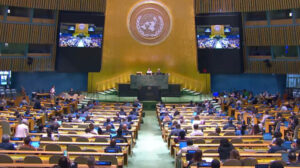
A standard news report might tell you that the United Nations Human Rights Council recently passed a resolution aiming to protect environmental activists. It might quote a diplomat, list the voting statistics, and file the story away under global governance. But those cold facts miss the terrifying reality of what it actually means to hold a cardboard sign or film an illegal mining operation in the year 2026.
The truth is much simpler, and much darker. To protect the earth is to invite a target onto your back.
The Geography of Fear
Consider how a typical environmental conflict unfolds. It does not begin in a courtroom. It begins with a whisper of chainsaws in the dead of night, or a sudden, unexplained fence erected around an ancestral water source.
When a community notices their river turning a milky, chemical gray, someone has to be the first to point a finger. That first person is usually a local farmer, an Indigenous leader, or a schoolteacher. They do not have corporate backing. They do not have bodyguards. What they have is a smartphone and a profound sense of stubbornness.
Let us look closely at what happens to that stubbornness when it meets entrenched financial interests.
According to data compiled by organizations like Global Witness, an environmental defender is killed somewhere in the world roughly every two days. Read that sentence again. It is not a vague trend; it is a steady, relentless drumbeat of assassination. Colombia, Brazil, Mexico, and the Philippines consistently top the list as the most lethal places to speak up for nature.
But death is only the final, loudest mechanism of silence. The everyday reality for these activists is a slow, grinding psychological warfare.
It starts with the digital realm. A smear campaign on Facebook labels a young activist a "terrorist" or a "foreign agent." Then come the text messages from unknown numbers, detailing the layout of their children's school. Next is the legal system, weaponized with terrifying precision through Strategic Lawsuits Against Public Participation—known colloquially as SLAPP suits. These are not meant to be won; they are meant to bankrupt. A small-scale activist group suddenly faces millions of dollars in damages for "defamation" simply because they published a report on a company's toxic runoff.
The system is rigged to exhaust them before it ever locks them away.
The Invisible Stakes at the UN
When the UN Climate Resolution for environmental defenders was introduced, the skepticism among grassroots organizers was palpable. It is easy to understand why. From a distance, international diplomacy looks like a theatrical exercise in semantics.
For weeks, diplomats in Geneva argued over whether to use the word "recognize" or "condemn." They debated commas while people in the Amazon basin were fleeing their homes under gunfire. It is easy to mock this bureaucratic inertia. When you are watching a community leader get dragged into an unmarked vehicle, a non-binding resolution from a distant committee feels utterly useless.
Yet, to dismiss international policy entirely is to misunderstand how power is checked on a global scale.
The UN resolution matters because it strips away the shield of domestic sovereignty that brutal regimes use to hide their crimes. When a state signs onto these frameworks, they are admitting, on the record, that environmental defenders are a distinct class of vulnerable human rights workers. It gives local lawyers a lever.
Think of it as a legal scaffold. A resolution does not send peacekeepers to guard a village leader's house. But it does allow international watchdog groups to penalize governments through trade agreements, aid conditionality, and public shaming. When money is tied to human rights, even the most corrupt regimes are forced to pause.
The real problem lies elsewhere, far from the polished marble floors of Switzerland. The gap between a ratified UN document and a dusty dirt road in Honduras is vast. Bridging that chasm requires more than signatures; it requires teeth.
The Mechanics of Silence
To truly comprehend the danger, we must look at who is doing the killing. The narrative we are often sold is one of rogue actors—cartels, illegal loggers, desperate wildcat miners acting in the shadows. That is a comforting lie because it suggests the problem is merely one of law enforcement.
The reality is much more uncomfortable.
The violence is frequently state-sanctioned, or at least state-tolerated. When a multinational corporation secures a mining concession in a developing nation, the local government often deploys the military or militarized police forces to "secure the asset." To the state, the extraction of copper, gold, or oil is a matter of national security and economic survival. Anyone standing in the way of that revenue stream is quickly reframed as an enemy of progress.
Imagine being an Indigenous elder facing a line of riot police holding shields purchased with your own tax dollars.
The corporation denies any involvement in the subsequent violence. They put out press releases about their corporate social responsibility initiatives and their net-zero targets. Meanwhile, the private security firms they hire operate with total impunity, blending seamlessly into local paramilitary groups. The lines of accountability are intentionally blurred, washed through layers of subcontractors and shell companies until the blame lands on nobody.
This is the sophisticated machinery that a twenty-something activist with a megaphone is trying to fight. It is a modern David and Goliath, except David's sling is regularly confiscated by the police.
Why Their Survival Dictates Ours
There is a temptation to view this as a localized tragedy—a sad reality for people living in the global south, but ultimately disconnected from life in comfortable, urban centers. This perspective is a profound mistake.
The people fighting to protect the mangrove forests of Southeast Asia or the peatlands of Central Africa are performing a vital service for every single person on this planet. They are the frontline stewards of the world's most critical carbon sinks. When an Indigenous community successfully blocks a mega-dam or an open-pit mine, they are preventing billions of tons of carbon from entering the atmosphere.
They are doing the heavy lifting of climate mitigation, paid for with their own safety, while the rest of the world debates carbon offsets on their smartphones.
When we allow them to be silenced, we lose the ecosystems they protect. It is a direct correlation. If the guardians are eliminated, the forests fall. If the forests fall, the climate destabilizes. The line connecting a murdered activist in Peru to a severe heatwave in Europe or a crop failure in the American Midwest is short, direct, and terrifyingly real.
Supporting these activists is not an act of charity. It is an act of collective self-preservation.
Turning Ink into Action
The UN resolution is on the books. The speeches have been delivered, the flashbulbs have faded, and the delegates have flown home. Now comes the dangerous part.
For this international agreement to mean anything to a person holding a line against an illegal logging truck, three things must happen immediately.
First, protection funds must bypass corrupt national governments and go directly to grassroots organizations. Activists do not just need statements of solidarity; they need satellite phones, legal defense funds, emergency evacuation protocols, and secure housing when the death threats become too specific to ignore.
Second, consumer nations must enforce strict supply-chain traceability. If a company imports timber, beef, or minerals sourced from land where environmental defenders were harassed or killed, that company must face crippling financial penalties and criminal liability in their home countries. We must make human rights abuses too expensive to absorb as a business cost.
Finally, we must change how we tell their stories. They cannot remain names on a spreadsheet or statistics in an annual human rights report.
We must see them for what they are: the most essential workers of our era.
The mud on Marinel Ubaldo’s boots has dried, but her work continues. She, and thousands like her, wake up every morning knowing that their next public statement could be their last. They do not carry weapons. They carry a belief that the land beneath their feet is worth more than the minerals buried inside it. They are holding up the sky for the rest of us, waiting to see if the world will finally step forward to help them bear the weight.