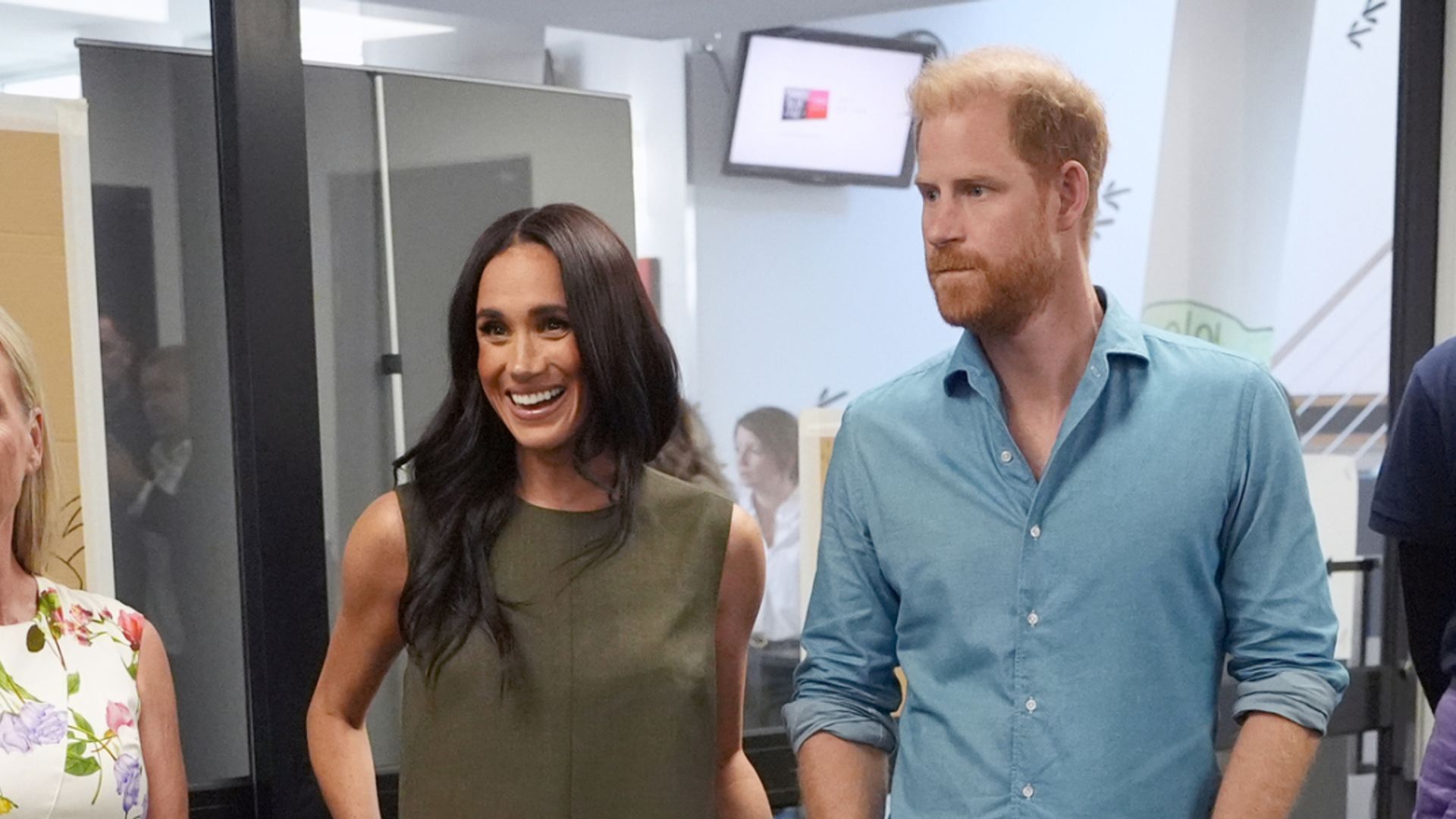
The media cycle loves a victim. For months, the dominant narrative surrounding Prince Harry’s travel plans has mirrored a high-stakes espionage thriller: a exiled prince desperately wanting to bring his family home to the United Kingdom, held back only by the looming threat of inadequate security. The competitor media treats this narrative as gospel. They print headlines about a father "reconsidering" trips due to safety concerns, treating the ongoing legal battle over his taxpayer-funded police protection as a genuine life-or-death crisis.
It is a comforting, dramatic story. It is also entirely wrong. Expanding on this idea, you can find more in: Stop Cheering For The Tupac Trial Because This Entire Prosecution Is A Legal Farce.
The lazy consensus in royal reporting accepts the premise that this is a dispute about physical safety. It ignores the mechanics of modern high-threat security, the realities of international travel for high-net-worth individuals, and the true utility of the Royal and VIP Executive Committee (RAVEC) decisions. Look past the emotional appeal of a concerned father, and you find a completely different reality. The security argument is not a logistical barrier; it is a highly effective, legally armored PR shield designed to mask a deeper, much more permanent familial alienation.
The Phantom Threat of Private Protection
The core argument put forward by Harry’s camp—and repeated without question by mainstream outlets—is that private security teams cannot operate effectively in the UK because they lack access to local intelligence and cannot carry firearms. Observers at Bloomberg have also weighed in on this situation.
This sounds reasonable to someone who gets their understanding of executive protection from Hollywood movies. To anyone who has actually managed risk profiles for ultra-high-net-worth individuals, tech executives, or visiting foreign dignitaries, it is pure fantasy.
The UK is one of the safest operating environments in the world for private security. Let's look at how executive protection actually functions.
- Intelligence Sharing: Private security firms do not operate in a vacuum. The global security apparatus relies heavily on former military and intelligence personnel who maintain deep, active networks. To suggest a top-tier private firm would be blind to a threat in London is an insult to the industry.
- The Firearm Myth: The UK is a strictly controlled firearm environment. The threat model for a public figure in London does not typically involve armed tactical squads executing a coordinated ambush. The primary threats are fixated individuals, aggressive paparazzi, and opportunistic protestors. None of these threats require a private security detail to carry submachine guns; they require crowd management, advanced route planning, and counter-surveillance.
- The RAVEC Reality: The court made it clear that Harry has not been denied state protection. He has been denied automatic state protection. RAVEC evaluates his visits on a case-by-case basis. If a specific, credible threat is identified by intelligence agencies, state resources are deployed.
Imagine a scenario where a tech billionaire visits London. They do not get Scotland Yard protection. They use private details that coordinate with local authorities, utilize armored vehicles, and execute flawless security protocols without a single state-funded officer present. If private security is sufficient for the CEOs of trillion-dollar companies facing active corporate espionage and global threats, it is sufficient for a non-working royal.
The Economics of the Legal Fight
The narrative further falls apart when you look at the financial logic of the legal challenge against the Home Office.
Harry offered to personally pay for his police protection, an offer the courts rejected. The media painted this rejection as bureaucratic cruelty. In reality, it was a defense of a fundamental constitutional principle: state policing is not a private concierge service for the wealthy.
If the goal were truly just safety, the millions of dollars spent on high-court judicial reviews could have funded a private security operation rivaling that of a small nation-state for a decade. A top-tier executive protection team in the UK costs thousands of dollars a day, not millions per week. By choosing a protracted, hyper-visible legal war over simply hiring a world-class private firm, the objective becomes clear. The fight itself is the point.
"Allowing wealthy individuals to purchase specialist police services risks creating a two-tier system where public safety resources are allocated based on wealth rather than assessed risk."
This principle is what the court upheld. The insistence on state-funded security is about status, not safety. It is a demand for the retention of state validation—a physical manifestation of royal status that cannot be bought on the private market. Police outriders and armed royal protection officers are the ultimate status symbols in the UK. Giving them up means admitting that the transition to private citizen is absolute.
The Practical Mechanics of High-Risk Travel
To understand how hollow the "UK is too dangerous" argument is, we have to look at the geography of the Sussexes' choices.
The family resides in Montecito, California. The United States has a vastly higher rate of violent crime, gun violence, and random mass shootings than the United Kingdom. In California, private security teams protect the family in an environment where almost anyone can legally or illegally obtain a firearm.
Yet, we are asked to believe that transitioning from that environment to the UK—a country with microscopic gun crime rates and world-class surveillance infrastructure—is an insurmountable risk.
Furthermore, consider their international travel. The couple has undertaken high-profile visits to countries with significantly higher baseline risk matrices than Western Europe. These trips are managed through a combination of private security and local state cooperation. The logistical template exists. It is utilized regularly. To claim that this same template cannot be applied to a weekend in Surrey or a brief stay at a private estate in Scotland is logistically nonsensical.
Dismantling the Premise of the "Family Visit"
People frequently ask: Why won't Harry just bring his children to see their grandfather if the King is unwell?
The standard answer provided by royal commentators is that he cannot justify the security risk to Archie and Lilibet. This response acts as a perfect conversational conversational stopper. It frames Harry not as a son refusing to see his family, but as a protective father shielding his children from harm. It shifts the moral burden from personal choice to state negligence.
Let’s dismantle that premise entirely.
If the children were to visit the UK, they would not be walking down Oxford Street or riding public transport. They would fly via private aviation directly into a secure airfield. They would be driven in armored, private vehicles directly to a secure royal residence—such as Windsor Castle or Sandringham—properties that feature permanent, heavily armed state security cordons regardless of who is staying in them.
The moment the family steps onto a royal estate, they are inside one of the most secure perimeters on earth. The journey between the private jet and the castle gate is the only variable, and that variable can be managed flawlessly by any competent private security firm.
The security risk to the children during a private family visit to a royal castle is statistically indistinguishable from zero.
The Strategic Value of the Stalemate
The ongoing security dispute provides a massive, ongoing strategic benefit to the Sussex brand. It serves as a universal alibi.
Whenever the family is absent from a major royal event—a wedding, a funeral, a jubilee, or a private gathering—the security narrative is dusted off and presented to the public. It prevents the media from focusing on the raw, uncomfortable truth: the emotional rift between the two factions is so deep that the desire for reconciliation does not exist.
Admitting that you simply do not want to see your brother or father creates a negative PR arc. It looks vindictive. But claiming you want to see them, but are prevented from doing so by a cold, faceless government committee that refuses to keep your children safe? That is a PR masterpiece. It converts an interpersonal failure into a systemic injustice.
The downside to this strategy is obvious to anyone watching closely. It alienates the British public, who view the demand for taxpayer-funded protection as an entitled overreach from someone who voluntarily stepped down from public service. But for a global audience unfamiliar with the nuances of UK constitutional law, the story plays perfectly.
Stop looking at the court documents as a struggle for survival. They are a struggle for branding. The minute Harry accepts private security as sufficient for his family in the UK, the alibi vanishes. The buffer is gone. He would be forced to confront the reality of his familial relationships without a legal smokescreen to hide behind.
The security argument will never be resolved, because resolving it would require admitting that the fear was never about the threat on the street—it was about the reality inside the room. Use the private security firms every other billionaire uses, or stop using the safety of your children as a rhetorical weapon. Those are the choices. Pick one.


_(cropped).jpg)