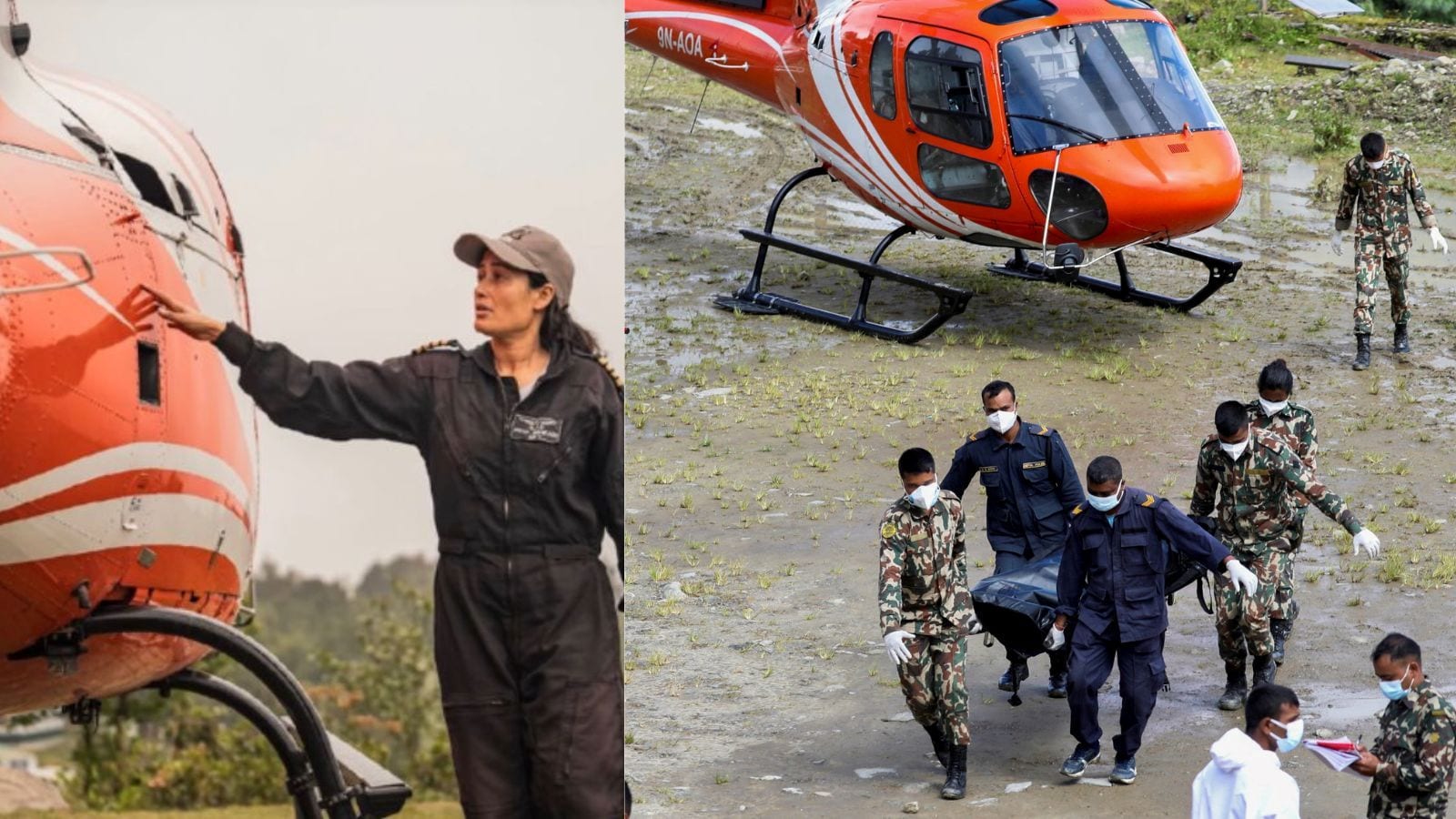
When flash floods and massive landslides tore through northern Nepal and the Tibet borderlands, roads vanished overnight and left entire communities completely stranded. Amid the chaotic disaster zone, Captain Priya Adhikari completed roughly one hundred rescue missions in just six days. As Nepal's first female helicopter captain, she didn't just break aviation barriers; she became a lifeline for survivors trapped in areas where landing a chopper felt like a gamble with death.
If you think flying in the Himalayas is stressful on a normal day, try doing it when valleys are choked with thick mud and five separate hydropower projects have been wiped out. Adhikari's intensive six-day run over the hardest-hit zones, including the devastated Timure area in the Rasuwa district, put her right in the middle of one of the worst crises the region has ever faced.
From Cabin Crew to Cockpit
Priya Adhikari didn't start her career with a silver spoon or an open runway into aviation. Back in 2006, she graduated college and started working as cabin crew for a domestic airline. She studied environmental science and worked long rosters to support her family. She is one of five daughters, and her family environment taught her early on how to push through financial and social hurdles.
The turning point happened when she took a routine helicopter ride and asked the pilot a simple question: how could a cabin crew member learn to fly the machine?
Within four months, she took out a parental loan and moved to the Philippines for rigorous flight training. Sceptics at home whispered that aviation was a man's job and doubted she could handle the pressure. She ignored the noise, built up her flight hours relentlessly, and officially became Nepal's first full-time female helicopter captain in 2017.
Surviving the Himalayan Skies
High-altitude rescue flying is an entirely different beast compared to commercial aviation. Density altitude eats aircraft performance, weather systems close mountain passes in minutes, and landing sites are often nothing more than jagged slopes or unstable riverbeds.
Adhikari spent years building an impressive resume before the recent floods hit. She flew cargo drops, navigated treacherous charter routes, and conducted high-altitude rescue missions up to 6,200 meters, plucking injured climbers off Mount Everest. During the devastating 2015 earthquake, she flew grueling missions into Hidden Valley, pushing through low oxygen levels that nearly caused hypoxia.
That background matters because what happened recently tested even her limits.
Inside the Six-Day Rescue Marathon
Operating in Timure meant dealing with congested airspace where five or six helicopters tried to land on the same tiny patches of earth simultaneously. Pilots had to coordinate constantly over crackling radios while keeping engines running because the mud was deep enough to swallow a helicopter's landing gear.
Adhikari described the sheer devastation bluntly. Entire settlements were erased, and bodies were scattered across areas where survivors waved frantically for help. She flew hundreds of people to safety while also recovering the deceased for families desperate for closure.
When media outlets like CNN asked her how she managed the exhaustion and the emotional toll, her answer was straightforward: "We've been trained for this."
There are no shortcuts to building that level of competence. It takes years of facing unpredictable crosswinds, managing engine performance in thin air, and staying calm when visibility drops to zero. Priya Adhikari's career proves that breaking glass ceilings in extreme environments requires equal parts technical skill and mental grit.