The rain over the hills of Tseung Kwan O always carries a heavy, salty dampness, the kind that clings to skin and blurs the edges of memory. Today, if you step off the underground train at Tiu Keng Leng station, you are greeted by the clean, rhythmic hum of progress. High-rise residential towers shoot toward the sky like concrete bamboo. Clean glass facades catch the morning light. Students laugh on their way to the architectural marvel of the Hong Kong Design Institute.
Everything looks permanent. Everything looks planned.
But if you look closely at the soil beneath the manicured podiums, or if you speak to the elders who watch the trains with distant eyes, you realize that this hyper-modern landscape is built over a ghost geography. Thirty years ago, this place was not a grid of glass and steel. It was a chaotic, clinging, fiercely independent enclave of wooden shacks, sheet-metal roofs, and stone cottages known to the world as Rennie's Mill.
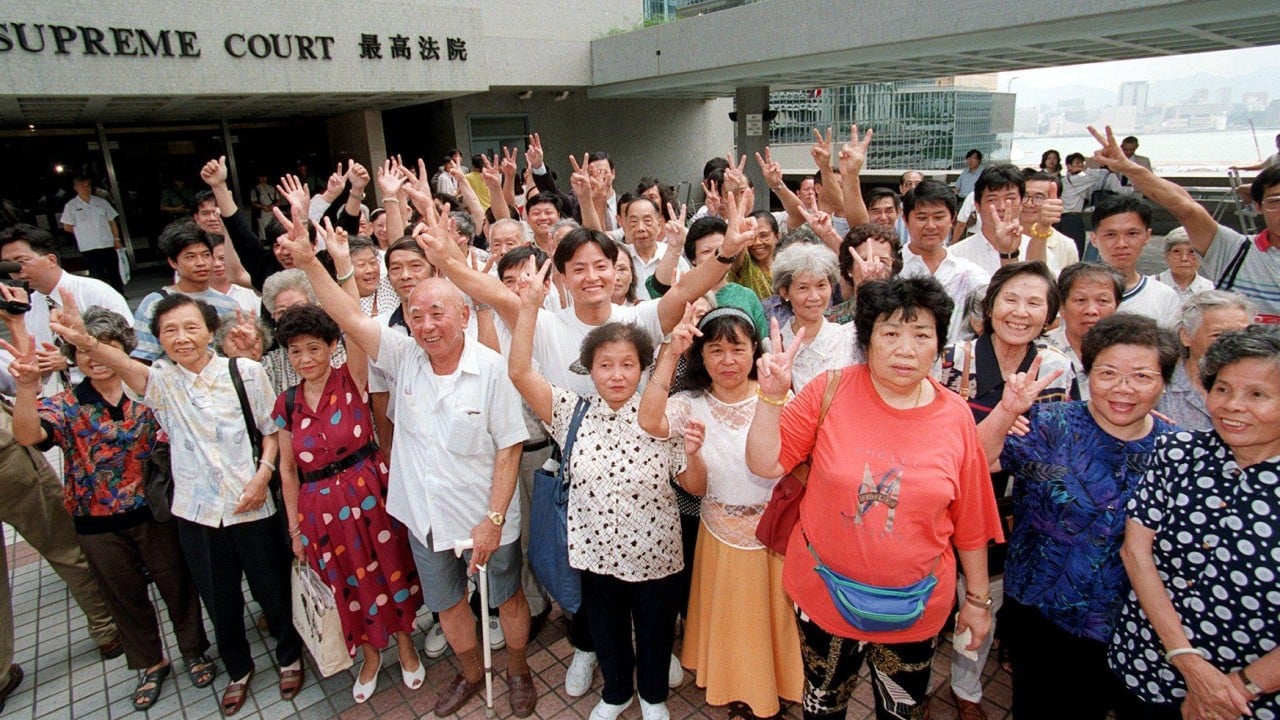
And on June 27, 1996, just days before the heavy hand of history rewrote the destiny of Hong Kong, a quiet war ended in a courtroom. It was a landmark legal battle that the history books often condense into a dry footnote about resettlement clearances and ex-gratia allowances.
The truth, however, is much louder. It was the day a forgotten village forced an empire to honor its word, even as the bulldozers were warming up their engines.
The Flags of the Forgotten
To understand the stakes of 1996, one must understand the smell of the air in Rennie's Mill during the decades before. It smelled of woodsmoke, salt fish, and burning incense.
In 1950, the area was a desolate, rocky hillside. The colonial government used it as a dumping ground for thousands of Nationalist Kuomintang soldiers and refugees who had fled the communist victory on the mainland. They were men and women with no country left, marooned on a steep slope facing the sea. The British called it Rennie’s Mill, after a businessman whose abandoned factory stood nearby. The locals called it Tiu Keng Leng—Hang Hau’s neck—a grim nod to the area's harsh isolation.
Consider the reality of a resident we will call Old Master Chang, a composite of the veteran soldiers who carved their lives into those rocks. Chang did not own land in the eyes of British common law. He owned a hammer, a spade, and a deep, unyielding devotion to a lost Republic. Every October, the hills of Rennie's Mill would erupt into a sea of blue, white, and red as thousands of Nationalist flags were hoisted above the rooftops. It was a geopolitical anomaly—a tiny, stubborn pocket of Nationalist Taiwan breathing inside a colony that was quietly preparing to be handed over to Beijing.
The colonial authorities originally viewed the settlement as temporary. They expected the refugees to disperse, to vanish into the urban fabric, or to eventually sail across the straits to Taiwan.
But people have a stubborn habit of growing roots where they are planted.
In June 1961, as the settlement grew from a chaotic camp into a permanent town with its own schools, churches, and clinics, the colonial government’s Commissioner for Resettlement issued a letter. It was a simple document, typed on official stationery. It stated that the residents of the cottage area could reside there indefinitely.
Indefinitely. A word that feels as solid as granite when you are building a life on a cliffside.
Based on that single word, families poured their meager life savings into reinforcing their stone walls, planting terraced gardens, and expanding their porches. The letter became a secular holy text, a shield against the creeping anxiety of a changing world.
The Clock on the Wall
By the mid-1990s, the countdown had begun. The 1997 handover was no longer a distant date on a diplomatic treaty; it was a physical weight in the air.
The colonial government announced a massive redevelopment scheme to transform the isolated cove into the Tseung Kwan O New Town. The official reason was urbanization—Hong Kong needed land for twelve thousand public housing flats to feed its booming population. The unofficial reason, whispered in every tea house from Kowloon to Hong Kong Island, was simpler: the British could not hand over a territory containing a hillside covered in Nationalist flags to the Communist government. The village had to go.
The Housing Authority served notices to quit. The residents were told to pack their bags, accept standard relocation packages into high-rise estates, and watch their community turn to rubble.
For the young, it was an inconvenience. For the old veterans, it was an eviction from the last sanctuary they had on Earth.
The government treated the clearance as a routine administrative exercise. They argued that the residents were merely licensees, holders of temporary occupation permits that could be canceled with three months' notice. The 1961 promise of "indefinite" residence was dismissed by bureaucrats as a historical courtesy, a vague statement of intent rather than a binding contract.
That is when the village decided to sue the Crown.
It was an audacious, desperate gamble. A group of eighty-two elderly residents, many of whom spoke only mainland dialects and understood nothing of British jurisprudence, applied to the High Court for a judicial review. They were represented by lawyers who had to translate legal jargon into the language of human survival.
The tension in the courtroom during those hot days in late June 1996 was thick. On one side sat the massed legal might of the colonial administration, armed with technicalities, land ordinances, and planning maps. On the other side sat the ghosts of 1950, clutching a yellowed piece of paper from 1961.
The Verdict of Justice Sears
Mr. Justice Raymond Sears looked down from his bench. He was a judge known for his independence, a man who understood that the law is not merely a machine for administrative efficiency, but a tool to prevent the strong from erasing the weak.
The government’s lawyers argued passionately that the community was a fire hazard, a historical anachronism, and that public funds should not be wasted on exceptional payouts for people who didn't even own the deeds to the dirt beneath their shoes. They asserted that the collective interest of the city's future housing needs outweighed the individual desires of a disappearing generation.
Justice Sears saw it differently.
On June 27, 1996, he delivered his judgment. He did not halt the march of progress; he knew the houses would ultimately be demolished. The city's hunger for land was a tidal wave that no court could stop. But he looked squarely at the Housing Authority and found their conduct to be a breach of faith.
He ruled that the residents who had lived in the cottage area prior to June 5, 1961, were victims of unfair treatment. The 1961 letter was not a meaningless piece of paper. It had created a legitimate expectation of security. By tearing down their world without acknowledging that broken promise, the state had committed a legal wrong.
He didn't just lecture the government; he hit them where it mattered. He ordered that eligible residents be compensated with substantial damages for the loss of their opportunity to live indefinitely at low rentals. He awarded redecoration expenses of sixty-five thousand dollars per household to help them start over. He insisted that the calculations be based on the actual size of their cottages, including their hard-won porches and paved open spaces.
When the news reached the steps of the High Court, the elderly residents did not break out into wild cheers. They wept. They held up their old photographs. They had won the argument, even if they had lost their hillside.
"The law protects the poor as well as the rich, and the government must keep its word when it makes a solemn promise to its people."
— From the spirit of the High Court proceedings, June 1996.
The Final Chord
The victory was bittersweet. Within weeks of the ruling, the clearance proceeded. The flags came down for the last time. The stone cottages were smashed by yellow excavators, their dust rising into the humid summer air to mix with the rain. Six thousand five hundred residents were scattered across public housing estates in Kowloon and the New Territories.
The Tiu Keng Leng of today is efficient. It is clean. It carries the weight of millions of daily commutes without breaking a sweat. It is exactly what the planners envisioned when they drew lines across the map of Tseung Kwan O.
But the landmark case of 1996 remains a vital reminder of what happens when the human element refuses to be scrubbed out of the ledger of progress. It proved that a community's history, built out of sweat, exile, and survival, has a value that cannot be ignored by bureaucratic convenience.
The next time you ride the escalator up from the Tiu Keng Leng station, look out past the glass canopy toward the green hillsides that rise abruptly behind the concrete. The shacks are gone. The flags are gone. But the victory of those eighty-two stubborn souls still lingers in the quiet air between the towers—a testament to the day the forgotten citizens of a disappearing village stood before the law, held up a fading letter, and made an empire pay its debts.