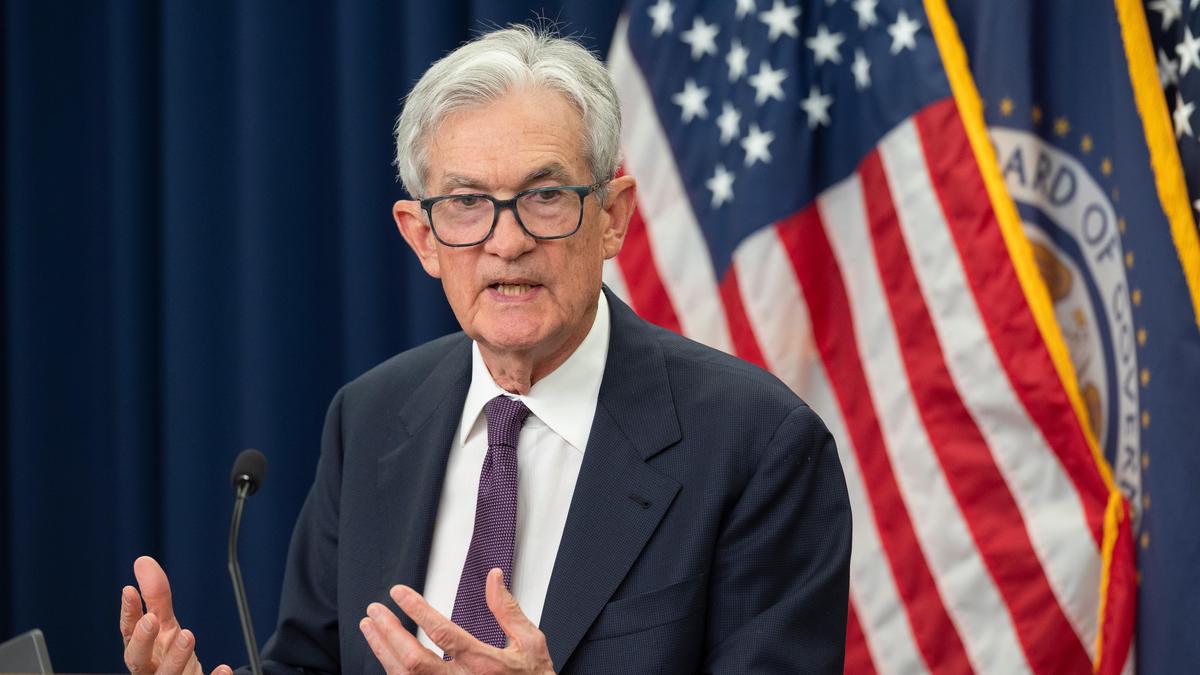
The Federal Reserve just signaled a pause, and the financial press is busy feeding you the same tepid porridge they’ve served for three decades. They tell you to "wait and see." They suggest your mortgage rate might dip by a fraction of a percentage point by next quarter. They whisper that your high-yield savings account is a "safe haven."
They are wrong. Dead wrong.
A Fed hold isn't a "pause" in the economic cycle; it’s a predatory equilibrium. While you wait for the central bank to "signal" your next move, the banking industry is quietly recalibrating its margins to ensure that whether rates go up, down, or sideways, you are the one funding their record quarterly profits. If you are waiting for Jerome Powell to give you permission to fix your finances, you’ve already lost.
The High Yield Savings Lie
The most dangerous advice circulating right now is that you should celebrate your 4.5% or 5% APY in a "high-yield" savings account.
Let’s look at the math the banks don't put in the glossy brochures. If the Fed holds rates at 5.25%–5.50%, and your bank is giving you 4.5%, they are pocketing a massive spread on your "safe" money. But it gets worse. Once you factor in real-world inflation—not the "Core CPI" that conveniently ignores the steak and gasoline you actually buy—and the taxes you owe on that interest income, your real rate of return is effectively zero. Or negative.
You aren't making money; you are participating in a slow-motion wealth transfer. The bank takes your deposits, lends them out at 8% for autos or 24% for credit cards, and tosses you a few crumbs to keep you from moving your capital to Treasury bills.
If you have more than three months of emergency expenses sitting in a standard savings account during a rate hold, you are an unpaid intern for Goldman Sachs. Real wealth is built by capturing the spread, not by being the spread.
Mortgages: The Pivot That Isn't Coming
The mainstream media loves the "pent-up demand" narrative. They claim that as soon as the Fed hints at a cut, mortgage rates will tumble, and the housing market will suddenly become affordable again.
This is a fundamental misunderstanding of how the bond market works. Mortgage rates track the 10-Year Treasury yield, not the federal funds rate. The market is forward-looking. If the Fed is holding rates steady because the economy is "resilient" (read: inflationary), the bond market will keep yields high to compensate for that risk.
We are currently trapped in a "higher for longer" reality that the average homebuyer refuses to accept. Waiting for 3% or even 4% mortgage rates is a fantasy. It’s a strategy based on nostalgia, not numbers. I’ve seen portfolios liquidated because investors sat on the sidelines for years waiting for a "return to normal."
Here is the brutal truth: The "normal" of 2010–2020 was a historical anomaly fueled by massive quantitative easing. We are back to the historical mean. If you can’t make the math work at 6.5% or 7%, you can’t afford the house. Period. Hoping for a Fed-induced bailout of the housing market is not a financial plan; it’s a prayer.
The Credit Card Trap: Variable Rate Violence
The "hold" is a death sentence for anyone carrying a balance on a credit card. While mortgage holders are locked into fixed rates (mostly), credit card interest is a shark that never stops swimming.
When the Fed holds, your APR stays at its all-time high—typically between 20% and 29%. Banks have no incentive to lower these rates. Even if the Fed eventually cuts by 25 basis points, do you think your credit card issuer is going to pass that "savings" on to you?
They won't. They will lag the decrease for months while immediately pricing in any potential increase. This is the asymmetry of retail banking. The "pause" is a period where banks harvest interest from the middle class to fortify their balance sheets against potential commercial real estate defaults. Every month you carry a balance during a rate hold, you are paying a "stagnation tax" that compounds against your future.
Why "Diversification" is a Trap During Stagnation
The standard "60/40" portfolio is a relic of a low-inflation, high-growth era. In a period where the Fed is paralyzed by the fear of reigniting inflation, traditional diversification fails.
When rates are held high, the correlation between stocks and bonds increases. They both move based on the same "Fed-speak" rumors. If the Fed holds because inflation is sticky, bonds sell off and stocks shudder. If they hold because the economy is slowing, stocks dump and bonds might rally slightly, but not enough to offset the equity bloodbath.
Stop looking at your portfolio as a collection of "safe" and "risky" buckets. In a rate-hold environment, you need to look at liquidity and pricing power.
- Companies with Debt: Avoid them. Interest expense is eating their cash flow.
- Companies with Pricing Power: These are the only survivors. If a company can't raise its prices faster than the Fed can hold rates, its margins are shrinking.
The Counter-Intuitive Play: Debt as a Weapon
Most "experts" tell you to pay down all debt when rates are high. That’s lazy advice.
In a high-rate-hold environment, fixed-rate debt is an asset. If you have a mortgage at 3%, that debt is effectively a short position on the US Dollar. Every month that the Fed holds rates high and inflation persists, the real value of what you owe shrinks while the nominal value of your labor (should) increase.
The goal isn't to be debt-free; the goal is to be low-cost-debt heavy. Use your cash to buy high-yielding, short-term Treasuries or private credit instruments that pay you more than your fixed-rate debt costs you. This is how the wealthy operate. They don't pay off the 3% loan; they arbitrage it against the 5.5% risk-free rate.
The Myth of the "Soft Landing"
The Fed holds because they think they can stick the landing. History suggests otherwise. Every significant rate-hiking cycle in the last 50 years has ended in something breaking.
The "hold" is the period of maximum tension before the snap. We are seeing it in commercial real estate. We are seeing it in the delinquency rates of subprime auto loans. We are seeing it in the exhaustion of "excess savings" from the stimulus era.
The competitor articles tell you "what this means for your wallet" in terms of a few dollars of interest. They are missing the systemic risk. A Fed hold means the central bank is intentionally keeping the brakes slammed on the economy. They are trying to slow things down. Eventually, something stops moving entirely.
Stop Asking the Wrong Questions
People ask: "Should I buy a car now or wait for rates to drop?"
The real question: "Why are you financing a depreciating asset at 9% interest during an economic slowdown?"
People ask: "Which savings account has the highest rate?"
The real question: "Why is your capital sitting in a bank's ledger instead of being deployed into assets that benefit from the very inflation the Fed is struggling to contain?"
The Arbitrage of Apathy
The Fed’s current stance relies on your apathy. They need you to keep spending your paycheck despite the high interest. They need you to keep your money in low-yield accounts so banks stay liquid. They need you to believe that the "hold" is a sign of stability.
It isn't. It is the eye of the hurricane.
The "lazy consensus" is to sit tight and wait for the next meeting. The insider move is to recognize that the Fed is no longer your friend. They have one mandate: save the currency. If they have to crush your housing dreams or your 401(k) to do it, they will.
Stop looking at the Fed as a weather report and start looking at it as a predator. Adjust your exposure. Exit the "high-yield" trap. Stop waiting for a 2021 that is never coming back.
The window to reposition is closing while you read about "what this means for your savings account." Move now, or stay stuck in the spread.