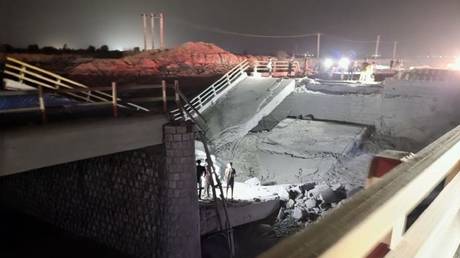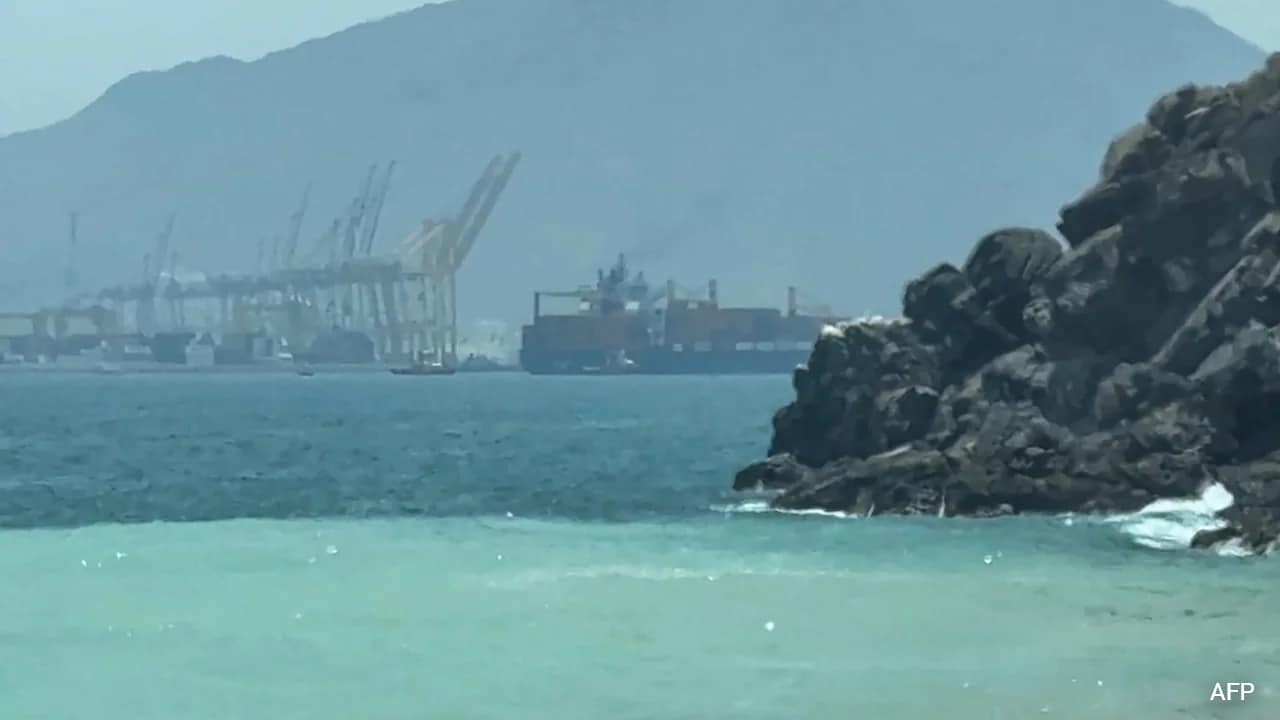
The prospect of military strikes targeting Iran’s critical transport infrastructure—its bridges, airports, and railway networks—represents a point of no return in Middle Eastern geopolitics. While sensationalist headlines often treat these target sets as isolated tactical achievements, the strategic reality is far more complex and dangerous. Disruption of Iran’s logistics network does not just halt military supply lines. It destabilizes the fragile regional trade corridors linking Moscow to the Indian Ocean, triggers immediate retaliatory blockades in the Persian Gulf, and drags global energy markets into uncharted territory.
To understand the impact of kinetic operations within Iranian borders, one must look past the immediate theater of explosions and analyze the structural dependencies of the Eurasian continent. Iran is not merely a regional power; it is a geographic bridge.
The Vulnerable Spine of the Eurasian Transit Corridor
For decades, Western defense analysts viewed Iranian transport infrastructure primarily through the lens of domestic troop movements and regional proxy supply lines. That view is dangerously outdated. Today, Iran’s railway network and northern ports form the central trunk of the International North-South Transport Corridor. This transit system connects Russian industrial hubs directly to Indian ports via the Caspian Sea and Iranian overland tracks.
The system relies on a few highly vulnerable bottlenecks.
Consider the Rasht-Astara railway link, a stretch of track designed to connect the Azerbaijani railway network to Iranian lines. A targeted strike on the bridges or terminals along this route does more than interrupt local commerce. It cuts Russia’s sanctions-busting backdoor to the global south. For Moscow, this corridor represents a vital economic artery. For Washington, disabling this infrastructure is a tempting way to squeeze both Tehran and Moscow simultaneously.
But railways are notoriously difficult to keep offline permanently unless the destruction is systemic. During the mid-twentieth century, air campaigns proved that rail lines can often be repaired within days. Bridges, however, are a different story. The mountainous terrain of western and northern Iran forces rail lines through narrow valleys and over massive concrete spans. Collapsing a critical rail bridge in the Alborz mountains requires precision-guided, heavy-earth-penetrating ordnance.
If these bridges fall, the logistical headache for the Iranian state is immense. Road transport cannot easily absorb the volume of bulk cargo currently moving by rail. The northern ports of Bandar Anzali and Amirabad would choke on accumulated freight, backing up cargo vessels deep into the Caspian Sea.
Airfields and the Myth of the Surgical Strike
Airports are always at the top of any strike list. Runway cratering and the destruction of air traffic control facilities are standard opening moves in modern air campaigns. In Iran, the primary targets are well-known: Mehrabad International Airport in Tehran, which doubles as a major military transport hub, and airfields in Shiraz, Isfahan, and Bandar Abbas.
The goal of striking these facilities is straightforward. The attacker seeks to ground Iran's fleet of cargo planes, which are routinely used to ferry personnel, drones, and missile components to proxies across the Levant.
But the concept of a clean, surgical strike on an airport is a dangerous illusion.
- Collateral Damage: Most Iranian military airfields are adjacent to or integrated with civilian airports. Striking the military aprons at Mehrabad, for instance, risks catastrophic civilian casualties and the destruction of foreign commercial airliners.
- Rapid Repair Capabilities: Modern militaries use rapid-hardening concrete and pre-fabricated metal mats to patch runway craters within hours. To keep an airfield suppressed, an attacking force must commit to continuous, high-risk sorties, exposing expensive aircraft to Iran’s air defense systems.
- Mobile Logistics: Drone manufacturing and storage facilities are increasingly decentralized. They do not rely on massive runways; they utilize ruggedized road segments, small hidden launch sites, and subterranean bases carved into the Zagros Mountains.
Targeting airports may look impressive on satellite imagery, but it rarely yields the long-term strategic denial that planners promise. Instead, it serves as a powerful political signal—one that almost guarantees an escalatory response.
The Retaliation Equation
Iran’s military doctrine has never been based on symmetrical air defense. The Iranian leadership knows it cannot match the raw airpower of the United States or its closest allies. Instead, its strategy is built on asymmetric retaliation and geographic leverage.
If Western forces strike bridges and rail networks deep inside Iran, Tehran will not confine its response to its own borders.
The first and most obvious retaliatory vector is the Strait of Hormuz. Roughly a fifth of the world’s liquefied natural gas and oil passes through this narrow waterway daily. Iran does not need to physically block the strait with a wall of warships to halt traffic. It merely needs to raise the cost of marine insurance to prohibitive levels.
"A single successful drone strike on a commercial tanker, or the deployment of smart sea mines in the shipping lanes, would instantly freeze commercial transit through the Gulf."
Furthermore, Iran’s regional network of partners would likely activate in unison. Rocket and drone barrages targeting port facilities in neighboring Gulf states, cyber attacks on Western maritime logistics firms, and sabotage of regional oil pipelines would be the immediate consequence. The illusion that a kinetic campaign can be contained within Iranian territory ignores the reality of modern proxy networks.
The Economic Aftershocks of Transport Disruption
The economic fallout of disabling Iran’s transport infrastructure extends far beyond the Middle East. If the Iranian rail and road network is crippled, the immediate casualty is the land-based trade between Asia and Europe.
While the Northern Route through Russia remains heavily restricted by sanctions and the Southern Route through the Red Sea is plagued by maritime insecurity, the Middle Corridor has emerged as a critical alternative. Disrupting the Iranian segments of these trade routes forces global shipping to rely even more heavily on long, expensive maritime detours around the Cape of Good Hope.
This is not just an abstract problem for logistics firms. It represents a direct injection of inflationary pressure into the global economy.
When transport infrastructure fails, supply chains stretch. Container ships take longer to reach their destinations, shipping containers become scarce in key manufacturing hubs, and the cost of moving basic commodities skyrockets. A sustained air campaign against Iranian logistics would inevitably translate to higher prices at gas pumps and grocery stores in Europe and North America, presenting a severe domestic political liability for the nations initiating the strikes.
Striking bridges and railways inside a sovereign nation is an act of total war, regardless of how planners try to brand it. The physical destruction of concrete and steel is relatively simple for a modern military machine. The management of the geopolitical, economic, and human chaos that follows is a task for which no one has a reliable playbook.