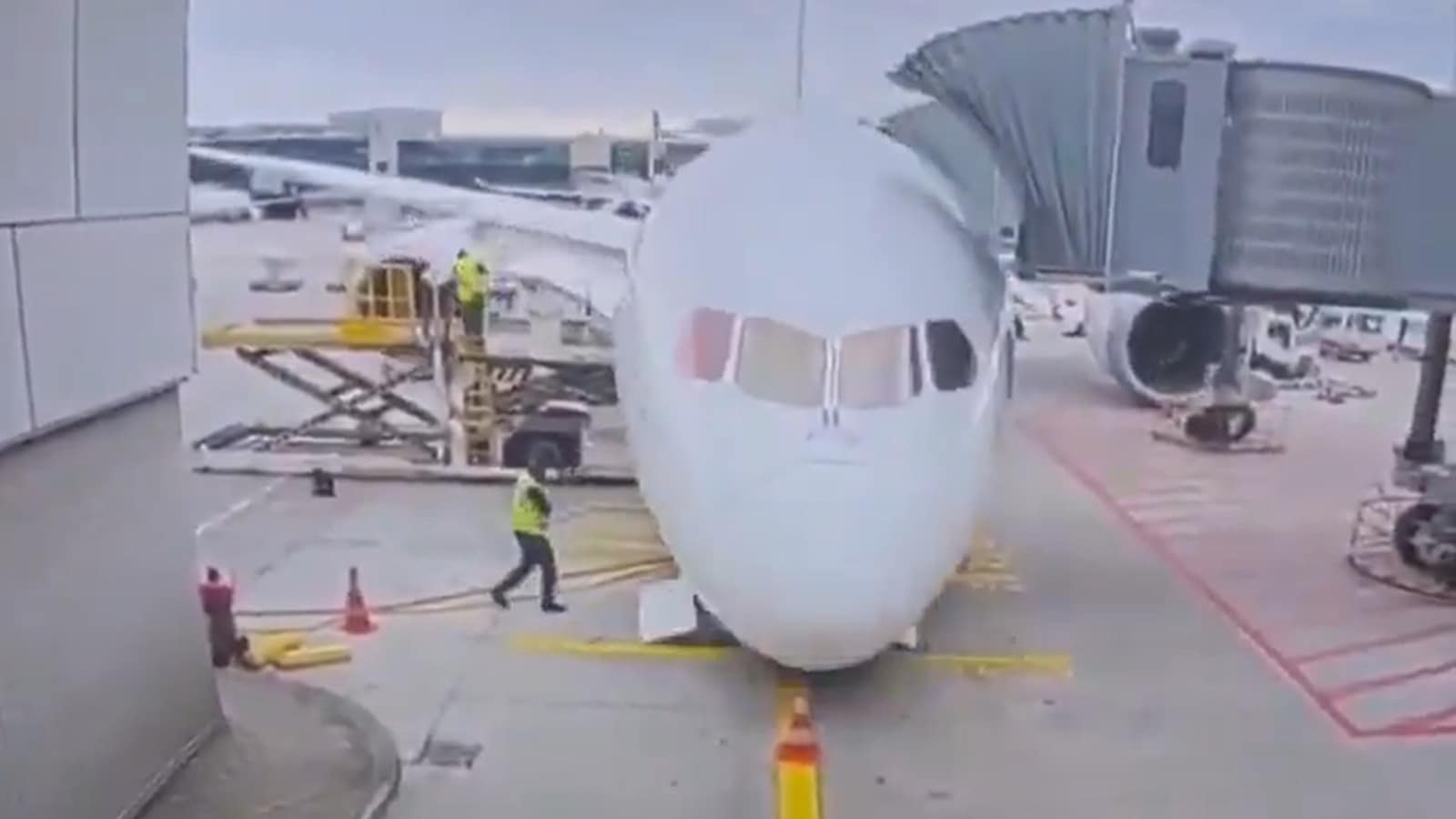
A standard pre-flight routine turned into a chaotic scene of twisted metal and emergency responses when a Lufthansa Boeing 787 Dreamliner suffered a sudden nose gear collapse on the tarmac. While preparing for departure, the forward fuselage dropped violently onto the concrete, causing immediate structural damage and leaving several crew members and ground staff with minor injuries. Investigators are focusing on whether the incident stemmed from a mechanical failure within the hydraulic locking pins or a procedural error during ground handling. This event adds to a troubling history of nose gear failures across multiple aircraft platforms, exposing deep vulnerabilities in maintenance protocols and automated ground safety systems.
Ground operations are inherently dangerous. When a multi-ton commercial airliner drops its nose without warning, the forces involved are cataclysmic. The immediate aftermath always triggers a predictable sequence of events: FAA or local equivalent investigations, corporate press releases promising full cooperation, and social media panic fueled by passenger cell phone footage.
Yet, looking beyond the immediate chaos reveals a recurring vulnerability that the aviation industry has struggled to eradicate for decades. This is not an isolated piece of bad luck for a single airline. It is a symptom of the intense friction between high-turnover airport operations and the uncompromising physics of landing gear design.
The Brutal Physics of the Forward Strut
The nose landing gear of a modern widebody aircraft is a marvel of engineering, but it is also a single point of failure. Unlike the main landing gear, which features massive multi-wheel bogies designed to absorb the crushing impact of landing, the nose gear is built for direction and steering. It carries a fraction of the weight during flight, but on the ground, it bears the brunt of directional shifts and sudden braking forces.
Inside the gear well lies a complex network of hydraulic actuators, mechanical over-center locks, and electrical sensors. When the aircraft is on the ground, a physical ground lock pin is manually inserted by ground crews to prevent the gear from retracting accidentally. For a collapse to occur on the tarmac, a specific sequence of safeguards must fail simultaneously.
If the mechanical lock fails to engage properly due to wear or micro-fractures, the gear relies entirely on hydraulic pressure to stay extended. If that pressure drops, or if an uncommanded retraction signal is sent through the aircraft’s digital nervous system, gravity and the weight of the aircraft do the rest. The collapse happens in less than two seconds. Metal shears, aluminum skin wrinkles, and anyone standing nearby or inside the forward cabin is subjected to a violent, vertical drop.
Human Factors and the Ground Crew Pressure Cooker
Aviation safety boards frequently point to maintenance or ground handling errors rather than pure mechanical failure when analyzing tarmac collapses. The modern airport ramp is an unforgiving environment. Turnaround times are squeezed to the absolute limit to maximize profitability. Ground crews work in high-decibel, high-stress conditions, often dealing with extreme weather and fatigue.
Inadvertent gear retraction often tracks back to a simple, devastating oversight: the improper use or premature removal of the nose gear ground lock pin. During maintenance or pre-flight towing, these pins are the primary line of defense. If a flight crew or maintenance technician cycles the hydraulic systems or tests the landing gear lever while the pin is missing or improperly seated, the system behaves exactly as it was programmed to do in the air. It retracts the gear.
Blaming the ground crew is easy. Fixing the systemic pressure that leads to these errors is much harder. Airlines have implemented strict "two-person verification" rules for pin removal, yet incidents persist. This indicates that training regimens and checklist compliance are failing under the weight of operational demands.
A History of Collapsing Metal
To understand why the aviation sector cannot seem to outrun this issue, one must examine the historical precedent. This is not a problem unique to the Boeing 787.
- The Boeing 747 Legacy: Early variants suffered from micro-cracks in the actuator cylinders, leading to several high-profile nose-drops during maintenance in the 1980s and 1990s.
- The Airbus A320 Series: Suffered from a recurring issue where the nose wheels would turn 90 degrees out of alignment during flight, causing the gear to collapse or catch fire upon touchdown.
- Regional Jets: Smaller aircraft like the Bombardier CRJ series have experienced localized nose gear failures linked to severe corrosion in the locking mechanisms due to de-icing fluids.
Every time an incident occurs, manufacturers issue Service Bulletins. Airlines perform fleet-wide inspections. The industry breathes a sigh of relief until the next set of images hits the news cycle. The reality is that as long as aircraft rely on mechanical linkages subjected to immense vibrations, salt, dirt, and human touch, the risk of structural failure remains above zero.
The Micro-Fracture Problem Nobody Can See
Beyond human error lies the insidious threat of material fatigue. The nose gear assembly undergoes thousands of cycles of stress every year. Every bump on the taxiway, every hard braking action, and every turn during pushback transmits kinetic energy through the forward strut.
Over time, this constant stress creates microscopic fractures deep within the high-strength steel or titanium alloy components. These cracks are invisible to the naked eye. They require specialized non-destructive testing methods, such as ultrasonic scanning or magnetic particle inspection, to detect.
[Stress Cycles] ➔ [Microscopic Cracks] ➔ [Corrosion Acceleration] ➔ [Sudden Structural Failure]
Because these inspections are time-consuming and expensive, they are scheduled at specific intervals based on flight hours or flight cycles. However, an aircraft operating in a harsh environment—such as highly humid coastal regions or areas with high pollution—can experience accelerated corrosion that bypasses standard inspection timelines. When corrosion meets a micro-fracture, structural failure is no longer a matter of if, but when.
The Cost of the Drop
When an airline loses a nose gear on the tarmac, the financial penalty extends far beyond the immediate repair bill. The forward fuselage of an aircraft houses the radar equipment, avionics bays, and critical flight computers. A sudden drop onto the concrete can shock-load these sensitive systems, rendering them useless and requiring total replacement.
Furthermore, the structural integrity of the hull is often compromised. Wrinkled skin panels indicate that the internal frame has absorbed energy it was never designed to handle. Repairing this kind of damage requires specialized teams from the manufacturer, often taking the aircraft out of service for months. For a major carrier, losing a widebody aircraft during peak travel season can result in millions of dollars in lost revenue and disrupted schedules.
The reputational damage is equally severe. Passengers today are hyper-aware of aviation safety anomalies. A video of a premium aircraft sitting on its nose like a wounded bird spreads globally in minutes, forcing corporate communications teams into damage control mode while engineers are still driving to the hangar.
Rethinking the Fail-Safe
The current approach to preventing nose gear collapse relies heavily on human compliance and traditional mechanical locks. This framework is no longer sufficient for the complexities of modern aviation.
True systemic resilience requires a shift toward automated, smart fail-safes. Modern landing gear systems should incorporate electronic proximity sensors that physically prevent the hydraulic actuators from moving if ground mode is detected, independent of the cockpit lever position or the presence of a manual pin. Some newer aircraft designs have begun integrating these digital overrides, but retrofitting older fleets is cost-prohibitive for many operators.
Until the industry mandates a hardware-level, digital block that completely isolates the gear retraction hydraulics while the aircraft detects weight on its wheels, the safety of the aircraft will remain dependent on a piece of red ribbon attached to a metal pin and the memory of a tired technician. The physics of the tarmac will continue to exploit any gap in that defense.