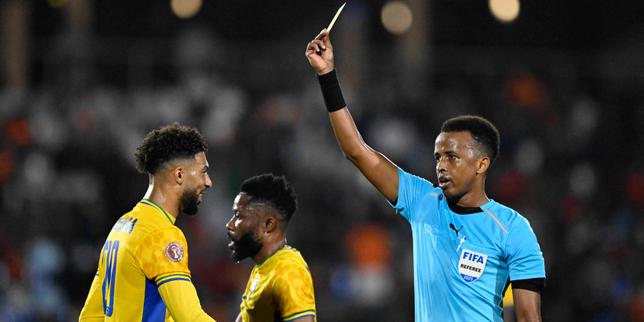
The mainstream sports press loves a lazy victim narrative. When news broke that FIFA replaced Somali referee Omar Abdulkadir Artan for the World Cup qualifiers after the United States denied his visa, the headlines practically wrote themselves. Editorial rooms rushed to paint this as a tragic tale of geopolitical unfairness, bureaucratic overreach, and a dream shattered by a heartless immigration system.
They are asking the wrong question. They want to know why Washington didn't rubber-stamp a visa for an elite athlete. If you enjoyed this piece, you should look at: this related article.
The real question we should be asking is why FIFA—a multi-billion-dollar global enterprise with more diplomatic leverage than most sovereign nations—continues to outsource its logistical viability to the whims of unilateral border policies.
This isn't an immigration story. It is a story about the structural incompetence of sports governance. FIFA didn’t drop Artan because the US said no. FIFA dropped Artan because its own outdated tournament model relies on the absolute compliance of superpowers, and when that compliance fails, the organization folds like a cheap lawn chair. For another angle on this development, refer to the latest coverage from Bleacher Report.
The Illusion of Global Football Governance
For decades, international sports bodies have operated under the delusion that sport transcends politics. I have watched sports executives spend millions drafting high-minded diversity charters and "football unites the world" marketing campaigns, only to watch those same executives grovel the moment a local customs agent decides to enforce a travel ban.
Let’s dismantle the premise that this visa denial was an unpredictable roadblock.
The United States has rigid passport and visa requirements, particularly for individuals traveling from regions experiencing long-term geopolitical instability. This is a known, static variable. When FIFA awards tournament hosting rights or scheduling windows to countries with strict immigration policies, they know exactly what the risks are.
Yet, the media consensus frames Artan’s exclusion as a sudden stroke of bad luck.
The Reality: Luck has nothing to do with it. FIFA chooses to operate in a framework where a single mid-level bureaucrat in a US consulate holds veto power over who steps onto the pitch.
By immediately replacing Artan with Eritrean referee Tewodros Mitiku, FIFA proved that its commitment to development in emerging football regions is entirely cosmetic. The message sent to referees across East Africa was brutal and clear: your merit, physical conditioning, and tactical sharpness mean nothing if you hold the wrong passport.
Why the Travel Infrastructure is Broken
To understand how deep this failure goes, we have to look at the mechanics of match official appointments. Referees are not afterthought participants; they are the literal guarantors of the game's integrity.
When a referee is selected for an international window, the appointing body typically relies on standard athletic visas. Look at how the system crumbles under pressure:
| Stage of Process | Theoretical Expectation | Operational Reality |
|---|---|---|
| Selection | Best referee chosen regardless of nationality. | Selection limited by passport strength. |
| Logistics | Governing body secures expedited diplomatic transit. | Official is left to navigate standard embassy backlogs. |
| Crisis Management | Legal team appeals or moves the venue. | Governing body panics and replaces the individual. |
This table exposes the cowardice of the current system. If FIFA actually possessed the institutional teeth it claims to have, a visa denial for a match official would trigger an immediate venue reassessment or a legal escalation. Instead, the governing body chose the path of least resistance. They neutralized the problem by erasing the individual.
Stop Blaming the State Department
People looking at this situation keep asking: Why can't the US make exceptions for international sports figures?
This question is fundamentally flawed. It demands that a sovereign state alter its national security protocols to accommodate a football match. It shifts the blame from the wealthy organizer to the government entity that is simply executing its stated laws.
The United States visa policy is public record. The processing times are public record. The scrutiny applied to specific passports is public record.
When I worked alongside international sports coordinators planning cross-border tournaments, the first rule of risk management was simple: Never build a critical path around a high-risk visa.
FIFA ignored this rule. They appointed Artan knowing the logistical hurdles, failed to provide the necessary institutional muscle to guarantee his entry, and then cut him loose when the predictable bureaucratic wall went up. It is a classic corporate bait-and-switch. They get the good press for appointing a diverse officiating crew, and the government takes the heat when the appointment falls through.
The Hard Truth About Sports Meritocracy
We are told that football is the ultimate meritocracy. If you are good enough, you play. If you are sharp enough, you referee.
Omar Abdulkadir Artan proved his elite status on the pitch during the Africa Cup of Nations. He earned his spot through physical metrics, split-second decision-making, and flawless rule enforcement.
But international football does not operate on merit; it operates on geographic privilege.
A referee from Western Europe with identical match ratings faces zero friction. They glide through international airports with biometric passports and pre-approved waivers. A referee from the Horn of Africa, doing the exact same job at the exact same level, is treated like a security liability.
By accepting this status quo, FIFA actively devalues its own product. They are telling fans that the quality of officiating matters less than the diplomatic alignment of the referee's home country.
How to Fix a Rigged System
If international sports organizations want to stop being humiliated by national immigration departments, they must fundamentally alter how they do business. The current playbook of sending a polite letter of support to an embassy does not work.
1. Establish Host-Country Binding Guarantees
No country should be allowed to host a FIFA-sanctioned match, qualifier, or tournament without signing a legally binding treaty guaranteeing unconditional entry for all qualified players, staff, and officials. If a nation cannot or will not sign that guarantee, they lose the hosting rights. Period.
2. Create an Independent Escrow Fund for Legal Appeals
When an official is denied entry, the governing body should not immediately look for a replacement. They must deploy a dedicated legal task force to challenge the decision via expedited administrative channels.
3. Decentralize Neutral Venues
If superpower nations refuse to cooperate with the global nature of the sport, move the matches to nations with progressive, open transit laws. Stop chasing stadium revenue at the expense of human equity.
The sports world will continue to wring its hands over Omar Abdulkadir Artan, treating his removal as an isolated incident of political misfortune. It is easier to blame a visa office than to admit that the entire structure of international sports administration is built on a foundation of systemic cowardice.
FIFA had the power to stand behind its referee. They chose to protect their schedule instead. Until the governing bodies of sport refuse to let politicians pick their officiating crews, the integrity of the global game is nothing but a marketing myth.