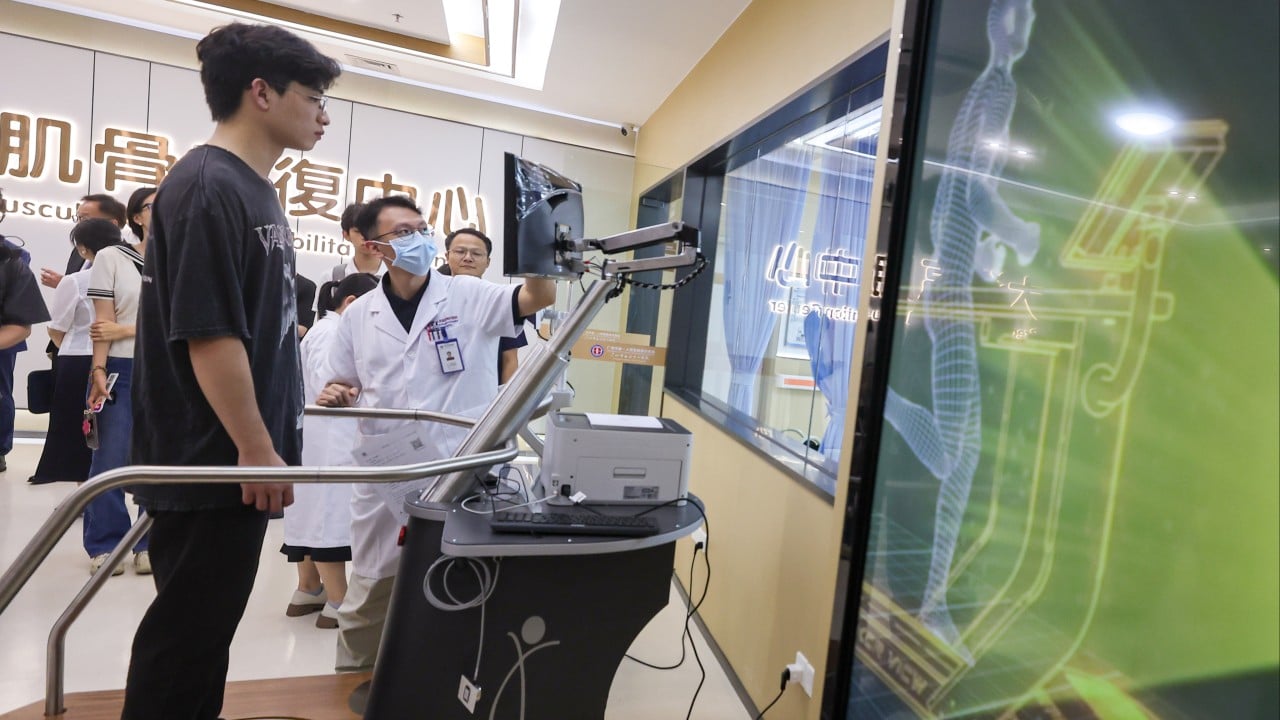
The Chinese University of Hong Kong (CUHK) signed a landmark agreement on July 15, 2026, to establish its first cross-border clinical trial centre in Guangzhou’s Nansha district. While the official press releases frame this as a celebratory academic partnership, the real objective runs far deeper. This is a high-stakes, calculated maneuver to resolve a structural crisis in drug development: Hong Kong’s acute shortage of clinical trial patients and the regulatory bottlenecks preventing global biotech firms from easily accessing the vast population of mainland China.
For decades, Hong Kong has held a unique advantage. Its clinical trial data is directly accepted by the US Food and Drug Administration (FDA), the European Medicines Agency (EMA), and China’s National Medical Products Administration (NMPA). Yet, the city's small population has severely limited its clinical trial capacity. By embedding itself directly into Nansha, CUHK is building an unprecedented pipeline to bypass these limitations, fundamentally altering how drugs are tested and approved across the border. Also making headlines recently: Why a Montreal Hospital Livestreaming Surgeries for Educational Purposes Matters Today.
The Patient Deficit and the Nansha Escape Valve
Hong Kong has world-class medical researchers, impeccable data integrity, and hospitals that run on strict international standards. What it does not have is patients.
With a population of just over seven million, the city struggles to recruit enough participants for large-scale clinical trials. The problem is particularly acute for rare diseases, advanced oncology therapies, and specialized medical devices. A trial that might take three years to recruit sufficient subjects in Hong Kong can find its cohort in a matter of weeks across the border in Guangdong province, which boasts a population exceeding 120 million. Further insights on this are explored by National Institutes of Health.
The new Greater Bay Area Clinical Trial Centre in Nansha, set up in partnership with the Guangzhou First People's Hospital, serves as the ultimate escape valve. Rather than attempting to bring mainland patients to Hong Kong—a process plagued by immigration hurdles, high accommodation costs, and administrative friction—Hong Kong is bringing its clinical trial infrastructure to the mainland.
This is not a simple expansion. It is an export of Hong Kong’s regulatory and operational standards into a mainland institution. Under this agreement, trials will be conducted in Nansha according to international Good Clinical Practice (GCP) guidelines, overseen by CUHK’s established clinical trial center. The initial flagship studies—including an AI-driven scoliosis screening validation and a Phase I clinical trial of mesenchymal stem cell therapy for knee osteoarthritis—showcase the breadth of this initiative, targeting both low-risk digital health tools and high-risk cell therapies.
The Regulatory Convergence and the "1+" Mechanism
To understand why this is happening now, one must look at the quiet revolution taking place in Hong Kong’s drug registration policies.
In late 2023, Hong Kong introduced the "1+" drug approval mechanism, which was subsequently extended to all new chemical and biological entities in late 2024. Historically, for a new drug to be registered in Hong Kong, it required approvals from two secondary regulatory bodies in recognized countries. Under the "1+" system, an applicant needs only one such approval, provided they can back it up with local clinical data and the endorsement of local experts.
The critical bottleneck has always been that "local clinical data". Global pharmaceutical companies want to register their drugs in Hong Kong as a prestigious, internationally recognized gateway to Asia. However, generating local clinical data solely within Hong Kong's tiny patient pool is slow and expensive.
By defining clinical data generated in the Nansha trial centre as eligible local data under the "1+" mechanism, the Hong Kong government and CUHK have created a massive incentive for global pharma. A drug developer can now run a trial in Nansha, leverage the massive patient pool of Guangzhou First People's Hospital, present the resulting data to Hong Kong regulators, and secure rapid approval under the "1+" system.
But the ambition does not stop at Hong Kong’s borders.
Under the "special measure of using Hong Kong-registered drugs and medical devices in the Greater Bay Area," drugs that are approved and registered in Hong Kong can be cleared for clinical use in designated mainland hospitals within the GBA. Nansha is positioned to become a primary site for this pathway. This creates a powerful, circular loop:
- A global drug is tested in Nansha under Hong Kong clinical supervision.
- The clinical data is used to secure registration in Hong Kong via the "1+" mechanism.
- The newly registered Hong Kong drug is immediately imported back into Nansha and other GBA hospitals for wider clinical use under the special measure.
- Real-world evidence (RWE) is collected from these GBA patients to support a full, nationwide approval by China's central regulator, the NMPA.
This loop cuts years off the traditional timeline required for foreign pharmaceuticals to enter the mainland Chinese market. It transforms Nansha from a quiet district at the mouth of the Pearl River into a highly valuable regulatory bridge.
The Data Sovereignty and Cross-Border Trust Experiment
If the benefits are so obvious, why hasn't this been done before? The answer lies in China's strict data security laws.
Beijing views genetic data, clinical records, and patient health histories as matters of national security. Under the Data Security Law and the Personal Information Protection Law, exporting raw medical data from mainland China to Hong Kong has been an administrative minefield, often requiring exhaustive regulatory reviews that can stall a clinical trial indefinitely.
To bypass this hurdle, the partners are attempting a delicate experiment in data sovereignty. Alongside the clinical trial centre, a cross-border medical data space has been launched. Rather than physically transferring sensitive patient data across the border, the system utilizes a localized data space and trusted nodes.
In this model, the raw clinical data of mainland patients remains securely stored on servers within the Nansha branch of the Guangzhou First People's Hospital. Hong Kong researchers and AI algorithms do not download the raw data; instead, they send their analytical tools into the secure mainland environment to run queries and extract aggregated, anonymized results.
It is a clever technical workaround. But whether this system can handle the sheer volume and complexity of multi-center clinical trials remains to be seen. A single security breach, or a sudden tightening of data export policies by Beijing, could instantly freeze the entire pipeline.
The Friction Points and Ethical Gray Areas
While the commercial and scientific promises are compelling, the integration of two vastly different medical systems introduces significant risks.
+------------------------------------+------------------------------------+
| Hong Kong Clinical Standards       | Mainland Clinical Realities        |
+------------------------------------+------------------------------------+
| • Strict international GCP standards| • High patient volume, lower average|
|   and independent ethics reviews.   |   time spent per patient.          |
| • Deeply entrenched research culture| • Varied clinical standards and     |
|   and data verification habits.    |   evolving research training.      |
| • Direct alignment with FDA/EMA    | • Dominated by domestic healthcare  |
|   regulatory expectations.         |   protocols and localized standards.|
+------------------------------------+------------------------------------+
The first major friction point is the alignment of ethical reviews. Hong Kong's institutional review boards (IRBs) are notoriously rigorous, often taking months to approve a protocol to ensure absolute patient safety and international compliance. Mainland hospitals, driven by immense patient volumes and different administrative structures, operate on different timelines.
While the new measures in Guangzhou call for the mutual recognition of medical ethics reviews within 15 working days, forcing two distinct regulatory cultures to accept each other's decisions is easier said than done. If a Hong Kong researcher objects to a protocol shortcut accepted by a mainland counterpart, who wins? If Hong Kong regulators rubber-stamp mainland ethics decisions to speed up trials, they risk compromising the international credibility that makes Hong Kong data valuable in the first place.
Furthermore, there is the challenge of clinical consistency. For clinical trial data to be accepted by international bodies like the FDA, the standard of care received by patients must be identical across all test sites. A patient treated in a highly funded Hong Kong research ward receives a level of monitoring, follow-up, and ancillary care that is difficult to replicate in a mainland public hospital operating under heavy daily workloads. Ensuring that the clinical environment in Nansha truly matches the quality of Hong Kong's Prince of Wales Hospital will require intense, continuous oversight and substantial capital.
The Real Winners of the GBA Integration
The launch of the Nansha centre is a clear signal that Hong Kong is no longer content to act merely as a regional financial hub; it is fighting to remain indispensable to the global life sciences sector.
The true beneficiaries of this cross-border integration are not just the academic institutions signing the agreements. The real winners are mid-sized global biotech firms and ambitious mainland biopharma companies. For a foreign developer, Nansha provides a compliant, Hong Kong-backed environment to test their therapies on mainland populations without fully submerging themselves in the complex mainland regulatory apparatus. For mainland developers, it offers a direct route to get their innovations validated under international standards, paving the way for global expansion.
However, this bridge is built on a delicate foundation of political will, technological workarounds, and regulatory alignment. If geopolitical tensions worsen, or if regulatory bodies in the West begin to question the integrity of data generated in these cross-border zones, the value of the Nansha pipeline could evaporate overnight. For now, the clinical trial industry has no choice but to watch this experiment closely, knowing that the future of drug development in Asia is being written in the clinics of Nansha.