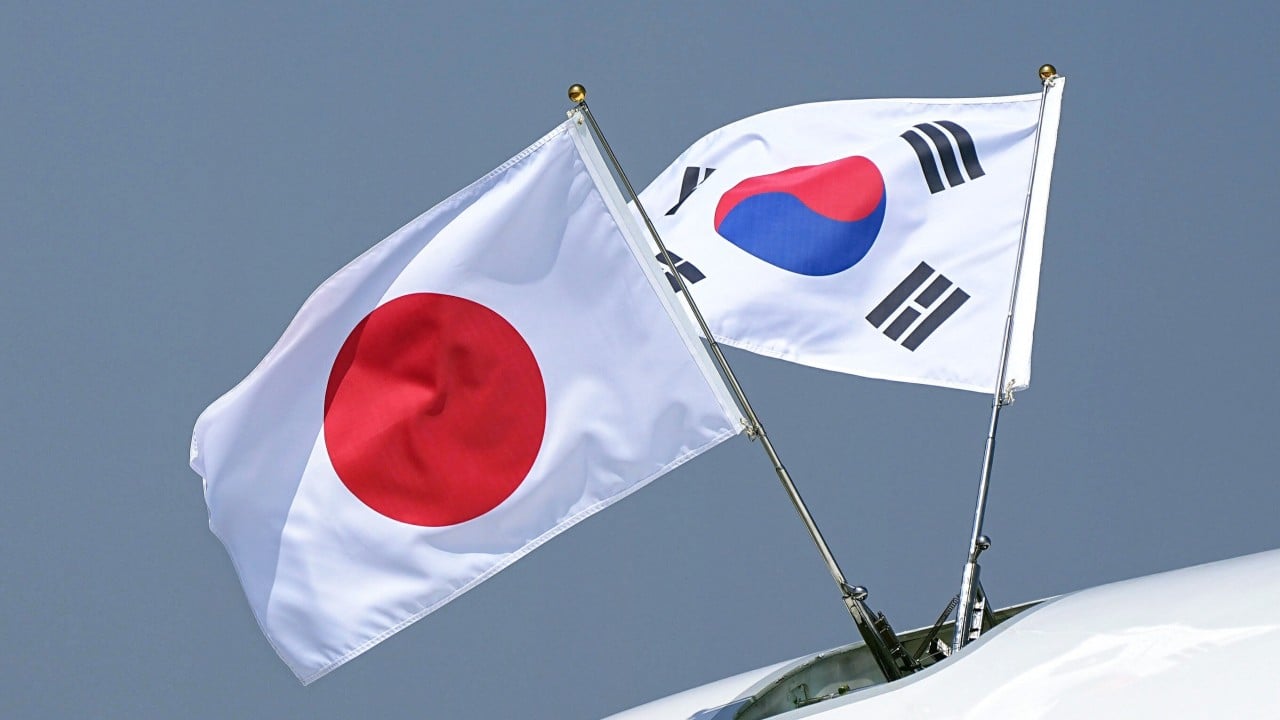
A quiet but profound shift is accelerating across the waters separating Tokyo and Seoul, completely redefining the balance of power in Northeast Asia. The potential resurrection of formal talks regarding an Acquisition and Cross-Servicing Agreement (ACSA)—a bilateral military logistics pact between Japan and South Korea—aims to establish a direct pipeline for sharing fuel, ammunition, spare parts, and supply-chain infrastructure during crises. This goes far beyond standard bureaucratic paperwork. It represents a fundamental rewiring of regional defense architecture designed to convert fragmented, hesitant bilateral relations into a unified, high-readiness front capable of pushing back against aggressive regional assertiveness.
For decades, the United States has had to manage two distinct, historically fraught allies through isolated "hub-and-spoke" security treaties. Washington handles Seoul; Washington handles Tokyo. Yet, the two spokes rarely connected directly without an American intermediary sitting in the room. This logistical fragmentation has long been a glaring structural vulnerability. Should a crisis erupt in the Taiwan Strait or the South China Sea, the lack of integrated, direct logistical cooperation between the region’s two premier democratic militaries could paralyze rapid response times. By moving toward a formal logistics pact, Tokyo and Seoul are beginning to build a framework where their respective self-defense and national armed forces can directly sustain each other without waiting for an American go-between. China has noticed this structural shift, and its leadership is visibly unsettled.
The Friction Behind the Front Lines
To understand why this development is causing friction in Beijing, one must look at the mechanical reality of modern warfare. Combat is entirely dependent on logistics. An advanced destroyer or a high-tech fighter jet is completely useless without a continuous supply of highly specific spare parts, standardized fuel types, and precise munitions compatibility.
Until recently, the prospect of a Japanese naval vessel docking at a South Korean port to load torpedoes, or a South Korean transport plane refueling at a Japanese airbase during an active security contingency, was politically unthinkable. Memories of Japan's colonial rule over the Korean Peninsula run deep, frequently spilling over to disrupt modern defense cooperation. In late 2018, a severe diplomatic dispute erupted when Tokyo accused a South Korean naval destroyer of locking its fire-control radar onto a Japanese maritime patrol plane. Seoul denied the charge, and the resulting political fallout effectively froze high-level defense exchanges for years.
The geopolitical landscape has shifted dramatically, forcing a rapid reassessment of old grievances. Consider the tangible progress made in recent days at the IISS Shangri-La Dialogue in Singapore. Japanese Defense Minister Shinjiro Koizumi and South Korean Defense Minister Ahn Gyu Back sat down to directly repair these broken operational links. Their immediate breakthrough was an agreement to resume joint maritime search-and-rescue exercises for the first time since 2017. This humanitarian exercise serves as the crucial political cover required to rebuild foundational trust on the high seas.
+-----------------------------------------------------------------+
|              The Evolution of Tokyo-Seoul Defense Ties         |
+-----------------------------------------------------------------+
| 2016: GSOMIA signed (Direct intelligence sharing on N. Korea)   |
| 2018: Radar lock-on dispute freezes high-level military ties    |
| 2023: Camp David Summit revives trilateral security focus       |
| 2026: Search-and-rescue drills resume; ACSA logistics eyed      |
+-----------------------------------------------------------------+
|   Result: Fragmented "spokes" converging into a unified front   |
+-----------------------------------------------------------------+
This rapid operational thaw is heavily driven by a parallel surge in institutional confidence under Prime Minister Sanae Takaichi in Tokyo. Japan has crossed several historical military thresholds that once seemed completely off-limits under its pacifist constitution. The country is deploying long-range cruise missiles capable of striking deep into mainland China and has significantly eased rigid restrictions on exporting lethal defense equipment. Tokyo is aggressively securing its periphery, expanding its intelligence-sharing networks, and finalizing an Acquisition and Cross-Servicing Agreement with the Philippines. This active regional networking is systematically boxing Beijing in.
Why Beijing Fears Direct Integration
China’s primary strategic objective in East Asia has long been to prevent the formation of a unified, functional democratic coalition along its maritime boundary. For years, Chinese diplomats could confidently exploit the historical animosity between Seoul and Tokyo, secure in the knowledge that any sudden political flare-up over wartime history could easily derail trilateral cooperation with the United States.
A formalized, direct bilateral military logistics pact completely dismantles that diplomatic leverage. It shifts the regional security dynamic from a collection of political statements into an integrated, operational reality.
The Tyranny of Distance and Supply Lines
If a maritime conflict breaks out, the US Seventh Fleet and regional partners cannot afford to ship every single crate of supplies across the vast expanse of the Pacific Ocean. They must rely heavily on localized, highly efficient rear-area support hubs. Japan is the ultimate logistical staging ground, housing massive airfields, deep-water ports, and extensive repair facilities. Under a fully realized logistics agreement, South Korean supply chains, transport fleets, and maintenance depots could connect directly into this network. This integration would essentially create a vast, continuous, and highly resilient logistical web stretching from the Kuril Islands all the way down to the Tsushima Strait.
Neutralizing the Strategy of Isolation
Beijing has frequently used targeted economic coercion and aggressive gray-zone maritime maneuvers to isolate its neighbors individually. We have seen this play out through intense economic boycotts against South Korean firms and dangerous, close-quarters confrontations between Chinese coast guard vessels and Philippine supply ships near disputed shoals. A formalized military logistics pact serves notice that an aggressive move against one partner triggers a coordinated, multi-national logistical response. This level of institutional integration makes it highly dangerous for China to attempt to bully a single neighbor in isolation.
The Domestic Hurdles Neither Side Can Ignore
Despite the undeniable strategic logic driving this integration, this defense pact is far from a done deal. Deep-seated domestic vulnerabilities could still easily derail progress in both capitals.
In Seoul, any defense agreement with Tokyo remains a highly volatile political issue. While the current administration views closer alignment with Japan as a strategic necessity to counter regional aggression, the political opposition is quick to label such moves as historical capitulation. The memories of the General Security of Military Information Agreement (GSOMIA) crisis remain a cautionary tale. In 2019, amidst a bitter trade and historical dispute, Seoul threatened to completely rip up that vital intelligence-sharing pact. It took intense, behind-the-scenes pressure from Washington to narrowly keep the agreement alive. If a more progressive, nationalist administration regains power in Seoul, a newly signed logistics pact would immediately become the primary target for political elimination.
Field Note: The operational reality of an ACSA is highly fragile. Unlike a standard trade agreement, a military logistics pact requires absolute, unwavering institutional trust. The moment a political crisis erupts over territorial disputes or wartime history, the entire operational mechanism can lock up instantly.
Japan faces its own set of delicate challenges. For decades, the Japanese public has held a deeply ingrained commitment to constitutional pacifism. While Prime Minister Takaichi's administration enjoys strong approval ratings, pushing the Self-Defense Forces into an expansive, direct logistics framework that could inadvertently draw Japan into a mainland Asian conflict remains an incredibly hard sell at home. Japanese defense planners must carefully walk a fine line, ensuring that these new logistics pacts are framed strictly as defensive, stabilizing measures rather than an aggressive, forward-leaning posture.
A New Hardline Reality in the Indo-Pacific
China’s response to these deepening ties has been predictably hostile. Beijing has frequently accused Tokyo of reviving "new militarism," a charge that Defense Minister Koizumi directly and forcefully rejected at the Shangri-La Dialogue. He pointed directly to China’s massive, opaque nuclear buildup and its fleet of strategic bombers as the undeniable justification for Japan's rising defense spending. The regional security debate has fundamentally shifted from historical grievances to a clear-eyed assessment of current military capabilities.
This unfolding reality means the era of strategic ambiguity in Northeast Asia is officially over. The traditional Chinese strategy of dividing and conquering through historical wedges is rapidly losing its effectiveness. By choosing to restore search-and-rescue drills and laying the groundwork for direct, structural military logistics cooperation, Japan and South Korea are sending an unmistakable signal to Beijing. They are actively preparing to defend the existing regional order, and they are building the shared physical infrastructure required to do it together.