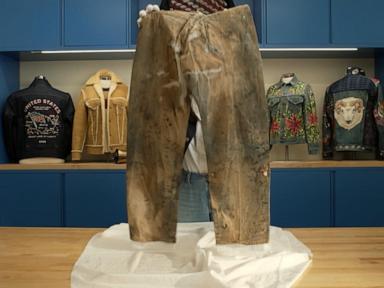
The history of Levi's is often told as a romantic myth of the American West, a simple tale of gold miners, tough canvas, and copper rivets. The reality is far more calculating. Levi Strauss and Co. did not just invent a durable pair of pants; they created a blueprint for industrial survival that has spent over 150 years trying to outrun its own legacy. Today, the company faces an agonizing structural tension: how do you sell a product whose primary appeal is that it never changes, to a modern market obsessed with speed and novelty?
To understand the current pressures on the denim giant, one must look past the marketing nostalgia. The brand is locked in a perpetual cycle of reinventing a wheel it perfected in the nineteenth century.
The Monopoly of the Rivet
The foundation of the company did not rest on fashion expertise. It rested on a legal monopoly. In 1873, a tailor named Jacob Davis noticed that the pockets of pants worn by laborers tore away from the fabric under heavy stress. His solution was simple but effective: secure the pockets with industrial copper rivets. Lacking the sixty-eight dollars needed to file a patent, Davis partnered with his fabric supplier, a Bavarian immigrant named Levi Strauss.
The resulting patent granted them exclusive rights to manufacture riveted clothing for nearly two decades. This period allowed the company to entrench itself deeply in the American industrial sector. They did not win the market by out-designing their rivals. They won because the law prevented anyone else from making a product that lasted as long.
When the patent expired in 1890, the marketplace flooded with competitors. Brands like Lee and Wrangler emerged, offering their own variations of rugged utility wear. Levi's responded by introducing the style number 501, a designation that shifted the product from a generic utility item to a specific, branded piece of intellectual property. The history of Levi's from this point forward became a defensive campaign to protect that specific silhouette.
The Postwar Cultural Hijacking
For the first seventy years of its existence, the brand was firmly categorized as workwear. It was clothing for men who worked with their hands. Middle-class Americans did not wear denim to dinner, and they certainly did not wear it to school.
The transformation occurred in the 1950s, driven by forces entirely outside the company's control. Hollywood took the uniform of the laborer and slapped it onto the bodies of cinematic rebels. When Marlon Brando rode a motorcycle in The Wild One or James Dean stared down the camera in Rebel Without a Cause, they were wearing denim. Suddenly, the blue jean was stripped of its utilitarian meaning and infused with a potent, anti-establishment energy.
School boards across the United States reacted by banning denim in classrooms. This was the ultimate marketing gift. The company did not have to spend millions convincing teenagers to buy their product; authority figures were doing the work for them by forbidden it.
Yet, this shift introduced a dangerous volatility to the business model. Workwear is stable. A carpenter needs new pants when his old ones wear out. Fashion, however, is fickle. By tethering its fortunes to youth culture, the company stepped onto a treadmill of shifting tastes that it has never been able to step off of.
The Offshoring Trait and the Loss of Authenticity
By the late twentieth century, the corporate structure of the organization faced a grim mathematical reality. Manufacturing a pair of heavy cotton jeans in the United States was becoming prohibitively expensive. The rise of globalized supply chains meant competitors could produce apparel for a fraction of the cost in developing nations.
For a brand that traded exclusively on the concept of rugged, authentic Americana, the decision to move production overseas was a severe identity crisis. Throughout the 1990s and early 2000s, the company systematically shuttered its domestic factories. The closure of the historic Valencia Street plant in San Francisco in 2002 marked the end of an era.
Production shifted to countries like Pakistan, Cambodia, and Bangladesh. Management argued that global sourcing was required to stay competitive on price. While the profit margins stabilized, the core narrative of the brand suffered a permanent bruise. They were now selling an American myth manufactured in Asia.
To mitigate this, the company maintained premium product lines, such as Levi's Vintage Clothing, which utilized specialized denim woven on old loom shuttle systems in places like Japan or the Cone Mills facility in North Carolina, until that mill closed in 2017. These high-end lines served as a shield against critics who accused the company of abandoning its heritage, but they represented only a tiny sliver of total revenue. The vast majority of the business was now dependent on mass-market, globalized manufacturing.
The Debt Bomb and the Fight for the Department Store
The financial health of the business took a massive hit during the late 1990s. Sales peaked at over seven billion dollars in 1996 before crashing down to just over four billion a few years later. The company had failed to anticipate the rise of baggy hip-hop styles and the explosion of low-rise women's jeans, allowing nimble competitors like Tommy Hilfiger and specialty mall retailers to steal market share.
At the same time, the company was buried under a mountain of debt stemming from a massive four-billion-dollar leveraged buyout by the descendants of Levi Strauss in 1996. This financial burden starved the company of the capital needed to innovate or aggressively market itself during a critical transition period in American retail.
For decades, the lifeblood of the company was the wholesale model. They relied on major department stores like Sears, JCPenney, and Macy’s to move millions of units. But as the internet began to hollow out the American mall, this reliance became a trap. Department stores, desperate to survive, constantly demanded discounts and promotional pricing. The brand was being dragged down by the slow death of its primary distributors.
The Athleisure Threat
The most severe challenge to the denim empire arrived not from another jeans brand, but from the rise of stretch fabrics. The 2010s saw a massive behavioral shift in how people dressed. Performance fabrics, yoga pants, and athleisure became the new baseline for casual attire.
Denim, even when blended with elastane for stretch, struggles to compete with the pure comfort of knitted synthetic fabrics. The company was forced to defend its territory against a product category that did not exist during its mid-century heyday.
[Historical Denim Consumption vs. Athleisure Market Share]
1990s: Denim Dominance (Rigid cotton, 100% market share in casual pants)
2000s: Premium Denim Boom (Introduction of low-rise, stretch blends)
2010s: Athleisure Rise (Yoga pants enter workplaces, denim sales stagnate)
2020s: The Fragmented Closet (Wide-leg denim fights synthetic performance fabrics)
The executive team attempted to counter this by engineering new fabric lines that mimicked the flexibility of sweatpants while retaining the look of traditional twill. However, this strategy carries an inherent risk. When a heritage brand tries to beat modern technical apparel companies at their own game, it often alienates the purists who value the stiff, unforgiving nature of raw cotton.
The Direct-to-Consumer Pivot
To break free from the department store death spiral, the company initiated a massive restructuring designed to prioritize its own retail channels and e-commerce platforms. The goal was simple: bypass the middleman, capture the full retail margin, and gather first-party data on consumer behavior.
This shift required an enormous capital investment in corporate-owned brick-and-mortar storefronts and digital infrastructure. While direct-to-consumer sales provide higher gross margins, they also bring massive overhead costs. The company is no longer just a manufacturer; it is a high-street retailer responsible for expensive leases in global metropolitan centers.
The strategy has shown mixed results. It has successfully insulated the brand from the absolute collapse of second-tier department stores, but it has exposed the company to the brutal realities of digital acquisition costs and the logistical complexities of global fulfillment.
The Immutable Product Problem
The ultimate dilemma governing the history of Levi's is the product itself. A classic pair of 501s is remarkably durable. If a consumer buys a high-quality pair of jeans, they may not need to replace them for half a decade.
This longevity is excellent for reputational value, but it is fundamentally hostile to the requirement of continuous quarterly growth demanded by public markets. To satisfy Wall Street after re-entering the New York Stock Exchange in 2019, the company must constantly convince consumers to buy things they do not strictly need.
This reality has forced the brand into a relentless cadence of fast-fashion collaborations with luxury labels, pop-culture franchises, and internet influencers. These limited-edition releases generate temporary buzz, but they also risk cheapening the timeless image that allowed the company to survive the nineteenth century in the first place. The company is trapped between the stability of its past and the frantic demands of its financial future, proving that the hardest part of building an empire on a classic product is figuring out what to do once everyone already owns one.