Nvidia announced the launch of its first dedicated artificial intelligence research hub in Singapore, a move framed by state officials as a triumph for the island-nation’s updated National AI Strategy. The cooperative agreement, unveiled at the ATxSummit tech conference, focuses heavily on physical automation and hardware optimization. Yet, looking past the standardized press releases reveals a far more transactional reality. Nvidia is not anchoring itself in Southeast Asia out of corporate altruism. The graphics processing unit giant is executing a calculated survival strategy to secure physical data testing grounds and lock down regional sovereign infrastructure before its competitors can catch up.
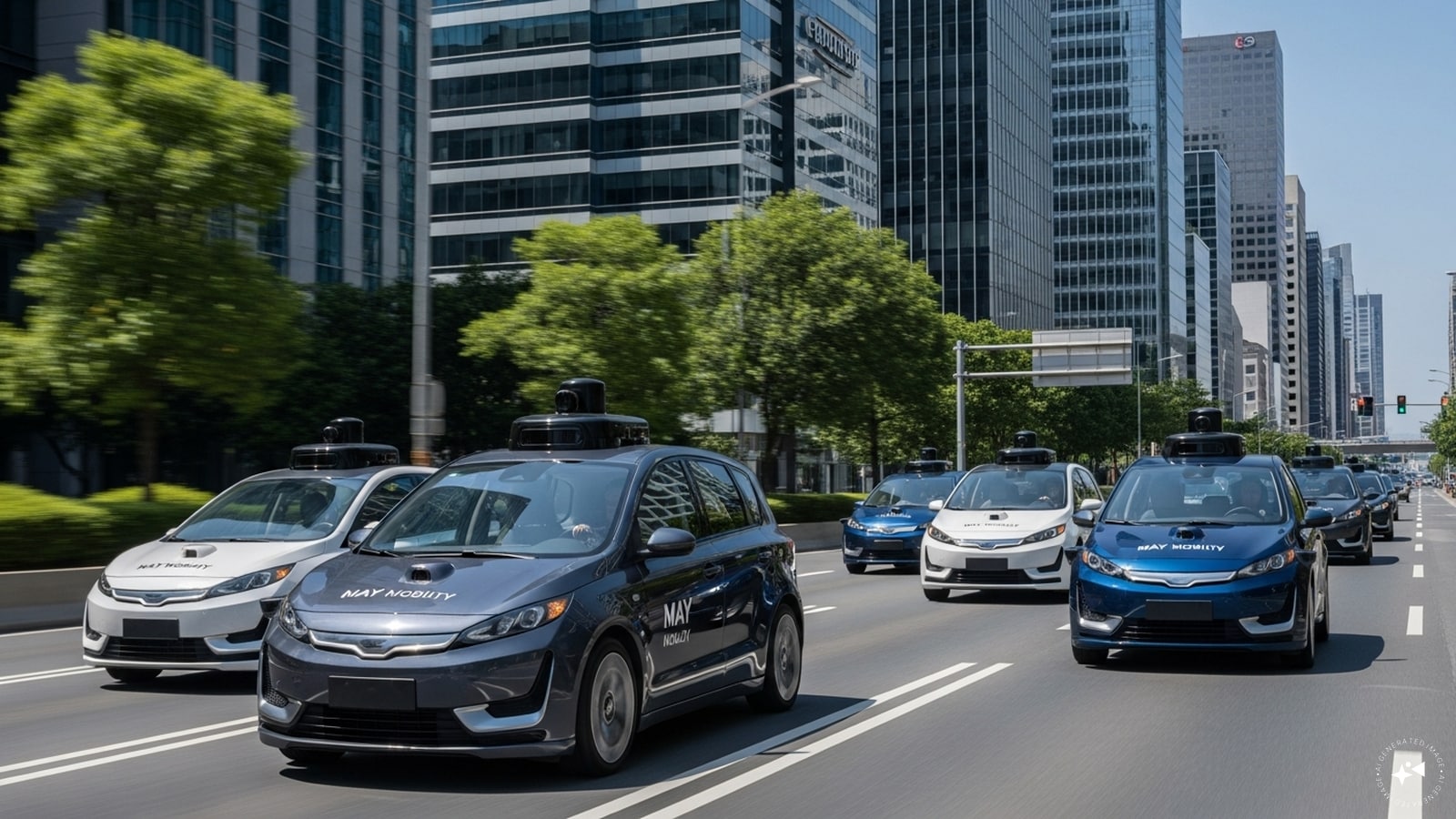
For Singapore, bringing the market-dominant chipmaker into its backyard solves a immediate vulnerability. The city-state lacks the land mass, water resources, and raw power grid capacity to compete with the United States or China in building massive, frontier-class foundational models. Prime Minister Lawrence Wong explicitly acknowledged that the country's economic advantage does not lie in training the largest models, but rather in deploying highly specific applications quickly and responsibly. By acting as a hyper-dense, regulatory-compliant laboratory for physical hardware, Singapore offers something Silicon Valley cannot easily replicate: a fully controlled urban environment designed for stress-testing heavy autonomous machinery. For a closer look into similar topics, we suggest: this related article.
The Simulation to Reality Crisis
The new facility will prioritize a field known as embodied intelligence. This branch of computer science focuses on placing machine learning models inside physical units like heavy manufacturing systems, delivery droids, and security infrastructure.
To understand why Nvidia is investing heavily here, one must understand the data gap currently stalling the robotics sector. To get more information on this development, in-depth reporting can be read at MIT Technology Review.
Training an online chatbot is relatively straightforward because the internet offers billions of pages of text data. Training an autonomous delivery vehicle to navigate a rain-slicked, crowded pedestrian walkway requires physical world data that is incredibly slow, expensive, and legally risky to gather. Software engineers refer to this roadblock as the simulation-to-reality gap. Algorithms that perform flawlessly inside a digital simulator frequently fail when confronted with real-world friction, uneven lighting, or erratic human behavior.
Nvidia plans to use the Singapore hub to run a complex feedback loop. It will build digital twins of local infrastructure, generate massive volumes of synthetic data, test its control policies virtually, and then deploy those models onto physical hardware operating in the city.
The Infocomm Media Development Authority is supporting this by launching a dedicated physical testing ground later this year in the Punggol Digital District. Logistics corporations and security firms will deploy automated systems in a mixed-use public area. Nvidia gets direct access to the telemetry and performance telemetry generated by these machines. This data is the lifeblood required to refine its enterprise software platforms. It is an arrangement where a sovereign state provides the real estate, civilian compliance, and legal clearance, while a single American technology company reaps the analytical rewards.
Securing Sovereign Infrastructure Markets
The broader corporate battlefront is structural. As western cloud computing companies tie up domestic power grids, the semiconductor industry is hunting for new revenue streams. The next massive growth engine is sovereign infrastructure. National governments want their own local data facilities, running localized models, managed by their own citizens, to protect data sovereignty.
NVIDIA REGIONAL STRATEGY MAP
├── United States / China  ──► Frontier Foundational Model Training
└── Singapore Hub          ──► Physical Deployment & Sovereign Infra Blueprints
Singapore represents the ideal regional gatekeeper. It currently hosts more than 1.4 gigawatts of data center capacity. By establishing a research facility and partnering with local telecommunications firms to build specialized development applications, Nvidia embeds its proprietary architecture into the state's long-term digital foundations.
This creates an intense vendor lock-in scenario. Once a country builds its national computing framework, training pipelines, and academic talent pipelines around a specific hardware ecosystem, switching to an alternative chip designer becomes prohibitively expensive.
| Country Focus | Primary AI Strategy | Hardware Dependency |
|---|---|---|
| United States | Frontier Large Language Models | High concentration of cloud hyperscalers |
| China | Closed ecosystem foundational models | Domestic chip development |
| Singapore | Applied edge robotics & sovereign governance | Proprietary infrastructure integration |
The Impending Energy Collision
This rapid deployment model faces a major physical constraint. Silicon computing structures are notoriously power-hungry, and Singapore is a small island with limited options for renewable energy. The government intends to introduce a Digital Infrastructure Act later this year to legally enforce strict energy efficiency metrics on local data facilities.
Nvidia’s research hub is tasked with addressing this exact tension. A core focus of the facility is efficient computing, which translates to squeezing more computational output out of every single watt consumed.
If the chip designer can use its Singapore facility to prove that it can run high-density workloads within tight environmental boundaries, it creates a repeatable template. This framework can then be marketed directly to other land-scarce, energy-constrained metropolitan areas across the globe.
The arrangement contains distinct risks for the host nation. While international technology firms pledge hundreds of millions of dollars to expand local technological ecosystems, they also draw heavily on scarce engineering talent. The local government has committed to a massive upskilling program to prepare its workforce, but the near-term reality is a fierce corporate scramble for top-tier analytical talent. Local enterprises and domestic public agencies find themselves forced to compete for skilled labor against multinational entities wielding massive financial resources.
Regulatory Sandboxes as a Competitive Weapon
The final piece of this corporate alignment involves policy control. Singapore is updating its governance frameworks to account for agentic systems that operate autonomously without human oversight. By embedding its research personnel directly within state-backed initiatives, Nvidia gains a front-row seat to the formulation of these global regulatory standards.
Tech enterprises understand that the entities helping governments draft safety metrics are the ones best positioned to clear those regulatory hurdles seamlessly. This is a pragmatic exercise in industrial positioning.
The strategy turns a compact city-state into a live defense mechanism against competing chip architects. As rivals attempt to challenge Nvidia's dominance in raw graphics processing power, the incumbent is moving down the value chain. It is integrating its systems directly into urban transit networks, automated manufacturing plants, and state regulatory frameworks. The real story in Singapore is not the opening of another corporate laboratory. It is the systematic construction of an unassailable operational footprint.