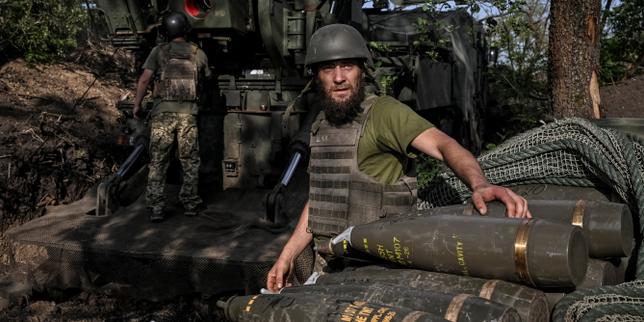
A profound shift has occurred along the thousand-kilometer frontline in Ukraine. For the first time since late 2022, Russian forces are actively going backward on the battlefield, yielding a net loss of 100 square miles of occupied territory over the past four weeks. This reversal is not the result of a single cinematic counteroffensive, but rather a brutal war of attrition where Ukraine has recaptured the overall drone advantage while systematically crippling Russia's domestic oil infrastructure. Western intelligence now estimates total Russian military fatalities have crossed the threshold of 500,000 dead, a staggering human toll that is finally outpacing Moscow's ability to mobilize replacements.
Yet, this strategic window for Kyiv is extraordinarily fragile. Recognizing that its ground forces are stalling, the Kremlin has pivoted to an unprecedented air campaign designed to break Ukraine's back from above. The conflict has transformed into a race between Ukrainian technological innovation on the front lines and the systemic exhaustion of its air defense interceptors.
The Mathematical Breaking Point of the Russian Infantry
For more than three years, the Russian military apparatus relied on a grim but effective calculus. By recruiting between 25,000 and 31,000 new soldiers a month, Moscow could sustain roughly 30,000 casualties over the same period without its frontlines collapsing. It was a conveyor belt of meat-grinder assaults aimed at gradual territorial creep in the Donbas.
That math has failed.
British electronic intelligence confirms that the attrition rate has broken past Moscow’s replacement capacity. When a military loses more personnel than it trains and deploys, the units at the front begin to hollow out. We are seeing the tactical consequences of this depletion right now. In the Slovyansk direction and western Zaporizhia Oblast, thinned Russian lines have allowed Ukrainian forces to push forward, reversing months of slow, agonizing Russian advances.
This manpower deficit is compounded by a severe degradation of Russian hardware. Ukrainian forces recently destroyed a rare 1L125 Niobium-SV mobile radar station deep inside occupied territory, alongside a major command and communications hub hit by Storm Shadow missiles. Without these specialized systems, Russian frontline units are operating blind. Drone operators have been forced to use highly visible, unshielded antennas just to maintain a signal. Ukrainian electronic warfare teams are locating and destroying these antennas within minutes of activation.
The Drone Inversion and the Asymmetric Fuel War
The primary driver of Russia's sudden battlefield regression is the reestablishment of the Ukrainian drone advantage. Throughout 2025, Russian industrial scaling of first-person view drones threatened to overwhelm Ukrainian trenches. Kyiv responded not with matching state factories, but with an agile, decentralized network of software updates and automated targeting mechanisms that bypass Russian jamming.
Simultaneously, Ukraine has taken the war deep into Russian territory with an aggressive, long-range strike campaign that has paralyzed the Russian energy sector.
- The Syzran Refinery Collapse: A precision drone strike successfully knocked out the primary CDU-6 crude distillation unit at the Syzran facility. This single blow eliminated over 70 percent of the refinery's operational capacity, forcing a total shutdown.
- The Vladimir Oblast Hub Strike: Ukrainian intelligence coordinated a successful hit on the Vtorovo linear production and dispatching station, triggering a massive fire and disrupting the vital pipeline network pumping raw materials from central Russia.
- Airspace Paralysis: The frequency of these long-range operations has overstretched Russian domestic air defenses to such a degree that authorities were forced to close Kaliningrad airport due to drone threats, while restrictions routinely cripple the Moscow air zone.
By forcing Moscow to pull air defense assets away from the front lines to protect refineries in the interior, Ukraine has left Russian forward deployment hubs exposed. The Russian military can no longer reliably protect its supply lines or its fuel reserves.
The Kremlin's Ballistic Pivot
Unable to secure definitive breakthroughs on the ground, Vladimir Putin has unleashed the most destructive aerial bombardment since the initial 2022 invasion. The logic is simple. If Russia cannot hold the territory, it will make Ukraine unlivable and bleed its western air defense stockpiles dry.
A recent overnight strike package saw Russia launch 90 missiles and 600 drones simultaneously. This barrage featured the combat deployment of the nuclear-capable Oreshnik intermediate-range ballistic missile against Kyiv and Bila Tserkva. While Ukrainian forces intercepted over 91 percent of the incoming drones, they managed to down only 36.7 percent of the Iskander-M and S-300 ballistic missiles.
Ballistic missiles travel at hypersonic speeds on high-arc trajectories, giving air defense teams seconds to react. Ukraine possesses only one weapon system capable of neutralizing these threats: the US-made Patriot.
President Volodymyr Zelenskyy has taken the unusual step of appealing directly to the US Congress and Donald Trump, offering to outright purchase Patriot systems and interceptor missiles rather than relying purely on aid packages. The diplomatic reality is harsh. Supply lines for Patriot interceptors are severely depleted, driven in part by parallel defense priorities in the Middle East. Furthermore, Washington’s political consensus remains fractured by the perspective that the war is fundamentally a European security concern.
The Coming Belarussian Complication
As Russia's options narrow, the Kremlin is actively attempting to widen the geography of the conflict to relieve pressure on its own borders. Belarusian security officials have begun claiming that Ukrainian drones are deliberately violating their airspace and targeting border infrastructure.
This is a transparent attempt to set the conditions for a new operational vector. While a ground invasion from Belarus remains highly unlikely due to a lack of available Russian reserves, the political maneuvering suggests a different utility. Moscow is positioning itself to launch continuous Shahed and Molniya drone strikes directly from Belarusian territory.
Such a move would allow Russian forces to bypass the heavily saturated air defense corridors of northern Ukraine. From Belarus, low-cost drones could easily target the M-06 highway and the critical railway corridors running through western Ukraine. These are the primary ground lines of communication connecting Ukraine to Poland. If Russia can systematically disrupt the arrival of Western spare parts, fuel, and ammunition at the border, the tactical gains currently enjoyed by Ukrainian infantry on the eastern front will evaporate within weeks.
The current Ukrainian momentum is real, but it is a byproduct of an asymmetric window of opportunity, not permanent military superiority. The battlefield has proven that Russia can be pushed backward when its logistics are broken and its infantry numbers drop below the replacement rate. However, without an immediate, sustained influx of ballistic missile interceptors to protect the domestic infrastructure supporting the front, Ukraine risks winning the tactical war in the trenches while losing the structural war for its skies.