The mainstream media loves a simple script.
When Donald Trump states that Iran is actively plotting to assassinate him, the press immediately falls into two predictable, lazy camps. The partisan right uses it to beat the drum for immediate military escalation. The partisan left scoffs, treating it as campaign-trail hyperbole designed to stir up the base.
Both sides are entirely missing the point.
The threat is real. Intelligence briefings confirm it. But the lazy consensus that this is just a standard geopolitical grudge match—or a simple case of state-sponsored revenge for the 2020 drone strike on Qasem Soleimani—completely misreads the mechanics of modern asymmetrical warfare.
This is not about a foreign power trying to tip an election or settle an old score. It is a calculated stress test of America’s rapidly fracturing domestic security apparatus. And right now, we are failing that test.
The Asymmetry Trap: Why Traditional Deterrence is Dead
For decades, Washington operated under a comfortable illusion. We believed that state actors wouldn't dare target top-tier American political figures on US soil because the threat of total military annihilation kept them in check.
That playbook is obsolete.
I spent years analyzing risk vectors and security protocols for high-profile targets. The old guard still thinks in terms of armies, embassies, and red lines. But adversaries like Iran don’t need to match America’s conventional military might. They operate in the gray zone.
When a foreign entity targets a former president and current candidate, they are not expecting a clean hit. They are exploiting a systemic vulnerability. They know that the mere existence of a credible, persistent threat forces the United States to expend massive amounts of logistical, financial, and political capital just to keep a single individual alive.
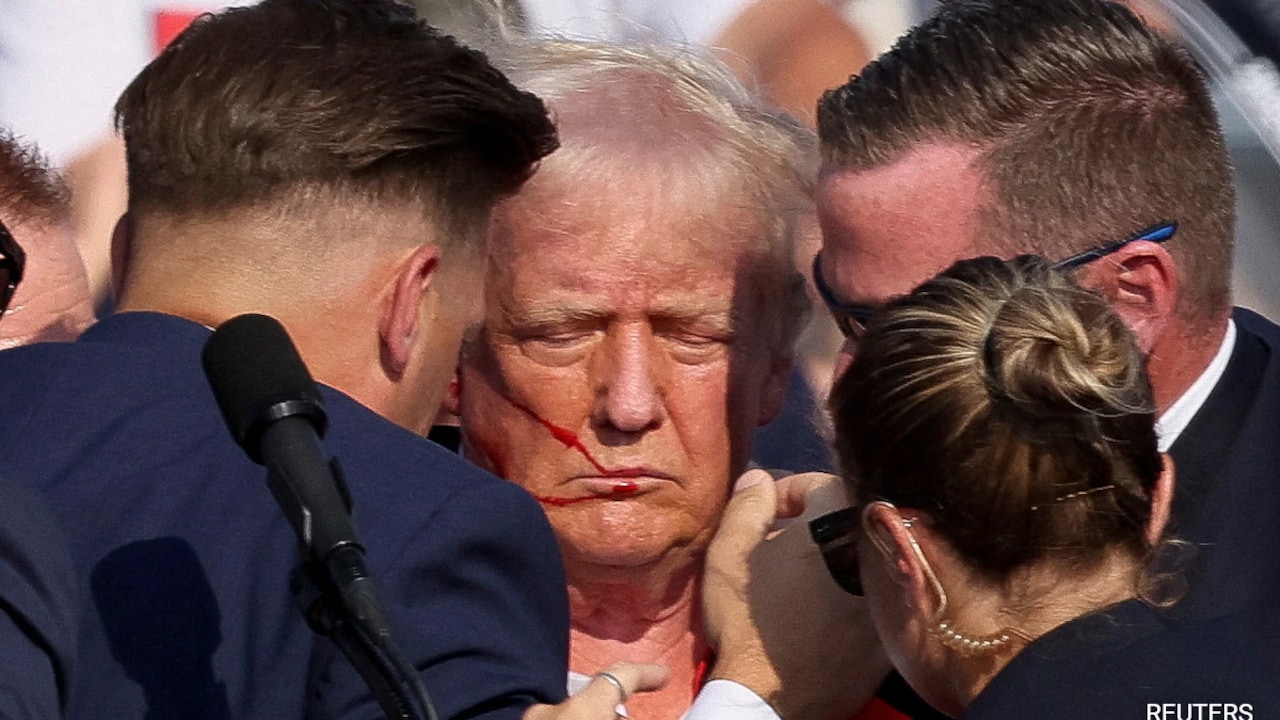
Think about the sheer chaos of the current security environment. We have already seen catastrophic operational failures on domestic soil, most notably the assassination attempt in Butler, Pennsylvania. While that specific attack was carried out by a lone, domestic gunman, it exposed a damning reality: the Secret Service is stretched to its absolute breaking point.
By layering a sophisticated, state-sponsored threat matrix on top of an already broken domestic security system, foreign adversaries achieve their real goal. They don’t just want to eliminate a specific politician. They want to expose America's inability to protect its own leaders, thereby shattering public trust in the stability of the state itself.
The Secret Service Myth: More Funding Won't Save Us
Whenever a security breach occurs, Congress rushes to do the easiest, dumbest thing possible: throw money at the problem.
"Double the Secret Service budget," the pundits shout. "Hire more agents."
This response ignores the structural rot inside bureaucratic protection agencies. I have seen massive organizations throw tens of millions of dollars at security crises, only to watch those funds vanish into administrative black holes, compliance paperwork, and middle-management bloat.
The Secret Service does not have a funding problem. It has a culture and talent retention problem.
The agency has evolved into a rigid, reactive bureaucracy that prioritizes checklist compliance over dynamic threat hunting. Agents are overworked, burning out at historic rates, and leaving the service just as they reach peak operational maturity. Replacing a twenty-year veteran with three twenty-two-year-old recruits who passed a physical fitness test does not make a protection detail safer. It makes it younger and less experienced.
Furthermore, traditional protection details are built around predictable environments. They excel at securing a hotel ballroom or a fortified government building. They are fundamentally unequipped to handle the fluid, decentralized threat environment of modern political campaigns, where candidates demand maximum exposure to massive crowds in unsecured outdoor venues.
If the premise of your security strategy relies on the assumption that you can control every variable in an open-air stadium, your strategy is already broken.
Dismantling the "Lone Wolf" Fallacy
When intelligence agencies warn about foreign plots, the public envisions a team of elite, foreign commandos infiltrating the border with silenced rifles. That is Hollywood nonsense.
The real danger lies in the privatization and outsourcing of state-sponsored violence.
Adversaries do not send their own agents to do the dirty work. They use proxy networks. They recruit local criminal syndicates, radicalized domestic actors, or desperate individuals via encrypted digital channels. They utilize the dark web to fund operations through cryptocurrency, completely bypassing traditional financial tracking systems.
This creates a terrifying layer of plausible deniability. If a radicalized individual with zero formal ties to a foreign government attempts an attack, the media labels it a "lone wolf" incident. The public moves on. But behind the curtain, the digital breadcrumbs often lead straight back to foreign intelligence operations that provided the blueprints, the funding, or the psychological push necessary to turn a disgruntled citizen into a weapon.
Our counter-intelligence frameworks are completely blind to this crossover. We treat foreign threats and domestic extremism as two entirely separate buckets. In reality, they have merged into a single, cohesive ecosystem of decentralized disruption.
The Brutal Reality of Political Exposure
So, what is the counter-intuitive solution? How do you protect a figure who faces unprecedented, multifaceted threats while simultaneously running a national campaign?
You stop pretending that absolute safety is possible, and you radically change how the candidate operates.
This is the hardest truth for political campaigns to swallow: the era of the wide-open, spontaneous handshake line is over. If a candidate insists on maintaining total, unrestricted physical access to the public in unvetted spaces, they are accepting a statistical certainty of an attack.
To survive this era of asymmetrical threats, campaigns must adopt an insular, highly controlled operational model.
- Eliminate large-scale, outdoor rallies in venues that cannot be completely swept and monitored with advanced drone overhead surveillance.
- Transition to smaller, heavily vetted town halls where every single attendee passes through multi-layered biometric screening.
- Stop broadcasting precise travel schedules and arrival times days in advance.
Yes, this hurts the optics of a populist campaign. Yes, it makes the candidate look detached from the average voter. But those are the tactical trade-offs required when dealing with state-level targeting. You can either have a perfectly staged, folksy photo-op, or you can have a living candidate. You cannot have both.
The conventional wisdom insists that we can secure our political system through tougher rhetoric, broader travel bans, and bigger government budgets. It is a comforting lie designed to make us feel like we are in control.
The reality is far colder. Our adversaries have realized that they don't need to match our military might to destabilize our nation. They just need to exploit the cracks in our overstretched, bureaucratic security systems, sit back, and watch us tear ourselves apart from the inside out.
Stop looking at the threat as a simple political talking point. Start recognizing it for what it actually is: a highly sophisticated, low-cost operation designed to prove that America can no longer guarantee the safety of its own democracy.