Washington and Tehran have spent a quarter of a century chasing a ghost. Since the discovery of the secret uranium enrichment plant at Natanz, the United States and Iran have stood on the precipice of a sweeping diplomatic breakthrough at least six distinct times, only to watch the opportunity shatter at the absolute last mile. The fundamental reason these deals consistently collapse is not a lack of political will, nor is it the standard rhetorical hostility broadcast by both capitals. The breakdown occurs because both nations are trapped in an architectural flaw of their own making. Washington approaches diplomacy as a temporary transaction contingent on the occupant of the Oval Office, while Tehran views any concession as a prelude to forced regime change.
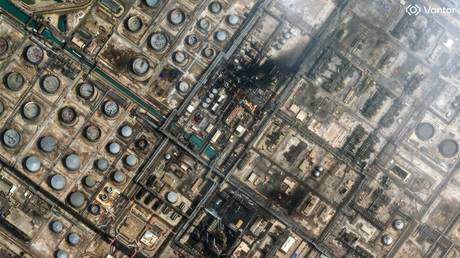
This structural disconnect has reduced decades of complex negotiations to a predictable, tragic cycle. When backchannels open, negotiators build elaborate technical frameworks that look bulletproof on paper. Then, domestic politics or regional proxy flare-ups intervene, the agreements disintegrate, and both sides return to escalation. The recent devastation of the Twelve-Day War, which saw direct American and Israeli airstrikes on Iranian nuclear facilities at Fordow, Natanz, and Isfahan, is the direct consequence of this diplomatic paralysis.
Understanding how the relationship reached this boiling point requires dissecting the history of the near misses that preceded the strikes.
The Mirage of the Grand Bargain
The earliest and perhaps most sweeping missed opportunity occurred in the shadow of the 2003 invasion of Iraq. Flushed with a rapid military victory in Baghdad, the Bush administration looked across the border at an isolated, deeply unsettled Iranian leadership. Sensing they could be next on the regime-change itinerary, reformers within the government of President Mohammad Khatami drafted a comprehensive, single-page proposal.
Transmitted through Swiss diplomats, the document offered a breathtaking series of concessions. Tehran volunteered to accept full transparency over its nuclear program, end its material support for Palestinian militant groups, and cooperate in stabilizing Iraq. In exchange, the Iranians demanded the lifting of economic sanctions, the recognition of their legitimate regional security interests, and a formal end to Washington's hostility.
The proposal never received an official reply. Inside the White House, influential neoconservatives argued that the United States did not need to negotiate with a member of the Axis of Evil. They believed the Iranian regime was on the verge of collapse and that engaging with Tehran would throw a lifeline to a dying autocracy. This miscalculation set the tone for the next two decades. By treating diplomacy as a reward for good behavior rather than a tool for managing conflict, Washington ensured that Iran would spend the next several years aggressively expanding its nuclear infrastructure to build leverage.
The Fuel Swap Failure
By the time the Obama administration opened a secret backchannel through the Sultanate of Oman, the geopolitical landscape had fundamentally shifted. Iran was no longer a nuclear novice; it was operating thousands of centrifuges and enriching uranium to 3.5 percent.
In October 2009, a creative technical solution appeared to solve the immediate crisis. The United States proposed a fuel-swap agreement under which Iran would ship the majority of its low-enriched uranium stockpile to Russia and France. In return, these nations would process the material into fuel plates required to run the Tehran Research Reactor, a medical facility producing isotopes for cancer patients.
The mechanism was elegant because it mathematically stripped Tehran of the breakout capacity to build a bomb in the near term, while preserving its right to peaceful nuclear technology.
The deal disintegrated within weeks. In Tehran, deep-seated paranoia paralyzed the decision-making process. Hardliners argued that shipping Iran’s domestic uranium stockpile abroad was a western trap designed to disarm the country before an inevitable attack. President Mahmoud Ahmadinejad initially supported the concept, but he lacked the political weight to override the skeptical security establishment. The supreme leader withdrew his backing, the swap collapsed, and Iran responded by accelerating its enrichment to 20 percent purity, bringing it technically closer to weapons-grade material.
The Tragedy of the Documented Truce
The single successful exception to this cycle of failure arrived in July 2015 with the signing of the Joint Comprehensive Plan of Action. The JCPOA was an unprecedentedly rigorous arms control agreement. It dismantled two-thirds of Iran's centrifuges, poured concrete into the core of its plutonium reactor at Arak, and placed the entire nuclear supply chain under the continuous, real-time monitoring of the International Atomic Energy Agency.
Yet, the deal carried a fatal, systemic flaw. It was built on an executive agreement rather than a formal treaty ratified by the United States Senate. This political vulnerability turned the agreement into a temporary truce.
The unilateral American withdrawal from the pact destroyed more than just a non-proliferation framework. It fundamentally vindicated the hardline narrative within Iran that Washington could never be trusted to honor its signature. The maximum pressure campaign that followed did not force Tehran back to the negotiating table to sign a better deal. Instead, it systematically destroyed Iran’s political moderates and convinced the leadership that economic survival depended on creating an unassailable nuclear deterrent.
| Year | Key Diplomatic Touchpoint | Point of Failure |
|---|---|---|
| 2003 | Swiss Backchannel Grand Bargain | Dismissed by Washington hardliners |
| 2009 | Tehran Research Reactor Fuel Swap | Blocked by Tehran internal paranoia |
| 2015 | Joint Comprehensive Plan of Action | Destroyed by unilateral US exit |
| 2021 | Vienna Re-entry Negotiations | Paralyzed by sequencing and verification disputes |
| 2025 | Oman and Rome Secret Emergency Talks | Drowned out by the outbreak of regional warfare |
The Vienna Standoff and the Illusion of Return
When indirect diplomacy resumed in Vienna, the task of reviving the carcass of the 2015 agreement proved structurally impossible. The strategic realities on the ground had evolved past the parameters of the original deal. Iran had spent the intervening years mastering advanced centrifuges, hardening its underground facilities, and accumulating a massive stockpile of uranium enriched to 60 percent purity.
The negotiations devolved into an intractable debate over sequencing. Tehran demanded a verifiable, total lifting of all economic sanctions before it would roll back its nuclear advancements. Washington insisted that Iran must first return to compliance before any major sanctions relief could occur.
This gridlock was compounded by a fundamental shift in Iran’s strategic posture. The country’s economy had adjusted to western isolation by forging deep economic and military ties with Moscow and Beijing. Iranian factories began exporting thousands of attack drones to assist the Russian war effort in Ukraine. This development permanently altered the calculus in Washington, transforming the nuclear standoff from an isolated non-proliferation issue into a critical element of a broader confrontation between major global powers.
The Secret Spring and the Road to War
The final and most tragic near miss occurred in the first half of 2025. Recognizing that Iran’s breakout time to a nuclear weapon had shrunk to less than a week, emergency diplomatic channels flared to life. Direct and indirect talks were hastily arranged in Oman and Rome.
Behind closed doors, American envoys and Iranian Foreign Minister Abbas Araghchi came remarkably close to an interim freeze. The proposed arrangement was straightforward: Iran would halt its 60 percent enrichment and cap its high-purity stockpiles in exchange for limited, targeted waivers on its oil exports.
The technical experts had finalized the wording, but the diplomatic window was slammed shut by regional military realities. The shadow war between Israel and Iran erupted into the open. The targeted assassinations of key regional proxy leaders triggered a sequence of retaliatory ballistic missile barrages that overran the fragile diplomatic backchannels.
The International Atomic Energy Agency’s formal declaration that Iran was in total non-compliance with its safeguards agreement became the trigger for the Twelve-Day War. The subsequent American and Israeli airstrikes on Fordow and Natanz destroyed physical buildings, but they also incinerated the very concept of a diplomatic solution.
The Broken Blueprint
The underlying flaw governing this quarter-century of diplomatic failure is the persistent belief that the US-Iran conflict is a technical problem that can be solved with an intricate contract. It is not. The issue is a profound, structural incompatibility in how both nations perceive national security and sovereign commitments.
Washington operates in a fragmented political environment where an international agreement can be completely undone every four years by a shift in domestic political control. This institutional volatility makes it impossible for American diplomats to offer the one thing Tehran actually requires: long-term, durable economic security.
Conversely, Iran’s security apparatus views any willingness to compromise as a sign of weakness that its adversaries will inevitably exploit. They look at the fates of other regional nations that volunteered to dismantle their strategic weapons programs and conclude that survival is guaranteed only by achieving the absolute threshold of nuclear deterrence.
The physical destruction of uranium enrichment halls does not erase the engineering knowledge embedded in the minds of Iranian scientists. The centrifuges can be rebuilt, the underground caverns can be dug deeper, and the economic desperation driving the Iranian domestic public can turn even sharper. By consistently prioritizing short-term tactical advantages over a sustainable, long-term strategic compromise, both Washington and Tehran have systematically eliminated every exit ramp on the road to a broader conflict.