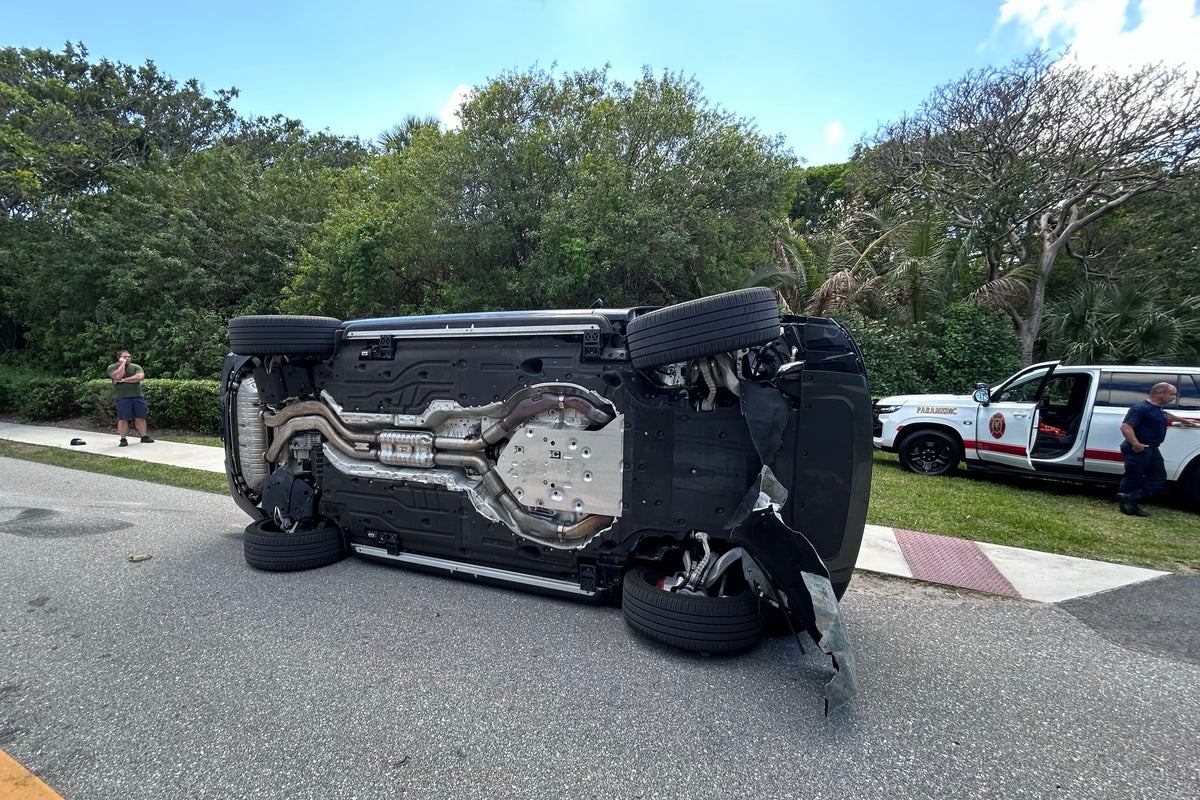
Tiger Woods wasn't drunk when police found him asleep at the wheel of his mangled Mercedes in May 2017. He was something else. He was a man who had clearly lost track of the cocktail of prescription meds running through his system. When Jupiter Police officers approached that black S63 AMG on the side of Military Trail in Florida, they didn't find a partying superstar. They found a confused, slurring 41-year-old who didn't know where he was.
The dashcam footage and the subsequent police reports stripped away the "champion" veneer. They showed a man struggling with physical pain and the chemical weight of a multi-year recovery process. People often conflate DUI with alcohol. In Tiger’s case, his breathalyzer test registered a 0.00. That’s right. Zero. But the arrest wasn't a mistake. The police report detailed a level of impairment that made him a danger to himself and everyone else on the road. It’s a stark reminder that "legal" drugs can wreck your life just as fast as a bottle of whiskey.
Inside the Jupiter Police Department Incident Report
The details in the 2017 report are gritty. Officers observed Woods’ Mercedes-Benz stopped in the right lane, tires blown out and rims damaged. Fresh damage to the body of the car suggested he’d hit something, though he couldn't tell the police what. When an officer woke him up, Woods had extremely slow, slurred speech. He was disoriented. At one point, he told the police he was coming back from Los Angeles. He was actually in Jupiter, Florida, headed in the opposite direction of his home.
The field sobriety tests were a disaster. You’ve probably seen the footage. It’s hard to watch. Woods struggled to walk a straight line. He couldn't keep his balance. He failed the "finger to nose" test repeatedly. The report notes he was "cooperative" but "extremely sleepy." This wasn't the defiant behavior of a typical drunk driver. It was the behavior of someone whose brain was firing on maybe two cylinders because of a heavy pharmaceutical fog.
What the Toxicology Results Actually Revealed
For weeks after the arrest, the public speculated. Was it booze? Was it a breakdown? The toxicology report eventually provided the hard data. Woods had five different substances in his system.
- Vicuodin: A powerful opioid painkiller.
- Dilaudid: Another heavy-duty narcotic used for post-surgical pain.
- Xanax: Used for anxiety and sleep.
- Ambien: A sedative-hypnotic for insomnia.
- THC: The active ingredient in cannabis.
Mixing those first four is a recipe for a blackout. When you combine an opioid like Vicodin with a benzodiazepine like Xanax, you're looking at a massive central nervous system slowdown. Throw Ambien on top of that, and it’s a miracle he was even able to turn the key in the ignition. The police report made it clear that while Woods wasn't "drinking," he was absolutely "under the influence."
Why the Arrest Happened Despite the Zero Percent Breathalyzer
Florida law is very clear on this. You don't need a drop of alcohol in your blood to be guilty of a DUI. If your normal faculties are impaired by any substance—legal, illegal, or prescribed—you’re breaking the law. The officers at the scene saw the "sleepy" eyes and the "droopy" eyelids. They saw the car parked haphazardly with the engine running and the blinker flashing. They had more than enough probable cause.
Most people think a 0.00 on a breathalyzer means you’re free to go. It doesn't. If a cop sees you can't stand up, they’re going to suspect drugs. In Tiger's case, he even told the officers he was taking several medications for his back surgeries. That admission, combined with his physical state, sealed the deal. It’s a common mistake people make during traffic stops. They think being honest about their prescriptions will help them. Usually, it just gives the officer the evidence they need to cuff you.
The Context of Chronic Pain and Surgery
To understand why this happened, you have to look at Tiger’s medical history leading up to 2017. He’d just undergone his fourth back surgery, a spinal fusion, in April. He was desperate to return to the golf course. Chronic pain changes people. It makes you desperate. It makes you take one more pill than you should because the throb in your spine won't stop.
I’ve seen this pattern with plenty of high-performance athletes. They treat their bodies like machines. When the machine breaks, they try to fix it with chemistry. The police report didn't just document a crime; it documented the breaking point of an athlete who’d pushed his body past the limit of human endurance. He wasn't out clubbing. He was a guy in a lot of pain who messed up his dosage.
The Legal Fallout and the Diversion Program
Woods eventually pleaded guilty to reckless driving. He didn't go to jail. Instead, he entered a diversion program for first-time DUI offenders in Palm Beach County. This required him to pay a fine, perform community service, and attend "DUI school." He also had to undergo regular drug testing.
The report from the court later confirmed he completed these steps. He went to a clinic to get professional help managing his medications. It worked. A year later, he was winning the Tour Championship. Two years later, he won the Masters in one of the greatest sports comebacks ever. But that 2017 police report remains a permanent record of how close he came to losing everything. It serves as a warning for anyone taking prescribed narcotics.
Lessons for the Rest of Us
If you’re taking meds for a back injury or anxiety, don't assume you're safe to drive just because a doctor wrote the script. Check the labels. Look for the "do not operate heavy machinery" warning. A car is a 4,000-pound piece of heavy machinery.
If you ever find yourself in a situation where a friend or family member is mixing sleep aids and painkillers, take their keys. Don't debate it. The Tiger Woods arrest shows that even someone with world-class discipline can lose control when chemistry takes over.
The Jupiter Police did their job that night. They probably saved Woods' life. If he hadn't been stopped, he might have drifted into oncoming traffic instead of just hitting a curb. When you read the full police report, you don't see a villain. You see a man who was very lucky the cops found him when they did.
Check your own medicine cabinet tonight. If you see more than two of the drugs listed in Tiger’s toxicology report, talk to your doctor about the risks of driving. Don't wait for a dashcam to tell the story for you. Be smart and stay off the road if you’re even slightly hazy. It’s not worth the mugshot. Or the crash.