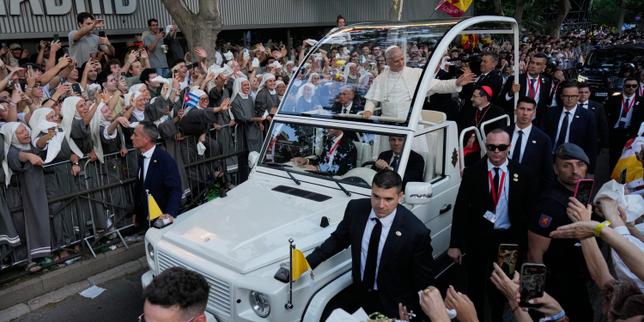
Spain isn't the Catholic stronghold it used to be. Decades of rapid secularization transformed the Iberian Peninsula from a deeply pious society into one of the most socially progressive and non-religious nations in Europe. Yet, when French traditionalist figure Léon XIV crossed the border into Spain, the reaction shattered the standard media narrative.
He didn't find a dying church. Instead, he met a fiercely dedicated, highly organized minority of young Catholics who are completely redefining what faith looks like in modern Europe.
This isn't about grandmas reciting the rosary in empty village chapels. It's about tech-savvy twenty-somethings who feel entirely alienated by modern progressive politics and are looking backward to find their future.
The Numbers Behind the Spanish Faith Shift
To understand why this visit caused such a stir, you have to look at the raw data provided by Spain's Centro de Investigaciones Sociológicas (CIS). The demographic decline of Spanish Catholicism isn't a secret. It's a massive, ongoing trend.
In 1980, over 90% of Spaniards identified as Catholic. By 2026, that number dropped significantly, hovering around 53% across the general population. But the real shock comes when you isolate the youth. Among Spaniards aged 18 to 24, fewer than 20% identify as practicing Catholics. The rest label themselves as atheists, agnostics, or indifferent.
Young Spanish Catholics know they are outnumbered. They feel it every day in their universities, their workplaces, and on social media. But this minority status didn't break them. It radicalized their devotion.
When you belong to a massive majority, your identity is passive. When you belong to a 20% minority surrounded by a culture that openly rejects your values, your identity becomes an active choice. It requires courage. That specific energy was on full display during the events welcoming Léon XIV.
What Modern Commentators Get Wrong About Traditionalist Youth
The mainstream media loves to paint traditionalist youth as nostalgic, uneducated, or driven purely by far-right political anger. It's a lazy take. It misses the actual human dynamic at play.
I talked to young attendees at these gatherings. They aren't uneducated. Most are university students, young lawyers, engineers, and creatives. They don't want a literal return to 1950s Spain under Franco. They are looking for a sense of absolute truth in a world that tells them everything is relative.
The appeal of a figure like Léon XIV lies in the rejection of compromise. For decades, the mainstream church tried to adapt to modern culture. It softened its language, updated its music, and tried desperately to seem relevant.
It failed to attract the youth.
Young people don't want a watered-down version of the secular world inside a church. They can get the secular world anywhere. They want something counter-cultural. They want the Latin Mass, strict moral clarity, fasting, and intense communal discipline. The rigor is the selling point.
Political Alliances and the European Culture War
You can't separate this religious movement from the broader political landscape of Southern Europe. The rise of nationalist and socially conservative political movements in Spain created a symbiotic relationship with these young traditionalists.
This youth movement openly rejects the secular, globalist vision pushed by Brussels. They see the defense of Christian identity as the ultimate form of rebellion against a homogenized global culture.
During the Madrid events, the rhetoric wasn't just theological. It was deeply cultural. Speakers drew direct lines between the loss of religious faith and the demographic decline of Europe, the breakdown of the traditional family unit, and the loss of national sovereignty.
Critics point out that this blends faith with hardline nationalism. They are right. For this new wave of believers, defending the faith means defending the nation's roots. They view the two as completely inseparable.
The Strategy of the New Catholic Underground
How does a small minority wield so much cultural influence? They use the tools of the modern world to fight modern culture.
- Independent Media Networks: They don't rely on traditional Catholic television or diocesan newspapers, which they view as timid. They build YouTube channels, host chart-topping podcasts, and run highly aesthetics-driven Instagram accounts.
- Alternative Subcultures: They form tight-knit parallel communities. They organize hiking trips that double as pilgrimages, start private reading clubs, and create professional networking groups exclusively for traditional believers.
- Liturgical Preservation: They actively revive ancient liturgical practices. The growth of parishes offering the Traditional Latin Mass in Madrid, Seville, and Valencia is driven almost entirely by demand from young families and singles.
This isn't a passive withdrawal from society. It's an intentional gathering of forces. They are playing the long game, betting that the hyper-secular culture will eventually burn itself out on its own contradictions, leaving their structured communities as the only stable alternative left standing.
The Friction With the Official Church Hierarchy
Here's the tension nobody wants to talk about openly. This fervent youth movement is often at odds with its own bishops.
The official Catholic hierarchy in Spain, mindful of the country's complex history with state religion, often tries to maintain a low profile. They want to avoid political polarization. They want dialogue with the secular government.
Then you have these young traditionalists who show up with banners, chanting ancient slogans, demanding uncompromising public orthodoxy. It makes the older generation of church bureaucrats incredibly nervous.
Pope Francis's restrictions on the older Latin Mass created a distinct sense of grievance among these young believers. They feel persecuted not just by the secular world, but by their own leadership. This internal friction makes the movement even tighter. It gives them a martyr complex that fuels their drive.
What Happens Next for Spain Religious Landscape
The passion seen during Léon XIV's visit proves that secularization isn't a simple, one-way street toward total atheism. It produces a powerful counter-reaction.
If you want to understand where European culture is heading, stop looking at the superficial consensus of the major political parties. Watch the margins. The future is being shaped by highly motivated minorities who refuse to disappear.
For secular Spaniards, this movement is a warning sign that the cultural battles of the past are far from over. For the young Catholics who filled the halls to hear Léon XIV speak, it's validation that they aren't alone in the trenches.
To track this movement as it evolves, pay close attention to the growth of independent traditional parishes in urban centers and the enrollment numbers in traditionalist seminary programs. The real shift isn't happening in parliament. It's happening in the pews.