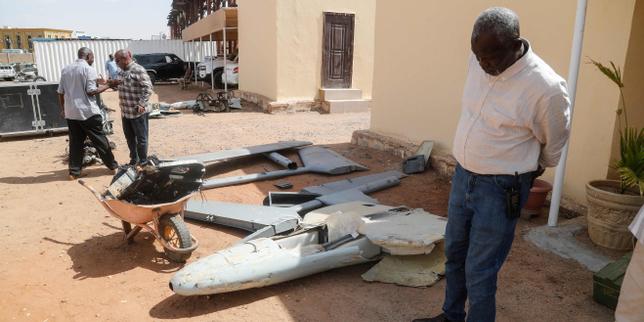
The headlines are celebrating a mirage. When mainstream outlets report that drone strikes hitting Khartoum, Atbara, and Wadi Halfa are interrupting months of calm, they are missing the entire structural reality of the Sudanese civil war. They want you to believe this is a temporary flare-up, a sudden breach of a cooling peace. That narrative is lazy, comforting, and completely detached from the operational dynamics on the ground.
There was never an accalmie. There was only a logistical pause.
The Illusion of Quiet
For months, armchair analysts pointed to a drop in high-intensity urban combat as proof of exhaustion. They mistook a strategic consolidation phase for a peace process. Wars of this magnitude do not pause because factions grow tired; they pause because supply lines need rerouting, drone inventories require replenishment, and command structures must adapt to shifting regional patron backing.
When the Rapid Support Forces and the Sudanese Armed Forces went quiet, they were not negotiating in good faith or reflecting on civilian casualties. They were digging in. The recent swarm of drone attacks targeting the capital and northern hubs is not a sudden escalation out of nowhere. It is the predictable opening salvo of a mechanized winter campaign designed to shatter remaining state infrastructure before the monsoon seasons and shifting geopolitical sands lock in permanent territorial division.
The Misdiagnosis of the Northern Front
Look at how the media covers the strikes reaching north toward Atbara and Wadi Halfa. The standard line treats these attacks as random acts of long-range harassment, a sign of desperation from a cornered militia or an overextended military command.
That is backward.
Extending drone operations deep into the north is a deliberate campaign to sever the last financial and logistical arteries keeping the central government functioning. These are not indiscriminate potshots. They are precise, economic strangulation tactics targeting supply conduits, fuel depots, and transit bottlenecks. If you analyze these strikes through the lens of traditional infantry warfare, you will remain perpetually confused. You have to look at them through the lens of financial bleed-out.
Why the Standard Solutions Fail
Every international summit produces the same tired playbook. Ceasefire talks, humanitarian corridors, rhetorical warnings from foreign ministries, and threats of sanctions that dictators and warlords frame as badges of honor.
None of this works because it misunderstands the currency of power in Khartoum.
Sanctions target bank accounts that were emptied years ago. Ceasefire appeals assume both sides want a unified state to govern. They do not. A fractured Sudan offers more localized extraction opportunities for commanders on both sides than a stable, tax-paying republic ever could. Asking them to lay down arms for the sake of national unity is like asking a scavenger to share a carcass with the vulture across the fence.
The Real Game Being Played
To understand why these drones are flying now, you have to follow the external logistics and proxy financing. This is no longer a localized domestic rebellion. It has morphed into a regional proxy arena where foreign intelligence agencies, external military contractors, and resource-extraction syndicates write the rules.
The drones hitting Khartoum are manufactured cheaply, flown via encrypted telemetry, and sourced through supply chains that laugh at international arms embargoes. When a consumer-grade chassis is strapped with military explosives and guided by satellite relays, the cost-benefit ratio completely breaks traditional air defense models. You cannot shoot down a ten-thousand-dollar drone with a multi-million-dollar interceptor missile indefinitely without going broke.
This is asymmetric economic attrition. The side with the deeper external pockets wins, not the side with the more righteous grievance or the larger historical mandate.
Stop Waiting for a Diplomatic Savior
The most dangerous delusion held by international observers is that a diplomatic breakthrough is just around the corner if only the right mediator steps up.
There is no mediator with enough leverage to alter the math of this conflict right now. The military leadership views any compromise as an existential death sentence. The militia leadership views any settlement that leaves the regular army intact as a temporary reprieve before an inevitable purge.
When you frame the conflict as an existential survival struggle rather than a political dispute over cabinet seats, the brutality of the current drone campaign makes grim, logical sense. They are not trying to win hearts and minds in Khartoum. They are trying to make the city entirely uninhabitable for the opposition, turning urban centers into scorched-earth leverage points for future partitioning negotiations.
The Unspoken Cost of Stagnation
Every week the international community spends drafting toothless resolutions, the war economy entrenches itself deeper into the bedrock of daily life. Child soldiers are integrated into logistics chains. Smuggling networks become municipal governments. War profiteers buy real estate in regional capitals with blood money mined from gold fields seized in Darfur and Kordofan.
By treating these recent strikes as a sudden shock rather than the logical progression of an unaddressed cancer, commentators are failing the public.
The drones over Khartoum are not the end of the peace. They are the true beginning of the permanent fracture. Stop looking for a ceasefire where none can survive. Start preparing for a protracted regional fragmentation that will redraw the map of East Africa for the next generation.