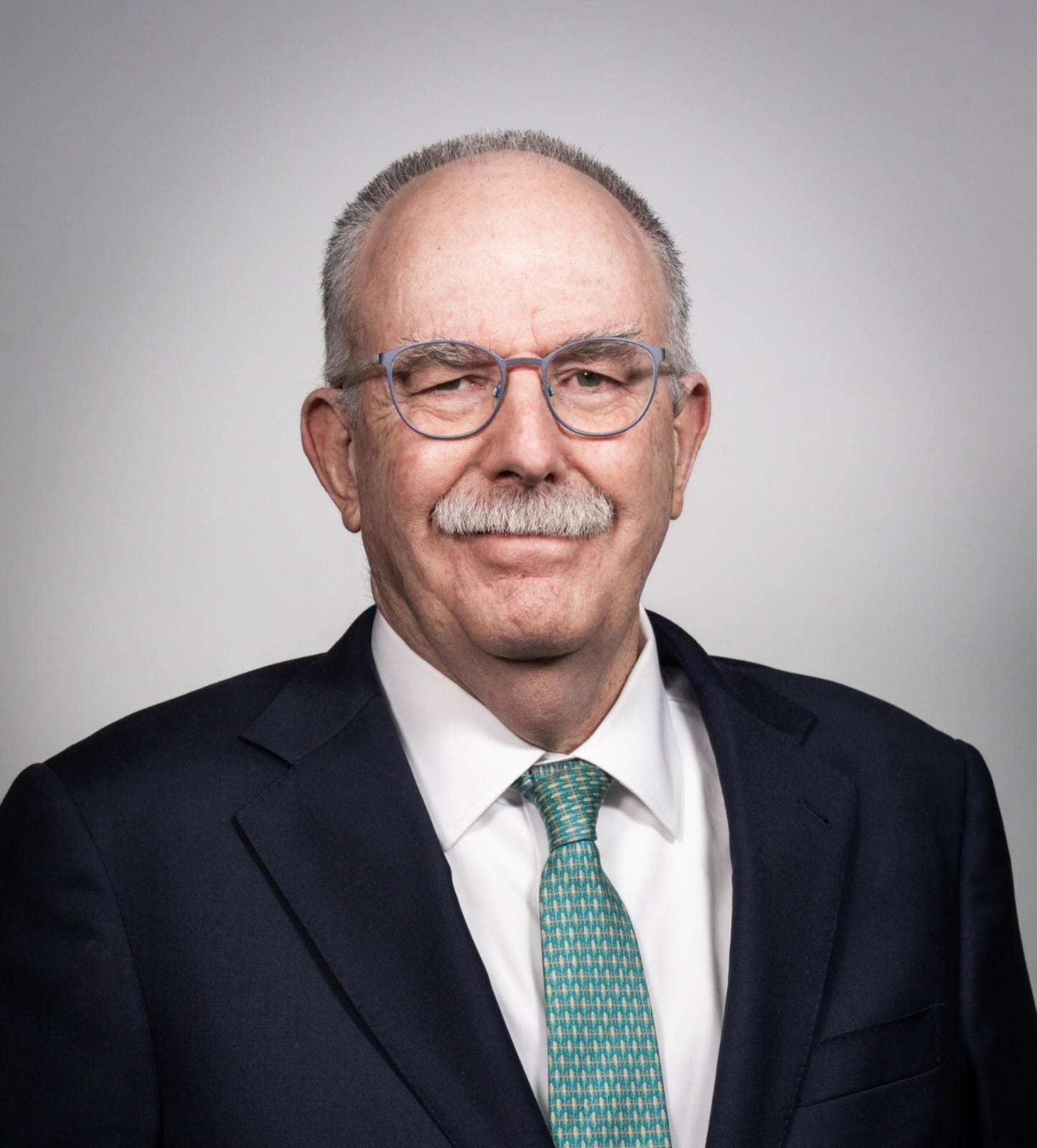
The air inside the National Assembly Hall in Hanoi carries a specific, heavy stillness. It is the scent of old wood, floor wax, and the electric hum of a thousand eyes watching a single man step toward a podium. On this Tuesday, To Lam did not just walk across a room. He walked into a historical anomaly.
For decades, Vietnam has operated on a principle of shared gravity. They call it the "four pillars." Power was never meant to be a jagged peak; it was a plateau. You had the General Secretary of the Communist Party, the President, the Prime Minister, and the Chairman of the National Assembly. It was a system of checks, balances, and collective whispers. If one pillar leaned too far, the others held the roof.
That roof just changed shape.
To Lam, the country’s powerful security chief, has been sworn in as President while simultaneously holding the position of General Secretary. He is now the most powerful individual Vietnam has seen in generations. He sits in the red chair, and for the first time in a long time, the chair does not have to share the room.
The Architect of the Burning Furnace
To understand how we got here, you have to look at the smoke. For years, Vietnam has been defined by a campaign known as Blazing Furnace (Dot Lo). It was the brainchild of the late Nguyen Phu Trong, a man who viewed corruption not just as a crime, but as a rot that would eventually topple the house.
To Lam was the furnace’s chief stoker.
As the head of the Ministry of Public Security, Lam was the hand inside the velvet glove. Under his watch, the anti-graft campaign moved from the fringes of the bureaucracy into the very heart of the boardroom. High-ranking officials vanished from office. Billionaires were led away in handcuffs. The message was clear: no one is too big to burn.
But furnaces are difficult to control. While the campaign cleaned the hallways, it also froze the gears. Imagine being a mid-level bureaucrat in a province outside Ho Chi Minh City. You have a contract on your desk for a new bridge. In the past, you might have signed it without a second thought. Now? You stare at the pen. You wonder if a signature today becomes an interrogation tomorrow.
Construction slowed. Permits lingered in limbo. The "four pillars" began to wobble as one leader after another was swept away by the very campaign meant to strengthen them. By the time the dust settled this week, To Lam was the only man left standing with the strength to hold both titles.
The Investor’s Dilemma
Outside the hall, in the gleaming skyscrapers of District 1, the world is watching with a mix of awe and anxiety. Vietnam is no longer a quiet backwater; it is the global factory floor. When Washington and Beijing trade blows, Vietnam is the referee that everyone wants to bribe with investment. Intel, Samsung, and Apple suppliers have poured billions into this soil.
They crave one thing above all else: stability.
On the surface, To Lam’s consolidation of power offers exactly that. There is no more guessing who is in charge. There is no more backroom friction between the Party chief and the President. The line of command is now a straight shot. For an executive in Cupertino or Seoul, a "strongman" can sometimes be easier to deal with than a fractured committee.
Yet, there is a ghost in the machine.
Reliability is built on predictable laws, not just predictable leaders. When power concentrates so heavily in one office, the institutional memory of a nation begins to look like the biography of one man. Investors are asking themselves if the "Blazing Furnace" will continue to hunt for transparency, or if it will become a tool to ensure total compliance. The stakes are not just political; they are measured in GDP.
The Human Cost of Silence
Step away from the marble halls and the stock tickers. Walk into a small cafe in the Old Quarter of Hanoi. The steam from the pho rises, and the chatter is constant, but notice what people aren't talking about.
In Vietnam, politics is often treated like the weather—something that happens to you, which you cannot change, but must prepare for. There is a deep, cultural respect for order. But there is also a burgeoning middle class that has tasted the fruits of a globalized economy. They want high-speed internet, luxury apartments, and the ability to travel.
They also want a government that functions.
The consolidation of power under To Lam is a gamble on efficiency. The argument is simple: to move a country of 100 million people into the next century, you need a firm hand on the tiller. You cannot afford the luxury of internal bickering when the South China Sea is simmering and the global supply chain is shifting.
But a firm hand can easily become a heavy hand. To Lam’s background is in security. He sees the world through the lens of threats and stability. To him, a dissenting voice isn't just an opinion; it’s a potential crack in the pillar. The question for the average citizen is whether this new era of "super-stability" comes at the cost of the very dynamism that made Vietnam an Asian tiger in the first place.
The Long Shadow of the Four Pillars
We often think of history as a series of dates, but it is actually a series of habits. For decades, Vietnam’s habit was consensus. It was slow, sometimes frustratingly so, but it was safe. No one person could drive the bus off a cliff because three other people had their hands on the wheel.
By taking the presidency while remaining General Secretary, To Lam has essentially removed the extra sets of hands. He is the driver, the navigator, and the mechanic.
This isn't just a change in personnel. It is a change in the soul of the Vietnamese state. The "four pillars" have effectively become one central column. If that column is strong, Vietnam may very well leapfrog its neighbors to become the dominant power in Southeast Asia. If it turns out to be brittle, there are no backups.
Consider the image of the inauguration. To Lam, standing before the red flag with the yellow star, hand raised, swearing to be "absolutely loyal" to the Fatherland and the people. He is a man who has spent his life in the shadows of the security apparatus, now thrust into the brightest light possible.
The furnace is still hot. The wood is still being gathered. But now, the man who controls the fire also owns the house.
The silence in the National Assembly wasn't just respect. It was the sound of a nation holding its breath, waiting to see if the heat will forge a new future or simply burn the old one down. The red chair is occupied. The crowns have been merged. And the rest of the world has no choice but to wait and see how heavily they sit on a single brow.