The asphalt of the Stuart Highway stretches across the Australian red center like a long, charcoal scar. If you drive it at night, the horizon disappears completely. There are no city lights to soften the edges of the world. There is only the hum of tires, the high beams cutting through the dark, and an oppressive, heavy emptiness that presses against the windshield.
Twenty-five years ago, a young British couple drove an orange camper van into that emptiness. They never came out together.
Peter Falconio was twenty-eight. Joanne Lees was twenty-seven. They were young, adventurous, and thoroughly in love with the idea of the open road. Like thousands of backpackers before them, they sought the wild freedom of the Australian Outback. They wanted the sun-baked horizons and the campfire stories. Instead, they drove directly into a living nightmare that would capture the attention of the world and leave a scar on the psyche of an entire continent.
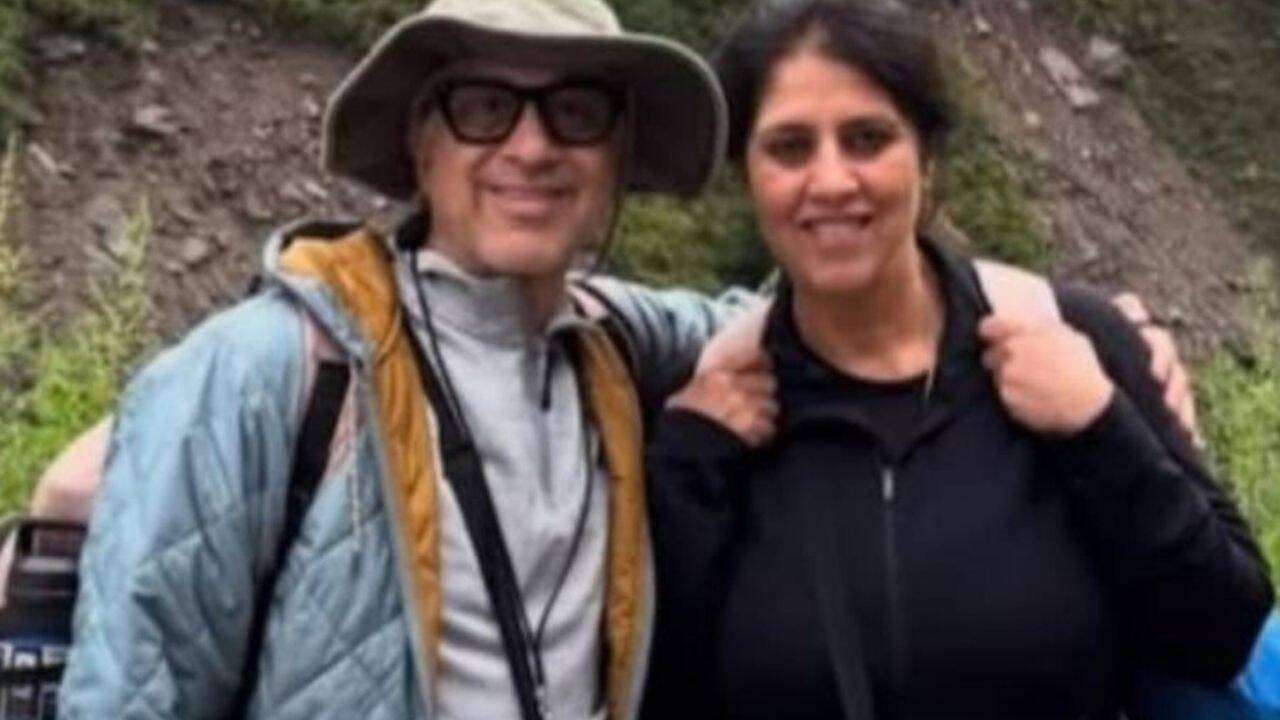
Now, a quarter of a century later, the Northern Territory Police have released a fresh series of photographs. These are not images of a celebratory anniversary. They are stark, clinical glimpses into a crime scene frozen in time. They are pieces of a puzzle that remains agonizingly incomplete. The man responsible sits behind bars, but the earth refuses to give up its final secret. Peter Falconio’s body has never been found.
The Midnight Stop
To understand the weight of these new images, one must go back to the night of July 14, 2001.
The couple was driving north toward Darwin, navigating the lonely stretch near Barrow Creek. It was dark. Desolate. Out of the gloom, another vehicle appeared, gesturing for them to pull over. The driver, a rugged man with a cold demeanor, indicated that their camper van’s exhaust was sparking.
Peter stepped out to check. Joanne stayed inside, shifting into the driver's seat, listening.
Then came the sound. A single, sharp crack that did not belong to the desert night. A gunshot.
Before Joanne could process the noise, the man was at her window. A silver gun glinted in the dim light. He bound her hands behind her back with cable ties, taped her mouth, and forced her into the rear of his utility vehicle. She was trapped, suffocating with terror, listening to the muffled sounds of a stranger moving around her partner’s van.
But Joanne Lees possessed a fierce, primal will to live.
When the attacker’s back was turned, she scrambled out of the vehicle and into the spinifex grass. She ran blind. The sharp weeds tore at her skin, but she did not stop until she found a hiding place beneath a low bush. For hours, she lay motionless in the freezing desert night. She could hear him searching for her. She could hear his dog. She squeezed her eyes shut, holding her breath, waiting for the bullet she felt certain was coming.
He never found her. At dawn, she managed to flag down a passing road train, her wrists still bound, her eyes wide with a trauma that would define the rest of her life.
The Man in the Frame
The man who hunted her that night was Bradley John Murdoch.
It took a massive, grueling investigation to track him down. The case against him was built on a meticulous web of circumstantial evidence, DNA matches found on Joanne’s shirt, and the undeniable terror of her testimony. In 2005, a jury found Murdoch guilty of Peter’s murder and the assault and attempted kidnapping of Joanne. He was sentenced to life in prison.
Yet, justice has a hollow ring when a mother still waits to bury her son.
Murdoch has maintained his innocence for two decades. He sits in a maximum-security prison, tightly holding the one piece of information that could offer closure to a grieving family. He refuses to speak. He refuses to say where he hid Peter’s body. Because of this, the Northern Territory’s "no body, no parole" laws ensure he will likely die behind bars, a stubborn old man consumed by his own malice.
The newly released photographs serve as a grim reminder of this stalemate. They show the interior of the camper van, the dirt tracks off the highway, and the mundane items left behind by two lives interrupted. A stray shoe. A map of the highway. These items are ordinary, yet they are haunted by the sudden absence of the person who owned them.
The Geography of Absence
The Australian Outback is beautiful, but its beauty is indifferent to human suffering. It is a vast, ancient expanse where a secret can be buried a foot beneath the dirt and remain lost for centuries. The red sand shifts with the wind. The scrub grows over old tracks.
Consider the sheer scale of the search area. The Northern Territory covers over half a million square miles. It is a region of rocky outcrops, deep gorges, and thousands of miles of uninhabited wilderness. Finding a hidden grave in this terrain without precise coordinates is akin to looking for a single grain of specific sand on a beach.
Detectives have never truly closed the book. They return to the files. They look at the old evidence with new eyes, hoping that advances in digital imaging or a fresh perspective might reveal a detail they missed in the chaos of 2001.
The release of these pictures is an appeal to the collective memory of a nation. Someone saw something. Someone remembers a utility vehicle parked in an unusual spot the following morning. Someone knows a detail that seemed insignificant twenty-five years ago but could be the key today.
The Weight on the Living
We often talk about true crime cases as if they are stories in a book, wrapped up neatly when the credits roll or the verdict is read. But for those involved, the story never ends.
Joanne Lees returned to England, carrying a burden of grief and survival guilt that few can comprehend. She suffered intense scrutiny from the media, a cruel skepticism that often targets women who survive when their partners do not. She had to fight for her dignity while mourning the man she loved.
Then there are Peter’s parents, Joan and Luciano. They have aged under the weight of an unresolved tragedy. To lose a child is a terrible thing; to lose a child to a violent act in a country thousands of miles away, and to never be able to bring his remains home, is a unique form of torture. They do not want vengeance anymore. They want a grave. They want a place to lay flowers where they know their son rests.
The new images are a message to the Falconio family that they have not been forgotten. The detectives who worked the case are mostly retired now, replaced by a new generation of investigators. Yet, the institutional memory remains. The commitment to bringing Peter home is a point of honor for the Northern Territory Police.
The Secret in the Dirt
The Stuart Highway remains a popular route for travelers. Today, modern backpackers drive the same roads in better vans with satellite navigation and mobile phones that connect to the world. They stop at the same roadhouses. They look out at the same red sunsets.
But if you stop near Barrow Creek and turn off your engine, the silence is absolute.
It is a silence that holds the truth of what happened in the dark twenty-five years ago. It holds the final moments of a young man whose life was cut short for no reason at all. The police will keep searching. The public will look at the new photographs, searching the backgrounds for a clue, a hint, a shadow that looks like a breakthrough.
Until that breakthrough comes, Peter Falconio remains a part of the landscape he chose to explore, a spirit lost in the red dust, waiting for the word that will finally bring him home.