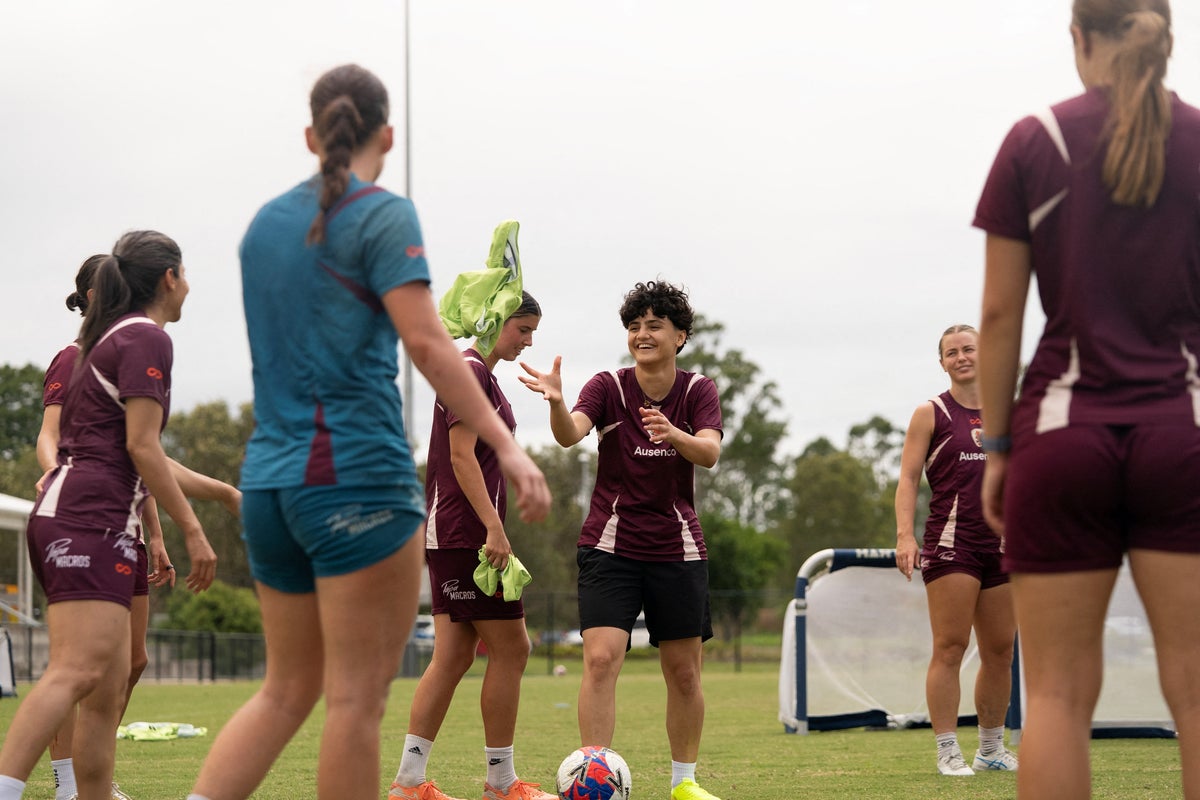
Australia’s recent embrace of Iranian footballers is being sold as a triumph of humanitarian spirit. The headlines scream about "hope" and "safe futures." It’s a warm, fuzzy narrative designed to make Western audiences feel like they’ve won a moral gold medal.
But here is the cold reality: Using sport as an escape hatch for a select few elites does nothing to solve the systemic rot they are fleeing. In fact, it might be making things worse. You might also find this connected coverage insightful: The Price of a New Flag.
By focusing on the feel-good story of a handful of athletes landing on Australian shores, we are ignoring the brutal mechanics of how sports diplomacy actually functions in 2026. This isn't just about "giving them a chance." It’s about the West’s obsession with symbolic victories while the actual machinery of oppression in Tehran remains perfectly calibrated.
The Mirage of the Athlete Refugee
The "lazy consensus" is that every athlete who defects is a blow to the regime. It isn't. To the Islamic Republic, an athlete who flees is often just a line item they can write off. They have a conveyor belt of talent. For every striker who finds "freedom" in the A-League, there are a thousand more back home being used as pawns for internal propaganda. As extensively documented in latest reports by Yahoo Sports, the implications are worth noting.
We love the narrative of the defector because it validates our own system. "Look," we say, "they want to be like us." But notice how the conversation stops the moment they clear customs. We provide the safety, but we strip away the platform.
Once these players are in Australia, they are effectively neutralized. They become "former" Iranian players. Their influence within Iran's borders—the only place where change actually matters—evaporates the moment they stop wearing the national kit. The regime doesn't fear the player in Sydney; they fear the player in Tehran who refuses to sing the anthem while millions are watching.
The Talent Drain is a Strategic Failure
When a nation loses its best minds, we call it "brain drain" and recognize it as a tragedy for that country’s development. When a nation loses its best athletes, we call it a "humanitarian success." This is a massive cognitive dissonance.
If the goal is truly to support the Iranian people, stripping the country of its cultural icons and sporting heroes is counterproductive. These athletes are the connective tissue of the Iranian social fabric. By facilitating their exit, we are assisting in the hollow out of the very civil society that is supposed to eventually challenge the status quo.
Imagine a scenario where every dissenting voice in a corporation simply quit to join a competitor. The competitor gets a minor boost, but the original company stays exactly as toxic as it was, now with zero internal opposition. That is what Australia is doing on a geopolitical scale. We are the competitor poaching the talent while the "company" (the regime) continues its business as usual, unbothered by the loss.
The Myth of Sport as a Neutral Ground
The International Olympic Committee (IOC) and various football federations love to preach that sport is "apolitical." That is the biggest lie in modern entertainment. Sport is the ultimate political currency.
When Australia grants visas to these players, it isn't a neutral act of kindness. It’s a soft-power maneuver. But it’s a cheap one. It’s easier to give a few visas than it is to enforce meaningful sporting sanctions that would actually hurt the regime’s pride.
The Iranian government uses its national teams to project a facade of normalcy to the world. They want the optics of competing in the World Cup and the Asian Cup. If the international community were serious about "hope" for Iranian athletes, they wouldn't be focusing on resettlement. They would be focusing on total isolation.
True "E-E-A-T" in this space—Experience, Expertise, Authoritativeness, and Trustworthiness—requires acknowledging that the most effective way to help these players is to make the regime’s participation in global sport impossible until conditions change. I’ve seen international bodies dance around this for decades, terrified of "politicizing" the game, while the game is used to mask human rights abuses every single day.
Stop Asking if They are Safe
The most common question people ask is: "Are they safe now?"
It’s the wrong question. It’s a selfish question designed to provide closure for the reader.
The real question is: "What happens to the players who stayed?"
By focusing on the escapees, we create a survivorship bias that obscures the reality for the hundreds of professional athletes still in Iran who are being threatened, tortured, or executed for showing solidarity with protesters. Navid Afkari wasn't a footballer who made it to Australia. He was a wrestler who was executed. That is the baseline reality.
When we celebrate the "safe future" of the few who got out, we are inadvertently telling the ones left behind that their only value is in their ability to leave. We are telling them that the world will only care about their "hope" once they are no longer in Iran.
The Uncomfortable Truth About Resettlement
Let’s be brutally honest about the "safe future" promised in Australia. Professional sport is a brutal, short-lived career. Most of these players will spend a few years in the lower tiers of Australian football, struggle with the language, and eventually fade into obscurity.
The Australian media uses them for a week-long news cycle to feel good about the country’s "fair go" values, then moves on. The players are left to deal with the survivor’s guilt and the knowledge that their families back home are now targets for the IRGC.
Is that "hope"? Or is it just a different kind of burden?
If you want to actually support these athletes, stop treating their arrival like a Disney movie ending. It’s the beginning of a complex, often depressing struggle for identity in a country that will never truly understand what they sacrificed.
The Sanctions Gap
We sanction oil. We sanction banks. We sanction individuals. Why do we not sanction the Iranian Football Federation with the same ferocity?
The answer is simple: governments don't want to deal with the public backlash of "ruining the game." It’s easier to play the hero by taking in refugees than it is to play the villain by banning a national team from the World Cup.
One is a photo op. The other is a diplomatic crisis.
But a diplomatic crisis is exactly what is needed. The regime lives for the prestige of international sport. It is one of the few areas where they can still stand on an equal footing with the West. Taking that away would do more for the "safe future" of Iranians than every humanitarian visa Australia has ever issued.
The Actionable Reality
If you actually care about the plight of these athletes, stop clicking on the "hope" stories. They are designed to soothe you, not inform you.
Instead, demand the following:
- Full Sporting Isolation: Pressure governing bodies to suspend Iran from all international competitions until female fans are allowed in stadiums without conditions and the targeting of dissident athletes stops.
- Asset Seizures of Officials: Instead of just welcoming players, the West should be seizing the assets of the sporting officials who facilitate the regime’s crackdowns.
- Long-Term Structural Support: If Australia is going to take these players, it needs to provide more than a visa and a jersey. It needs to provide a permanent, well-funded platform for them to continue their activism from abroad.
Right now, we are giving them a life raft but taking away their oars. We are telling them to be grateful for the safety while we continue to shake hands with the people they are running from on the international stage.
The "safe future" being touted is a mirage. It’s a way for the West to look the part of the savior without having to do the hard work of the disruptor. We aren't saving Iranian football; we’re just collecting the wreckage.
Stop celebrating the exit. Start demanding an end to the reasons they have to leave.